

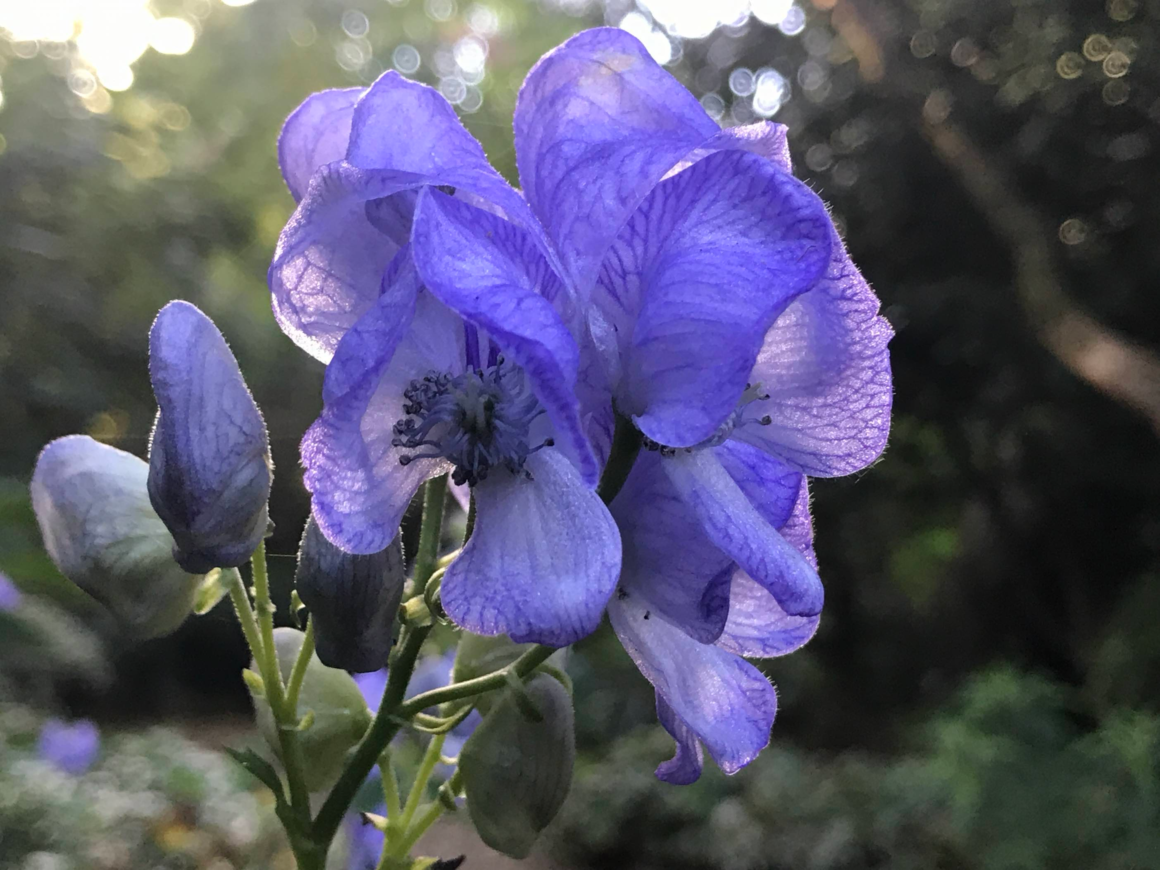
Perennial
Aconitum napellus
Monkshood
A tall, very hardy perennial with deeply cut leaves and spires of hooded, deep violet-blue flowers. Highly poisonous.
- Full sun, Partial shade
- 1–1.5 m (3–5 ft)
- 30–50 cm (12–20 in)
- H7 · Zone 4
- June–August
- Deciduous
Overview
Native to the mountains and damp meadows of Europe, including Britain, monkshood is the most widely grown aconite. It forms clumps of glossy, deeply divided leaves and, in mid to late summer, upright spikes of helmet-shaped, deep violet-blue flowers that long-tongued bumblebees love. It is extremely hardy (below -20°C / -4°F) and thrives in moist, fertile soil in sun or part shade. It is one of the most poisonous plants grown in gardens: every part is toxic, and poison can be absorbed through broken skin, so always wear gloves and avoid planting it near vegetables or where children play.
At a Glance
Growing Conditions
Aspect Suitability
- North-facing
- East-facing
- South-facing
- West-facing
Soil Tolerance
- Clay
- Chalk
- Sandy
- Loam
- Acid
- Neutral pH
- Alkaline
Foliage
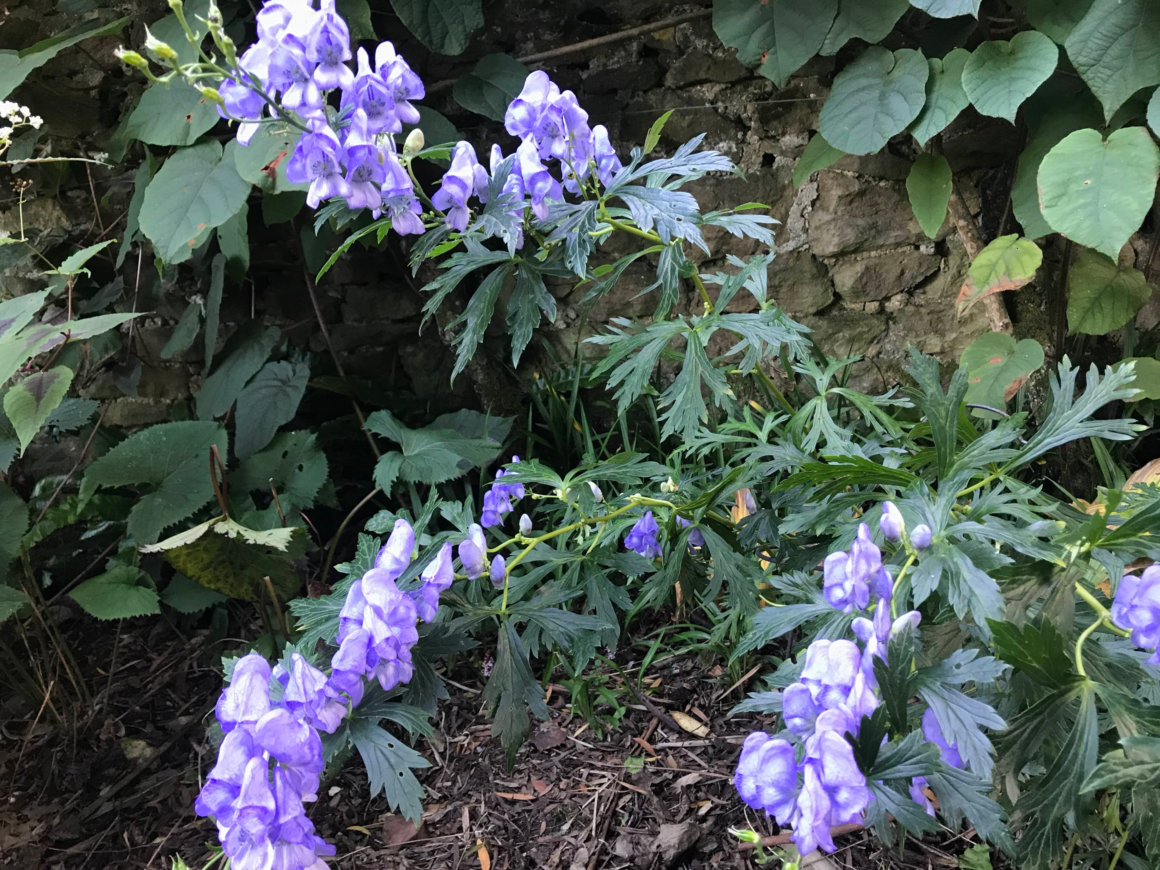
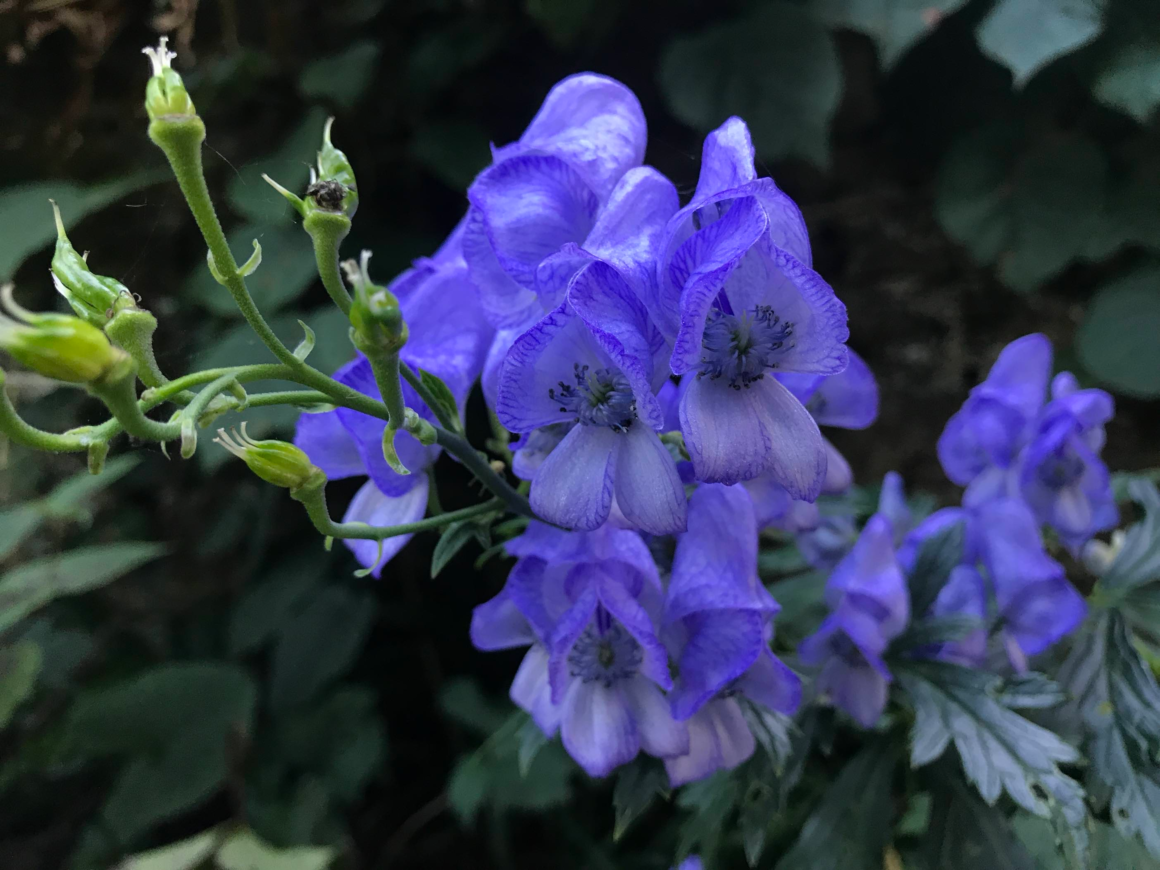
Foliage interest: April–October
Seasonal Timeline
- Flowering Jun Jul Aug
- Foliage Apr May Jun Jul Aug Sep Oct
- Fruiting Sep Oct
- Propagate Mar Apr Oct
Maintenance Calendar
- Apr Put supports in place early in exposed gardens, because the tall spikes can topple in wind
- Jun Water in dry spells, as monkshood prefers soil that never dries out
- Sep Wearing gloves, cut faded flower spikes and later the dead stems, then wash your hands thoroughly
- Oct Divide congested clumps every few years, wearing gloves, to keep them flowering well
Garden Design
Works well in: Cottage, Wildlife-friendly, Woodland / Shade
Gives cool blue spires in a moist border or woodland edge in late summer. Choose its position carefully, away from paths, play areas and vegetable beds.
Companion planting: Delphiniums, Phlox, Astilbes, Ferns
Wildlife Value
- Bees
- Other pollinators
Safety
- Toxic to humans
- Toxic to dogs
- Toxic to cats
- Toxic to horses
- Skin irritant
Highly toxic: all parts, especially the roots, contain aconitine, which can be fatal if eaten and can be absorbed through cuts in the skin. Always wear gloves, wash hands afterwards, never plant near edible crops, and keep away from children, pets and livestock.