

Climber
Actinidia kolomikta
Kolomikta vine
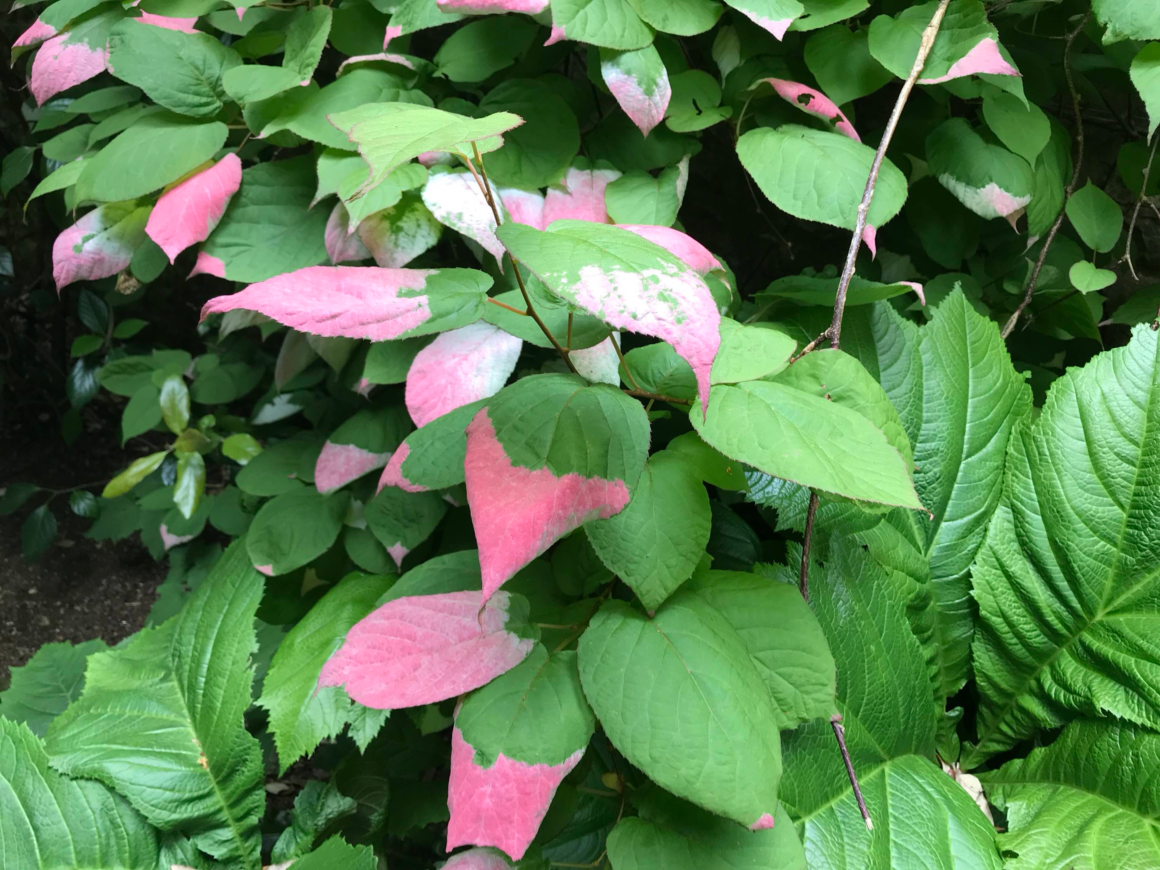
A hardy twining climber whose heart-shaped leaves are splashed white and pink, as though dipped in paint.
- Full sun, Partial shade
- 4–8 m (13–26 ft)
- 4–8 m (13–26 ft)
- H5 · Zone 7
- May–June
- Deciduous
- RHS Award of Garden Merit
Overview
A relative of the kiwi fruit from north-east Asia, this deciduous climber is grown for its remarkable leaves: green, heart-shaped and tipped first with white and then with bright pink, as if dipped in paint. The colouring develops best in full sun and on established plants, often taking two or three years to appear. Small, fragrant white flowers in early summer can produce small, sweet, edible fruit on female plants when a male is nearby. Very hardy (about -15°C / 5°F and lower). Cats love it like catnip and may damage young plants.
At a Glance
Growing Conditions
Aspect Suitability
- East-facing
- South-facing
- West-facing
Soil Tolerance
- Clay
- Chalk
- Sandy
- Loam
- Acid
- Neutral pH
- Alkaline
Foliage
- Variegated
Foliage interest: April–October
Seasonal Timeline
- Flowering May Jun
- Foliage Apr May Jun Jul Aug Sep Oct
- Fruiting Aug Sep
- Propagate May Jun Jul Aug
Maintenance Calendar
- Jan In winter, shorten side shoots to a few buds and remove crowded stems, but avoid late pruning in spring, when cuts 'bleed' sap
- Mar Protect the base of young plants with wire mesh, as cats are drawn to the plant and can damage it
- Apr Tie in new shoots to wires so the plant covers its support evenly
- Jul Water young plants in dry spells while they establish
Garden Design
Works well in: Cottage, Edible / Kitchen Garden, Modern / Contemporary, Tropical / Exotic, Wildlife-friendly
Train on wires against a sunny wall or fence where the painted leaves can be seen; male plants are usually said to colour more strongly.
Companion planting: Clematis, Climbing roses, Wall shrubs
Wildlife Value
- Bees
- Other pollinators
- Birds
- Shelter
- Food source
- Nesting cover for birds
- Food
Safety
Not toxic; fruit of female plants is edible. The plant contains a compound that attracts cats, which may chew or roll on young plants, so protect them with wire mesh until established.