

Perennial · Succulent
Agave americana
Century plant
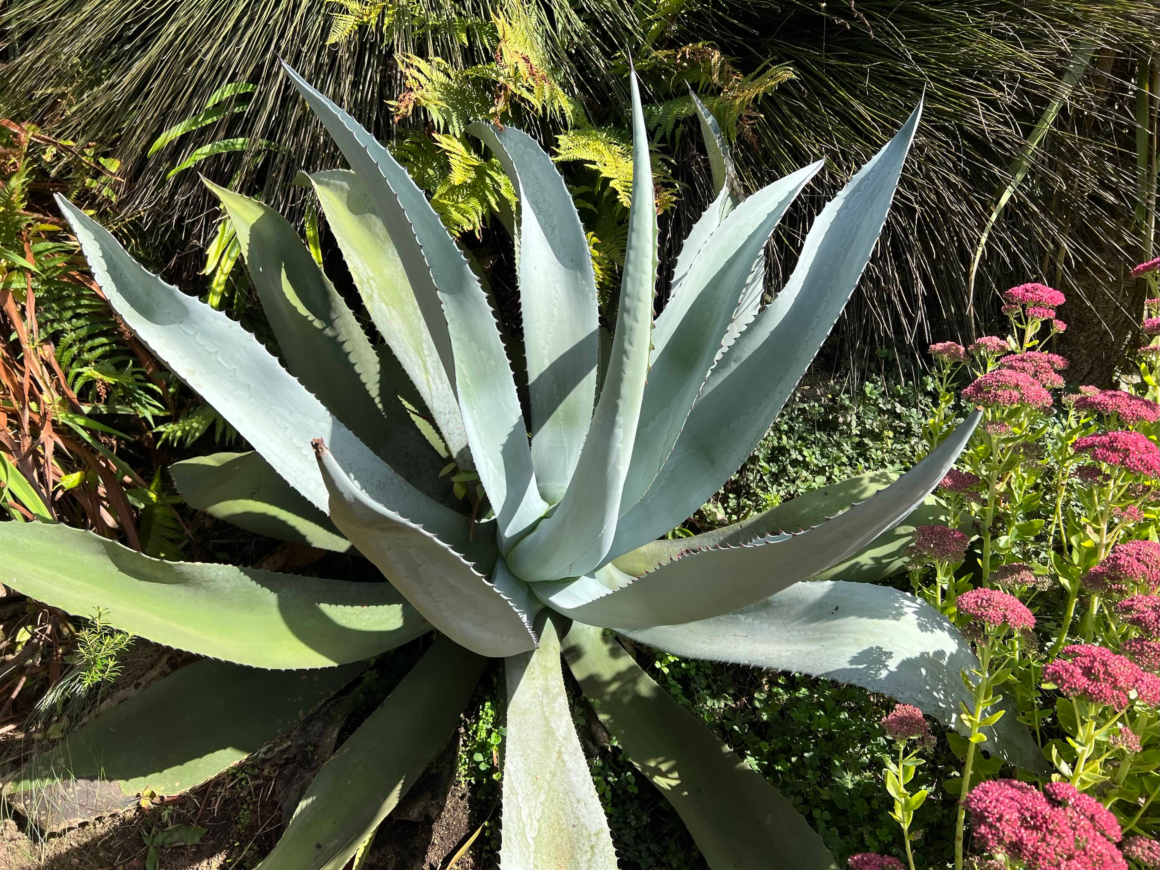
A huge, sculptural succulent with a rosette of thick, blue-grey, spine-tipped leaves.
- Full sun
- 1–1.5 m (3–5 ft)
- 1.5–2 m (5–7 ft)
- H2 · Zone 10
- June–August
- Evergreen
- RHS Award of Garden Merit
Overview
From Mexico and the southern USA, the century plant forms an enormous rosette of thick, arching, blue-grey leaves edged with hooked teeth and tipped with a needle-sharp spine. After 10-30 years a mature rosette sends up a flower spike like a tree, several metres tall, then dies, leaving offsets to carry on. The RHS rates it H2 (frost tender), and in cold, wet winters it is safest in a pot under cover. In mild, dry, sheltered gardens, established plants often survive a few degrees of frost when the soil is very well drained.
At a Glance
Growing Conditions
Aspect Suitability
- South-facing
- West-facing
Site Tolerance
- Exposed sites
- Wind
- Coastal
- Salt
- Drought
Soil Tolerance
- Sandy
- Loam
- Acid
- Neutral pH
- Alkaline
Foliage
- Architectural foliage
Foliage interest: 12 months of the year
Seasonal Timeline
- Flowering Jun Jul Aug
- Foliage 12 months of the year
- Propagate Apr May Jun
Maintenance Calendar
- May Move pots outside after frost and acclimatise to full sun over a week or two, preventing leaf scorch
- Jun Remove offsets with gloves on and pot them up to keep the rosette tidy and make new plants
- Aug Water pots only when the compost is completely dry, as overwatering causes rot
- Oct Bring pots under cover or keep garden plants dry under a cloche, because cold, wet weather rots the crown
Garden Design
Works well in: Desert / Dry, Mediterranean, Modern / Contemporary, Tropical / Exotic
An unbeatable focal point for a gravel garden or large terracotta pot. Allow plenty of space, because rosettes grow much wider than they look in a nursery pot.
Companion planting: Yuccas, Grasses, Aloes, Mediterranean shrubs
Wildlife Value
- Bees
- Other pollinators
- Birds
Listed as an invasive non-native plant in the UK: never let it spread into the wild.
Safety
- Toxic to humans
- Toxic to dogs
- Toxic to cats
- Skin irritant
Leaf tips and edges carry sharp spines that can cause deep puncture wounds; plant well away from paths and children. The sap irritates skin and is harmful to pets if eaten. It is listed as invasive in parts of the Mediterranean, South Africa and Australia.