

Tree
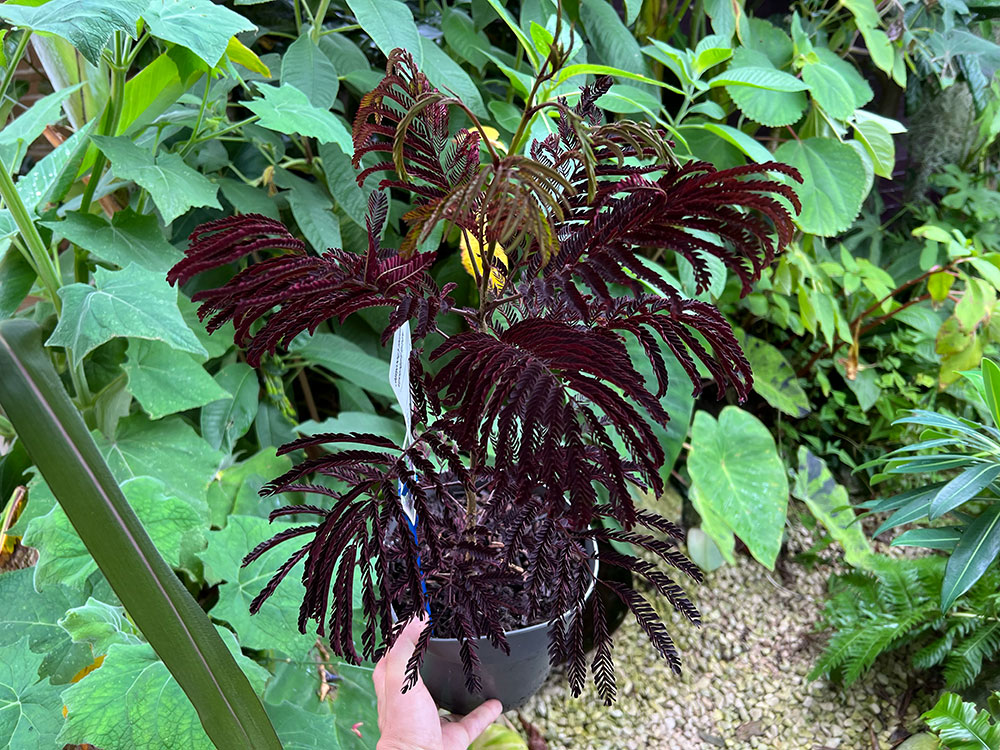
Albizia julibrissin ‘Summer Chocolate’
Chocolate silk tree
An airy small tree with finely divided burgundy foliage and pink powder-puff flowers.
- Full sun
- 4–8 m (13–26 ft)
- 2.5–4 m (8–13 ft)
- H4 · Zone 7
- July–August
- Deciduous
- RHS Award of Garden Merit
Overview
This deciduous silk tree develops a spreading crown of feathery leaves that darken from bronze to chocolate-purple. Pink flower heads appear in warm summers. A sunny, sheltered position helps ripen the wood and limits damage from late frost and cold winds.
At a Glance
Growing Conditions
Aspect Suitability
- South-facing
- West-facing
Site Tolerance
- Drought
Soil Tolerance
- Chalk
- Sandy
- Loam
- Acid
- Neutral pH
- Alkaline
Foliage
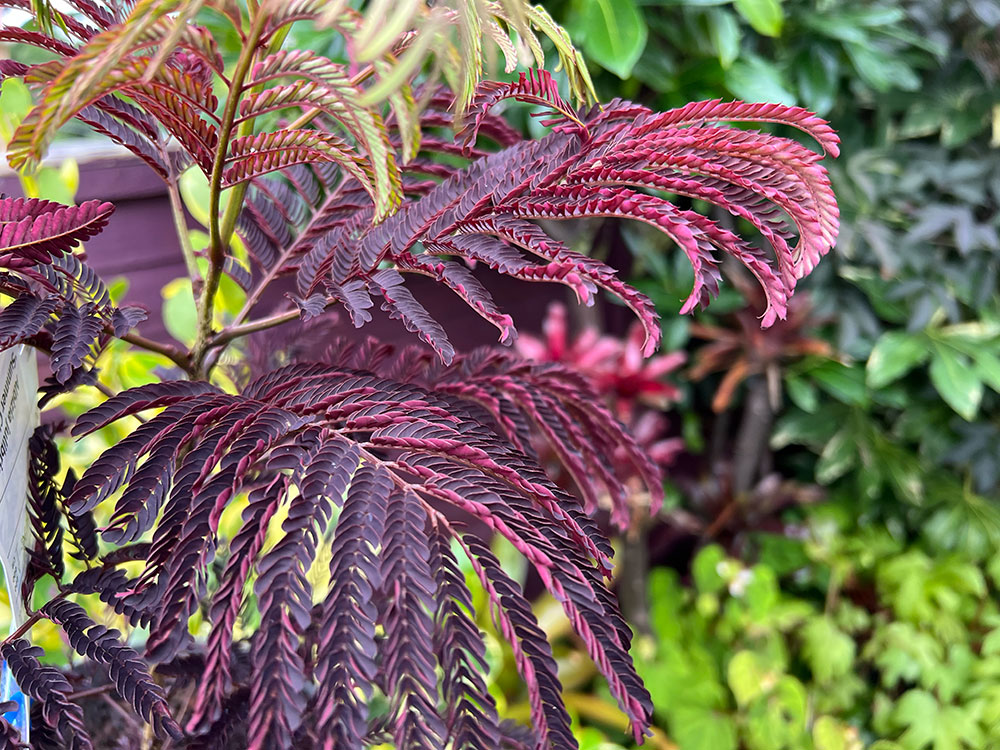
- Architectural foliage
Foliage interest: May–October
Seasonal Timeline
- Flowering Jul Aug
- Foliage May Jun Jul Aug Sep Oct
- Fruiting Sep Oct Nov
- Propagate Mar Apr Jul Aug
Maintenance Calendar
- Mar Mulch the root area without covering the trunk
- May Remove dead or damaged wood after frost risk passes
- Jun Water deeply while establishing and during drought
- Jul Check for aphids and unexplained wilting
- Oct Collect fallen pods where animals have access
- Nov Check ties on recently planted trees
Garden Design
Works well in: Mediterranean, Modern / Contemporary, Tropical / Exotic
Allow room for a broad canopy. Dark foliage contrasts with lime-green leaves; avoid frost pockets and exposed courtyards.
Companion planting: Golden foliage shrubs, Ornamental grasses, Low perennials
Wildlife Value
- Bees
- Butterflies
- Shelter
- Food source
- Food
Safety
- Toxic to dogs
- Toxic to horses
Seeds and pods can poison dogs and grazing animals. Do not eat any part; collect fallen pods where pets have access.