

Bulb · Vegetable
Allium cepa
Onion, Bulb onion, Shallot
Also known as: Allium cepa var. aggregatum (shallots)
A staple kitchen crop grown from seed or small sets for bulbs that store for months, including shallots and salad onions.
- Full sun
- 30–60 cm (12–24 in)
- 10–15 cm (4–6 in)
- H5 · Zone 5
- Deciduous
Overview
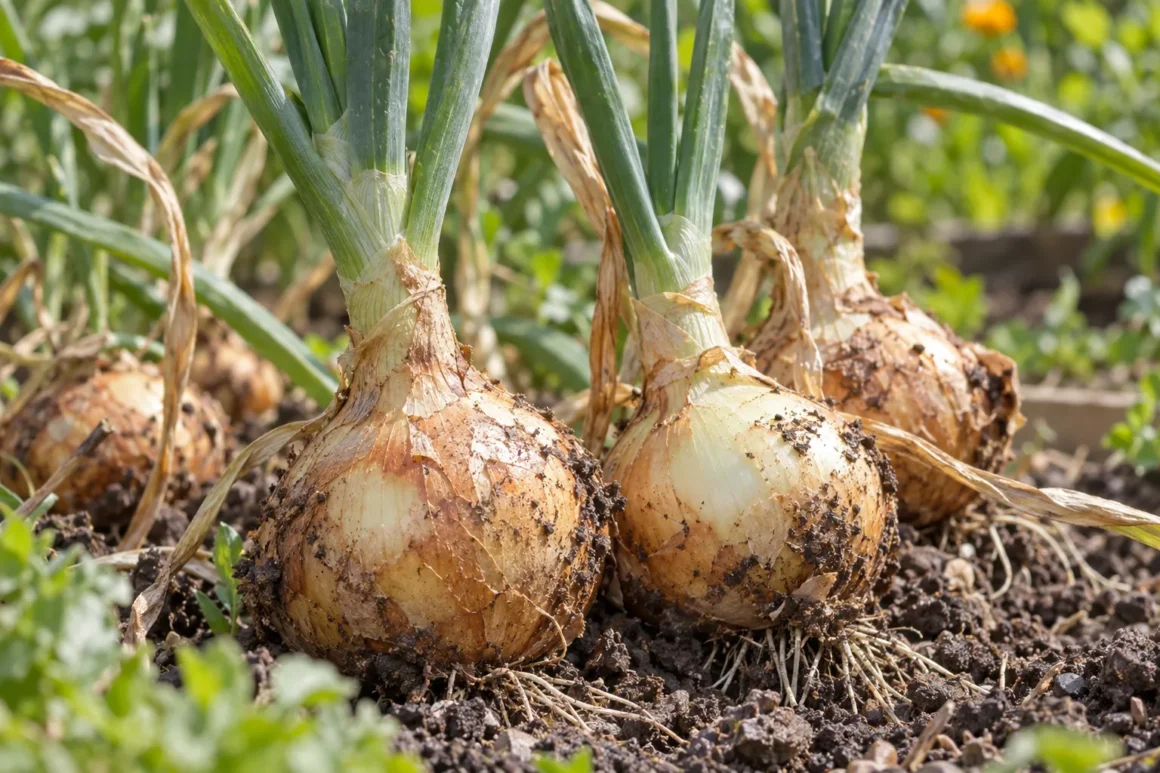
Onions were domesticated in Central Asia and are grown in almost every kitchen garden. Plants form upright, hollow, blue-green leaves above a swelling bulb, which is lifted, dried and stored. The species also includes shallots, which divide into clusters of small bulbs, and is often grown as green salad (spring) onions. Bulbing is triggered by day length, which matters wherever you garden: long-day types (needing 14-16 hours) suit higher latitudes, short-day types (10-12 hours) suit warm climates closer to the equator, and intermediate types fit in between. Onions are hardy and grown in cool weather, from small bulbs (sets), transplants or seed. Bulb colour, flavour, storage life and day-length type depend on the variety, so check the details for the one you choose.
At a Glance
Growing Conditions
Aspect Suitability
- South-facing
- West-facing
Soil Tolerance
- Clay
- Sandy
- Loam
- Neutral pH
- Alkaline
Foliage
Foliage interest: March–July
Seasonal Timeline
- Foliage Mar Apr May Jun Jul
- Propagate Jan Feb Mar Apr Sep Oct
- Sow indoors Jan Feb
- Sow / plant outside Mar Apr Sep Oct
- Plant out Apr
- Harvest Jul Aug Sep
How to propagate
One way to grow more Onion, Bulb onion, Shallot: the usual steps for each method.
From seed Jan–Apr, Sep–Oct Easy
You'll need: Seed compost, a seed tray or small pots, labels, and a clear lid or plastic bag.
- Fill a tray or pots with seed compost, level it and firm it gently.
- Water the compost and let it drain.
- Sow the seeds thinly on top. Cover them with a fine layer of compost or vermiculite about as deep as the seed is big; leave tiny seeds uncovered.
- Label them, cover with a clear lid or bag, and keep them somewhere bright but out of hot sun.
- Keep the compost just moist, and take the cover off once seedlings appear.
- How long
- Usually comes up in 1 to 3 weeks.
- It's worked when
- Seedlings with their first pair of leaves.
- Then
- When each has its first true leaves, prick them out into their own small pots, holding them by a leaf, never the stem. Harden them off for a week or two before planting out.
Sow seed indoors 10-12 weeks before your last frost, or plant sets with the tips just showing two to four weeks before your last frost. In mild-winter climates hardy types can be planted in autumn. Choose sets that are heat-treated where available, as these are less likely to bolt.
Maintenance Calendar
- Feb Sow seed indoors 10-12 weeks before your last frost for large bulbs
- Mar Plant sets or transplants two to four weeks before your last frost, tips just showing and 10cm (4in) apart
- Apr Check and firm back any sets lifted by birds or frost
- May Hoe carefully between rows, as onions compete poorly with weeds
- Jun Water in long dry spells while bulbs swell, but stop once they ripen
- Jul Lift bulbs once most leaves have yellowed and toppled over
- Aug Dry bulbs in sun or an airy, covered place for two weeks until the skins rustle, then store cool and dry
- Oct In mild-winter climates plant hardy sets for an early crop next summer
Garden Design
Works well in: Edible / Kitchen Garden
Grow in rows or blocks in an open, sunny bed, ideally next to carrots, whose different pests the onion scent is thought to confuse. Keep weed-free, as the thin leaves cast little shade.
Companion planting: Carrots, Beetroot, Lettuce, Chamomile, Avoid planting next to beans and peas
Safety
- Toxic to dogs
- Toxic to cats
- Toxic to horses
Bulbs and leaves are edible for people. All onions are toxic to dogs, cats and horses, raw or cooked, as they damage red blood cells, so keep crops and scraps away from pets. Cutting onions irritates the eyes.