

Bulb · Vegetable
Allium sativum
Garlic
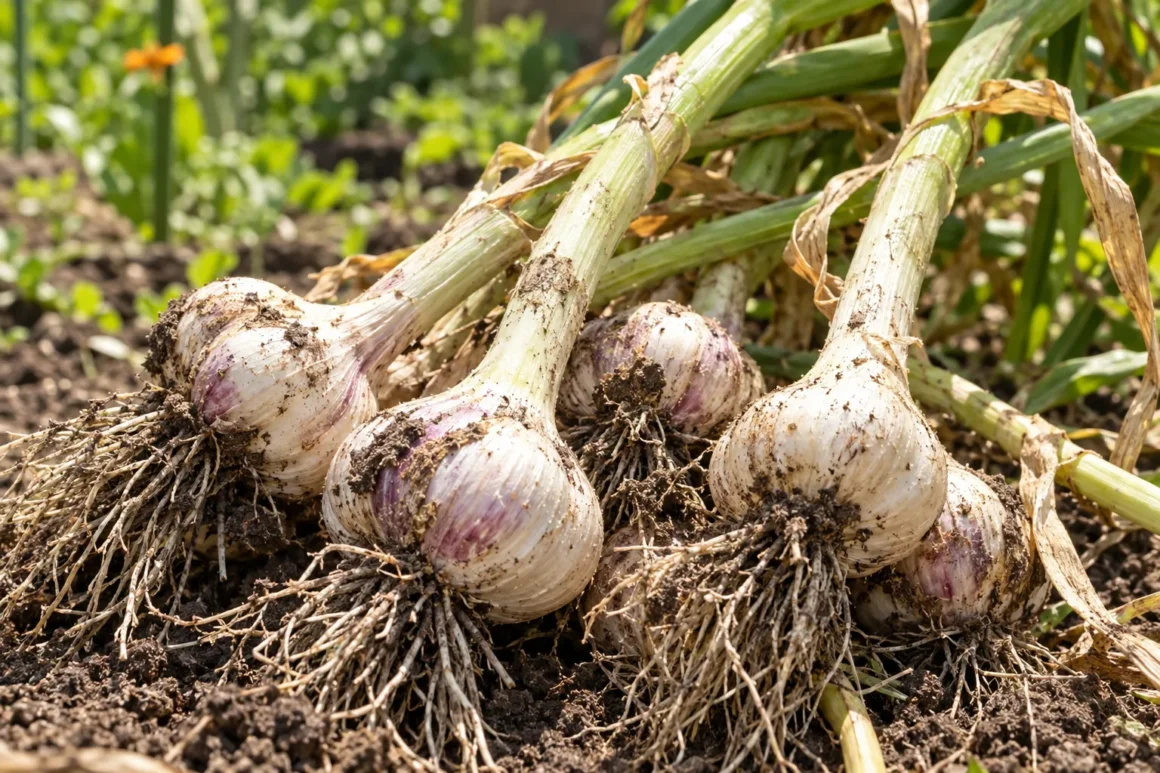
An easy, hardy crop planted from cloves in autumn, forming fat, pungent bulbs by summer.
- Full sun
- 30–60 cm (12–24 in)
- 15–20 cm (6–8 in)
- H6 · Zone 5
- June
- Deciduous
Overview
Garlic comes from Central Asia and has been cultivated for over 5,000 years. Each clove planted in autumn grows into a clump of flat, blue-green leaves and divides underground into a new bulb of many cloves by summer. There are two main groups: hardneck types, which tolerate severe cold, produce a curling flower stalk (scape) that is cut and eaten, and have rich flavour but shorter storage; and softneck types, which have no scape, suit milder climates and store longest, which is why they are used for braids. Garlic needs a period of cold, roughly four to eight weeks below 10°C (50°F), to form good bulbs, so in warm climates chill cloves in a fridge before planting. Flavour, hardiness and storage life depend on the variety.
At a Glance
Growing Conditions
Aspect Suitability
- South-facing
- West-facing
Soil Tolerance
- Clay
- Sandy
- Loam
- Neutral pH
- Alkaline
Foliage
Foliage interest: January, February, March, April, May, June, October, November, December
Seasonal Timeline
- Flowering Jun
- Foliage Jan Feb Mar Apr May Jun Oct Nov Dec
- Propagate Sep Oct Nov Feb
- Sow / plant outside Sep Oct Nov
- Harvest Jun Jul Aug
How to propagate
One way to grow more Garlic: the usual steps for each method.
Offsets, runners and bulblets Feb, Sep–Nov Easy
You'll need: A trowel, small pots and compost.
- Find the small plants, offsets or bulblets growing beside the parent plant, or on its runners.
- Gently separate them with some roots, cutting any runner from the parent.
- Pot them up, or replant them at the same depth, and water.
- How long
- Grows on within a few weeks.
- It's worked when
- New leaves on the young plants.
- Then
- Grow them on until they're a good size before planting out.
Plant the largest outer cloves, pointed end up, 5cm (2in) deep in mid to late autumn so they root before winter. Use certified bulbs or your own healthy stock rather than shop garlic, which may carry disease or be unsuited to your climate.
Maintenance Calendar
- Mar Feed lightly with a nitrogen-rich fertiliser as growth starts in spring
- May Hoe or hand-weed regularly, as garlic struggles against weeds
- Jun Cut off the curling flower stalks (scapes) of hardneck types when they loop, which feeds the bulb, and eat them
- Jun Stop watering a few weeks before harvest, which helps the bulbs cure and store
- Jul Lift bulbs when the lower third of the leaves has turned brown
- Jul Dry bulbs in an airy, shady place for two to three weeks, then store cool and dry
- Oct Plant cloves 5cm (2in) deep and 15cm (6in) apart in autumn, as they need a cold spell to form proper bulbs
- Nov Mulch with straw or leaves in very cold areas to protect cloves from heaving out of frozen soil
Garden Design
Works well in: Edible / Kitchen Garden
Grow in rows or a block in an open, sunny bed that has been empty of onions for several years. Its upright leaves add a fine, vertical note to an ornamental kitchen garden.
Companion planting: Carrots, Beetroot, Roses, Strawberries, Avoid planting next to beans and peas
Wildlife Value
- Bees
Safety
- Toxic to dogs
- Toxic to cats
- Toxic to horses
Bulbs, leaves and scapes are edible for people. Garlic is toxic to dogs, cats and horses, as it damages red blood cells, so keep bulbs and scraps away from pets. Peeling large amounts can irritate sensitive skin.