

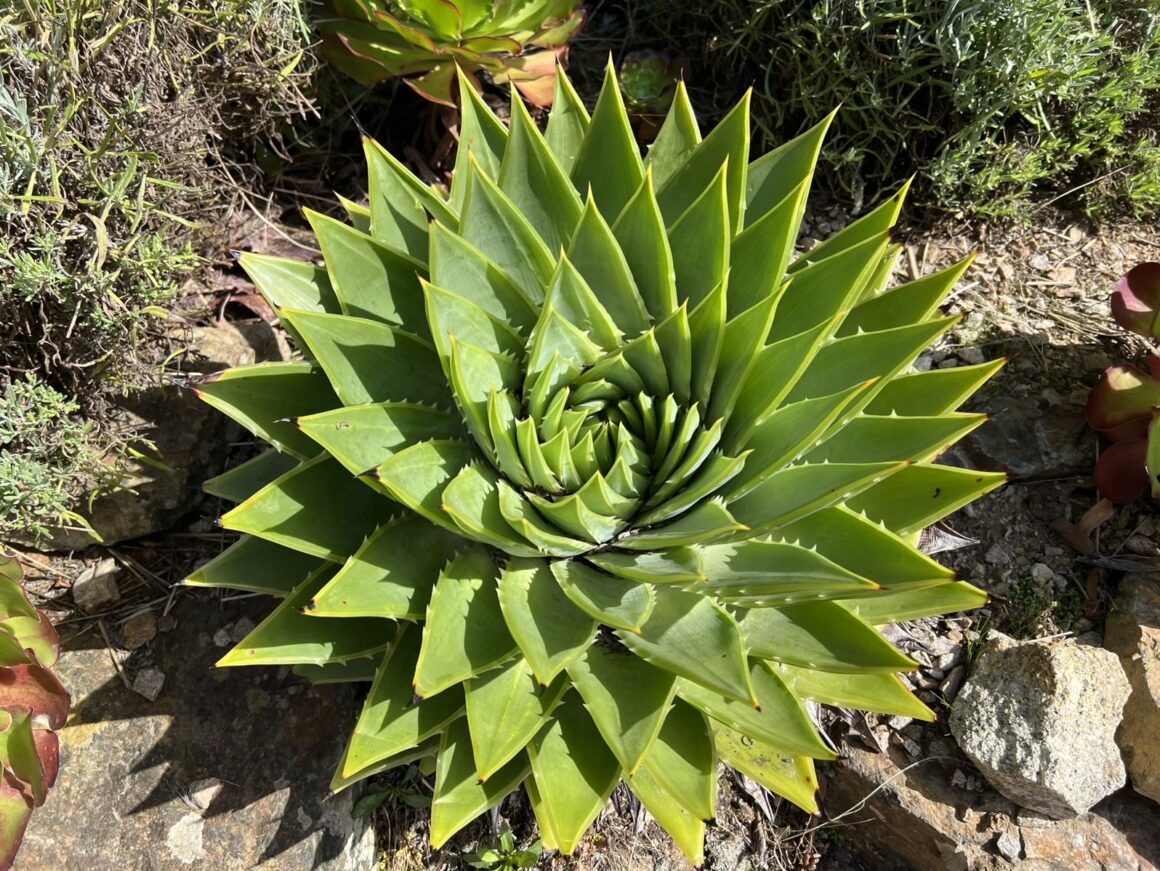
Succulent perennial
Aloe polyphylla
Spiral aloe
Also known as: Aloe polyphila (misspelling), Spiral aloe
A remarkable aloe whose fleshy toothed leaves form a precise clockwise or anticlockwise spiral.
- Full sun
- 20–50 cm (8–20 in)
- 0.5–1 m (2–3 ft)
- H3 · Zone 8
- April–June
- Evergreen
Overview
This high-altitude aloe makes a solitary, geometrical rosette of blue-green leaves and mature plants may produce red and yellow-green flower spikes in spring. Unlike desert aloes, it appreciates cool roots and reliable summer moisture, but demands sharp drainage.
At a Glance
Growing Conditions
Aspect Suitability
- South-facing
- West-facing
Site Tolerance
- Exposed sites
- Wind
- Coastal
- Drought
Soil Tolerance
- Sandy
- Loam
- Acid
- Neutral pH
- Alkaline
Foliage
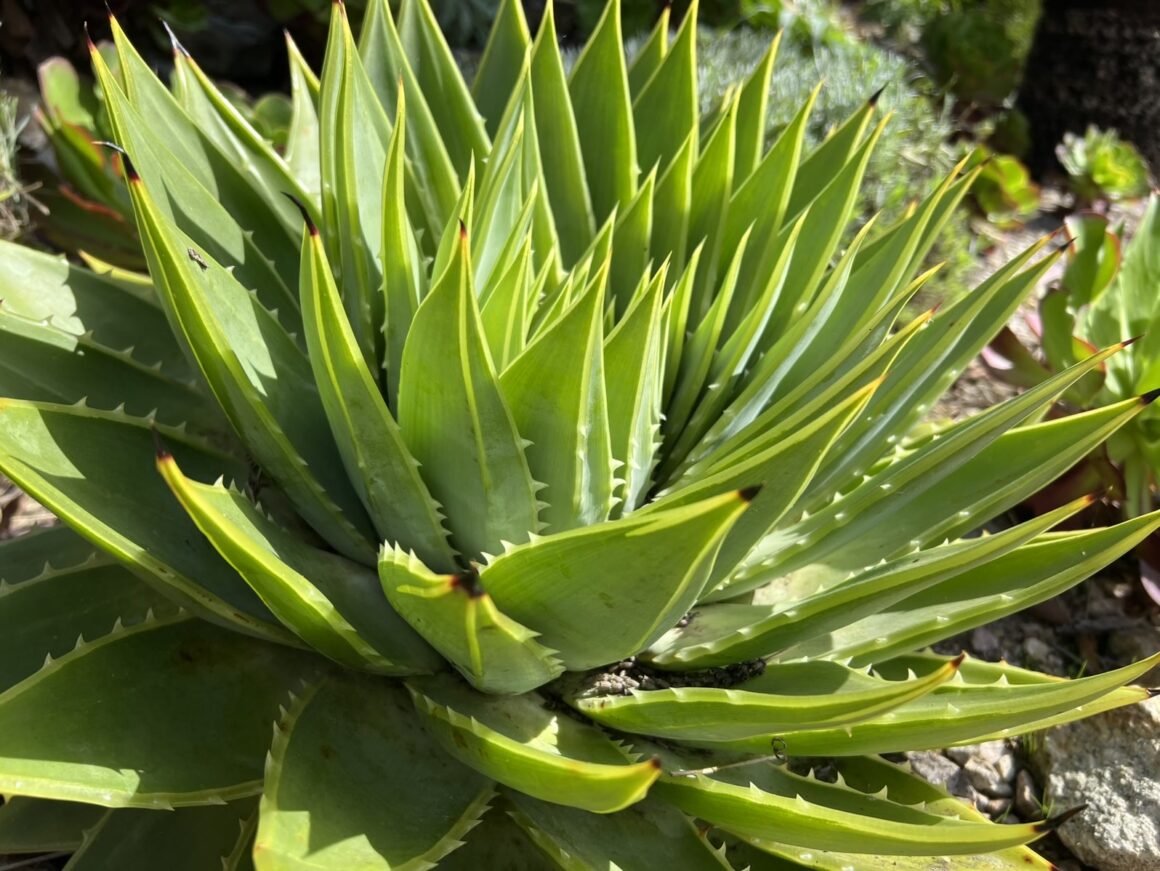
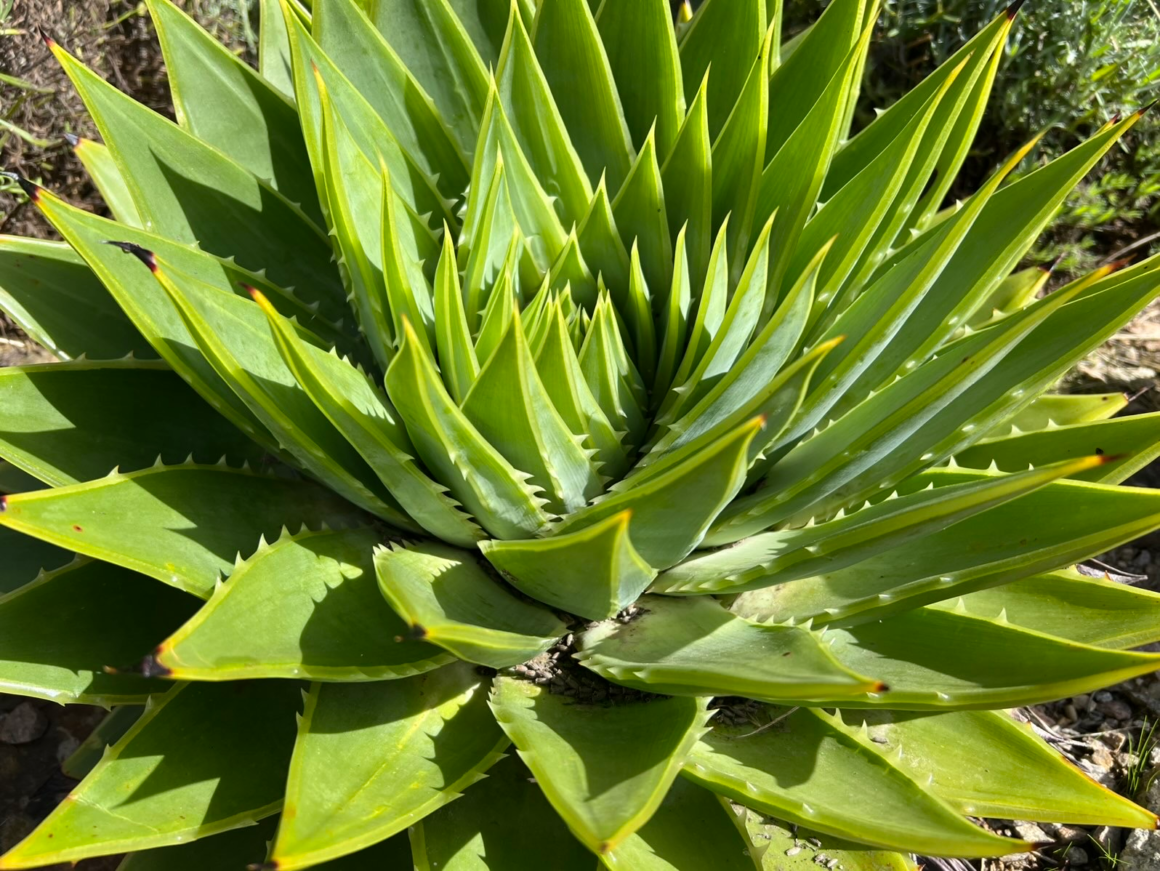
- Architectural foliage
Foliage interest: 12 months of the year
Seasonal Timeline
- Flowering Apr May Jun
- Foliage 12 months of the year
- Propagate Feb Mar Apr
Maintenance Calendar
- Mar Check the crown and root zone drain freely before spring growth
- May Provide regular water in active growth without saturating the crown
- Aug Keep roots cool during hot dry spells
- Nov Protect potted or young plants from persistent winter wet
Garden Design
Works well in: Coastal, Container, Contemporary, Gravel, Mediterranean, Specimen, Tropical, Tropical / Exotic
Use on a raised slope or in a trough where the spiral is visible from above and the crown sheds winter rain.
Companion planting: Restios, Small grasses, Hardy succulents, Alpine bulbs
Wildlife Value
- Bees
- Other pollinators
Safety
- Toxic to humans
- Toxic to dogs
- Toxic to cats
- Skin irritant
Sap and leaves may be harmful if eaten and leaf teeth are sharp. Buy only legally propagated plants or seed; never collect from the wild.