

Bulb · Perennial
Amaryllis belladonna
Belladonna lily
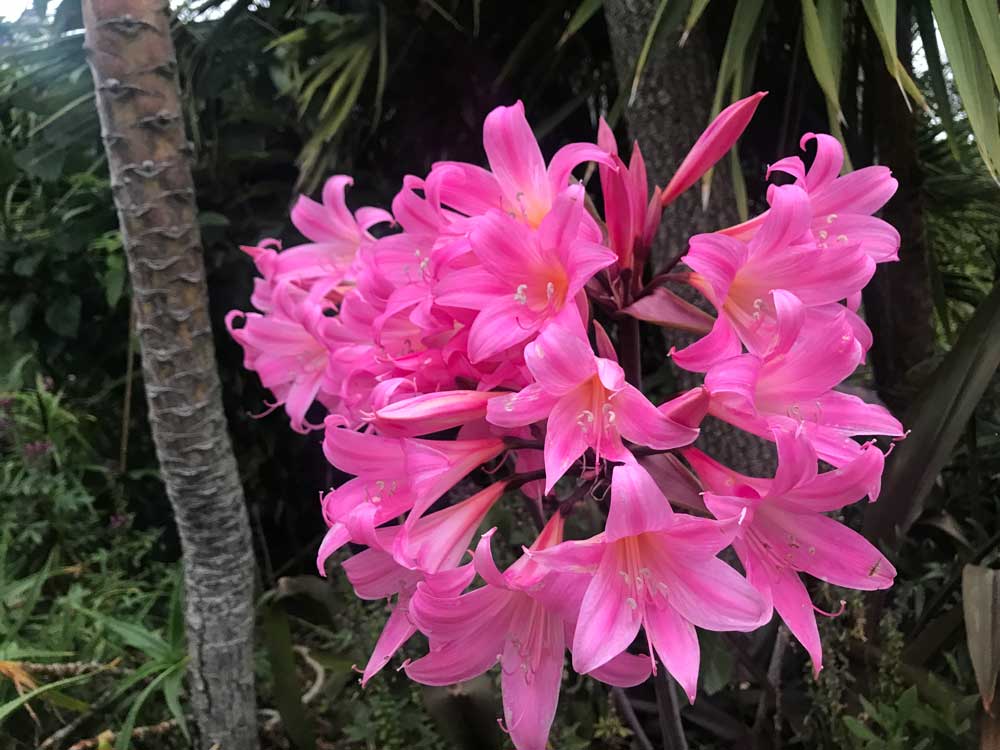
A late-summer bulb with fragrant pink trumpets carried on bare stems.
- Full sun
- 40–60 cm (16–24 in)
- 20–40 cm (8–16 in)
- H4 · Zone 8
- August–September
- Deciduous
- RHS Award of Garden Merit
Overview
This South African bulb flowers after its leaves have died back, then produces fresh strap-shaped foliage in autumn. Leaves grow through the cooler months and the bulb rests in summer. A warm, sunny site and minimal disturbance encourage flowering; newly planted bulbs may take several years to settle.
At a Glance
Growing Conditions
Aspect Suitability
- South-facing
- West-facing
Site Tolerance
- Drought
Soil Tolerance
- Chalk
- Sandy
- Loam
- Acid
- Neutral pH
- Alkaline
Foliage
Foliage interest: January, February, March, April, May, November, December
Seasonal Timeline
- Flowering Aug Sep
- Foliage Jan Feb Mar Apr May Nov Dec
- Fruiting Sep Oct
- Propagate Jul Aug Sep Oct
Maintenance Calendar
- Mar Feed lightly while the winter foliage is still growing
- May Let yellowing leaves die back naturally
- Jul Separate crowded bulbs only if essential during dormancy
- Aug Water sparingly during the summer resting period
- Oct Protect exposed bulbs and potted plants from hard frost
Garden Design
Works well in: Cottage, Mediterranean, Modern / Contemporary
Plant with bulb necks near the surface beside a sunny wall. Keep companions low so summer sun reaches the bulbs.
Companion planting: Low Mediterranean shrubs, Summer annuals, Grasses
Wildlife Value
- Bees
- Food source
- Food
Safety
- Toxic to humans
- Toxic to dogs
- Toxic to cats
- Toxic to horses
- Skin irritant
All parts are harmful if eaten, especially the bulbs. Sap may irritate skin; do not confuse bulbs with onions.