

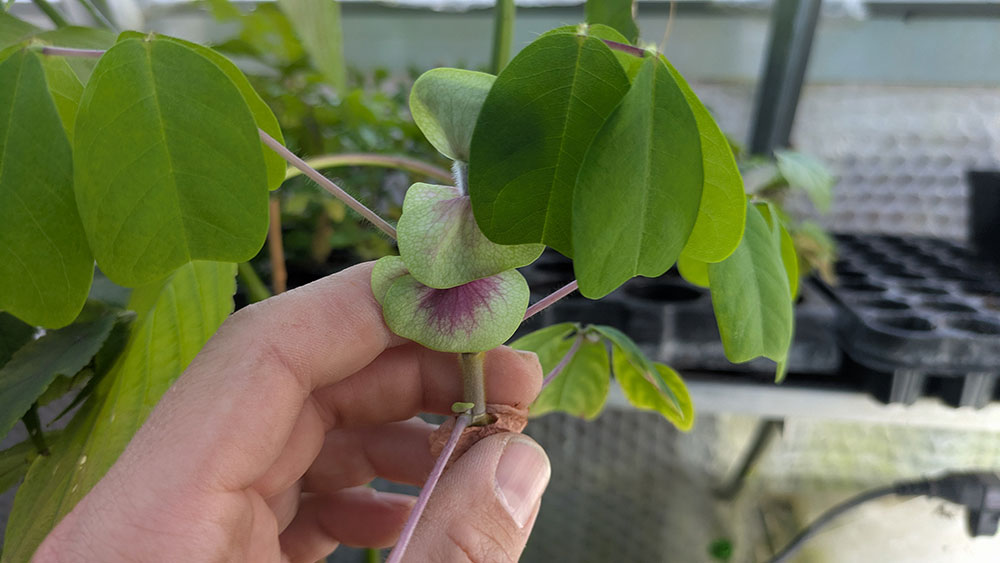
Perennial · Subshrub
Amicia zygomeris
Yoke-leaved amicia
A tall perennial with unusual paired leaflets, purple stipules and late yellow pea flowers.
- Full sun
- 1.5–2.5 m (5–8 ft)
- 1–1.5 m (3–5 ft)
- H4 · Zone 8
- September–October
- Deciduous
Overview
This Mexican perennial forms upright stems with four rounded, notched leaflets and conspicuous purple-red stipules. Yellow pea flowers appear late in the season. Stems may die back in frost, but an established, mulched crown can regrow where soil is well drained.
At a Glance
Sun
Full sun
Height
1.5–2.5 m (5–8 ft)
Spread
1–1.5 m (3–5 ft)
Hardiness
H4 · Zone 8
Flowers
September–October
Soil
Chalk, Loam, Sand
Moisture
Moist well drained
Habit
Clump forming, Upright
Water
Moderate
Maintenance
Moderate
Growing Conditions
Min. Temperature
-10°C (14°F)
pH Range
6–8
Fertility
Fertile
Drainage
Free Draining
Aspect Suitability
- South-facing
- West-facing
Soil Tolerance
- Chalk
- Sandy
- Loam
- Acid
- Neutral pH
- Alkaline
Foliage
Persistence
Deciduous
Colour
Green
Leaf shape / texture
pinnate_four_leaflets
- Architectural foliage
Foliage interest: May–November
Seasonal Timeline
Jan
Feb
Mar
Apr
May
Jun
Jul
Aug
Sep
Oct
Nov
Dec
Flowering
Foliage
Fruiting
Propagate
- Flowering Sep Oct
- Foliage May Jun Jul Aug Sep Oct Nov
- Fruiting Oct Nov
- Propagate Mar Apr May Jun
Maintenance Calendar
- Apr Remove dead stems after frost and when regrowth is visible
- May Apply a balanced feed and water during establishment
- Jun Support tall stems before they lean
- Jul Water deeply during dry spells
- Nov Mulch the crown deeply with dry organic material
Garden Design
Works well in: Cottage, Modern / Contemporary, Tropical / Exotic
Use at the back of a sheltered border. The late flowers need a warm autumn; foliage is the more dependable feature.
Companion planting: Cannas, Gingers, Ornamental grasses
Wildlife Value
- Bees
- Shelter
- Food source
- Food
Safety
Species-specific toxicity is poorly documented; do not eat leaves or seeds.