

Perennial
Anemone × hybrida
Japanese anemone
Also known as: Anemone hybrids, Anemone japonica (of gardens), Eriocapitella × hybrida
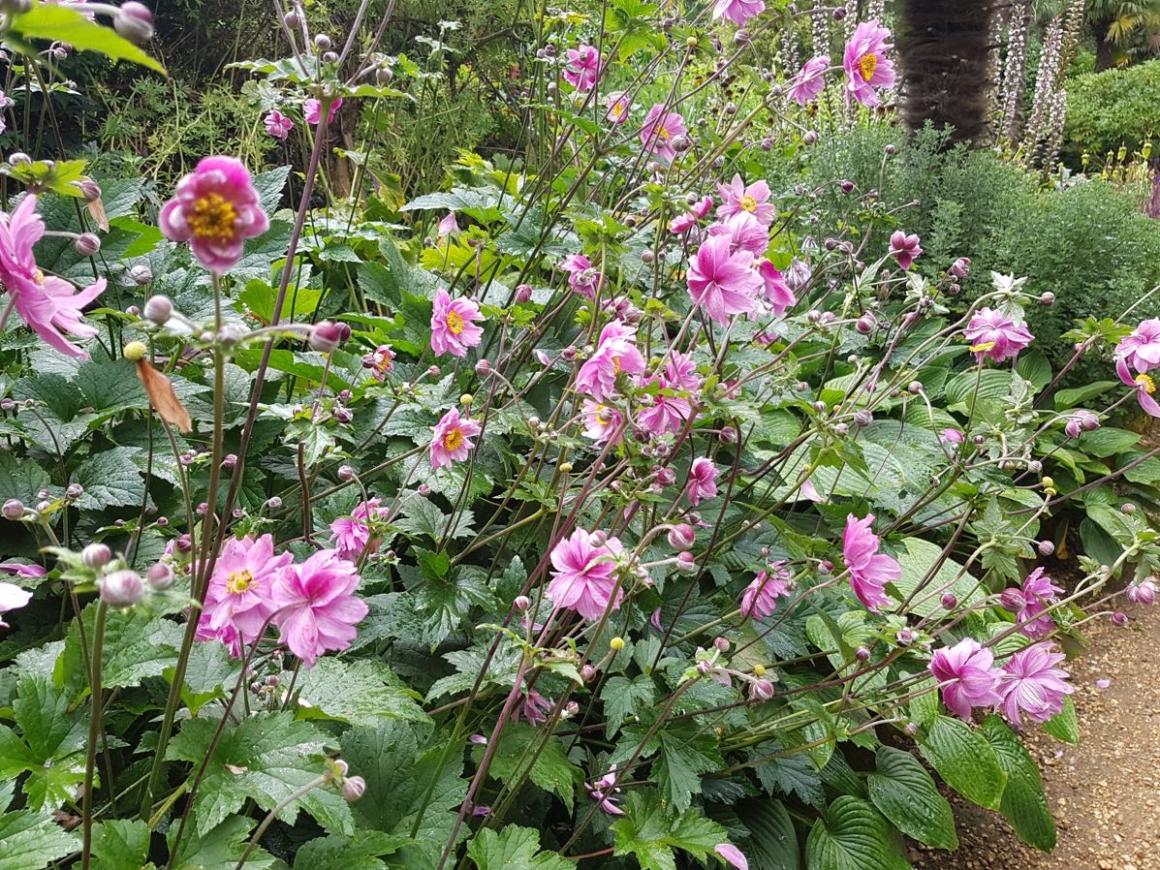
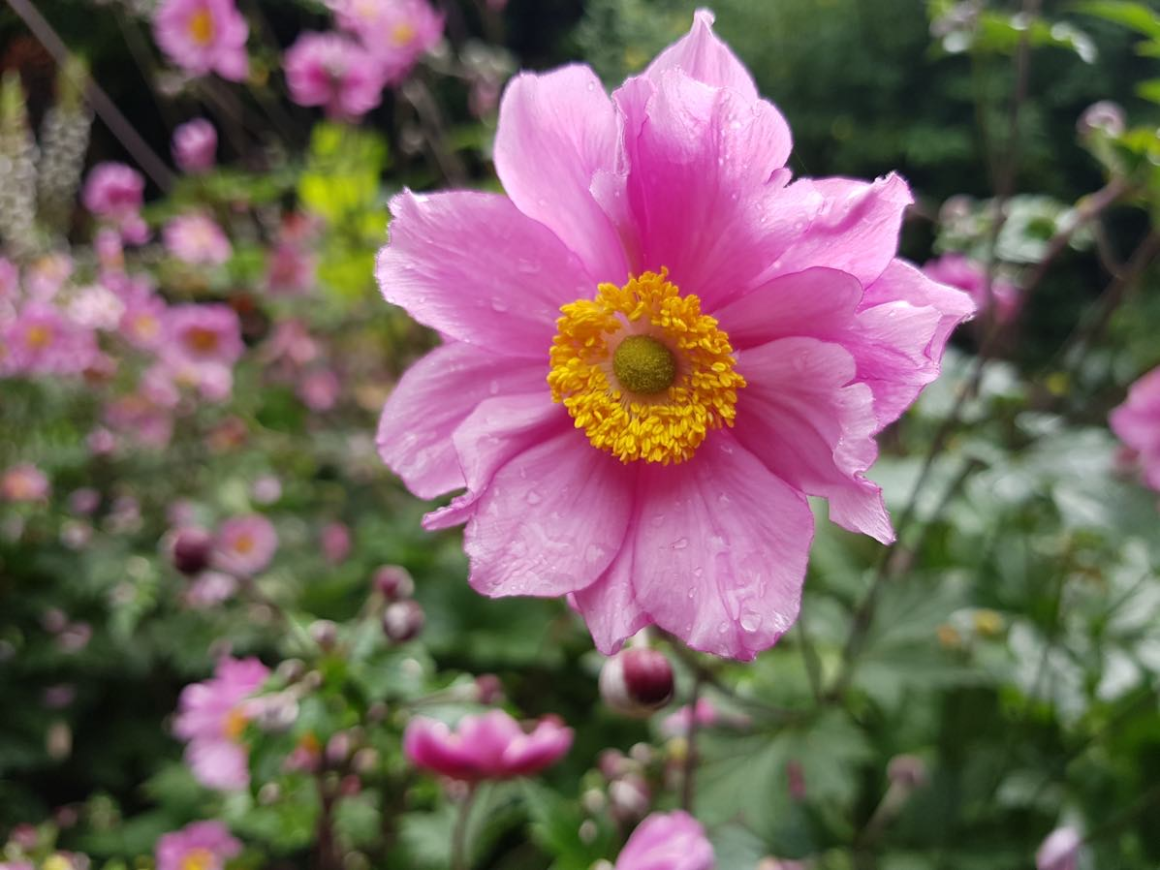
The classic Japanese anemones: tall, elegant late-summer perennials with saucer flowers in white or pink above vine-like leaves.
- Full sun, Partial shade
- 0.8–1.5 m (3–5 ft)
- 0.6–1.5 m (2–5 ft)
- H7 · Zone 5
- August–October
- Deciduous
Overview
Japanese anemones are a group of hybrids raised in the 19th century from Chinese and Himalayan species, chiefly Anemone hupehensis var. japonica and A. vitifolia. They form clumps of dark green, vine-like leaves, from which tall, branching, wiry stems rise in late summer to carry a long succession of open, saucer-shaped flowers in white or shades of pink, single or semi-double, around a ring of golden stamens. Fluffy, woolly seedheads follow. Flower colour, height and doubleness depend on the variety, so check the details for the one you choose. They are extremely hardy (below -20°C / -4°F), grow in sun or part shade in most soils, and are a magnet for bees late in the season. They spread by underground roots once settled and are hard to remove, so give them room.
At a Glance
Growing Conditions
Aspect Suitability
- North-facing
- East-facing
- South-facing
- West-facing
Soil Tolerance
- Clay
- Chalk
- Sandy
- Loam
- Acid
- Neutral pH
- Alkaline
Foliage
- Autumn colour
Foliage interest: April–October
Seasonal Timeline
- Flowering Aug Sep Oct
- Foliage Apr May Jun Jul Aug Sep Oct
- Fruiting Oct Nov
- Propagate Jan Feb Mar Apr Dec
How to propagate
Ways to grow more Japanese anemone: the usual steps for each method.
Division Mar–Apr Easy
You'll need: A garden fork or spade (two forks back to back help with big clumps) and a sharp knife.
- Water the plant well the day before.
- Dig up the whole clump with a fork, keeping as much root as you can.
- Split it into pieces about the size of your fist, each with healthy roots and shoots: pull them apart by hand, or cut tough clumps with a knife or spade.
- Throw away any old, woody middle.
- Replant the pieces straight away at the same depth, and water them in well.
- How long
- Settles in within a few weeks.
- It's worked when
- Fresh new growth within a few weeks.
- Then
- Water in dry spells for the rest of the season.
Root cuttings Dec–Feb Takes a little care
You'll need: A fork or spade, a sharp knife, deep pots, gritty compost and some grit.
- While the plant is dormant, lift it or dig down one side to reach some roots.
- Cut off a few pencil-thick roots and slice them into 5 cm pieces: a straight cut at the top end, a sloping cut at the bottom, so you know which way up they go.
- Push them upright into pots of gritty compost with the tops level with the surface (lay thin roots flat), and cover with a little grit.
- Keep them in a cold frame or cool greenhouse, only just moist.
- How long
- Shoots appear in spring.
- It's worked when
- New shoots, then roots at the pot's holes.
- Then
- Pot them up separately once they're growing well, and plant out in autumn.
Divide clumps in spring, or take root cuttings in winter while dormant. Established plants move badly, so take small pieces from the edge rather than lifting the whole clump.
Maintenance Calendar
- Mar Cut down last year's dead stems before new growth emerges
- Apr Mulch young plants to help them establish, as they can be slow in their first year
- Jul Water in long dry spells, as dry soil can lead to powdery mildew
- Nov Leave the fluffy seedheads for winter interest, or cut back once they look untidy
Garden Design
Works well in: Cottage, Japanese / Zen, Modern / Contemporary, Wildlife-friendly, Woodland / Shade
A mainstay of the late-summer border and woodland edge; plant where its spreading roots can fill space, among shrubs or with grasses and asters.
Companion planting: Asters, Grasses, Sedums, Hydrangeas
Wildlife Value
- Bees
- Other pollinators
- Beneficial insects
- RHS Plants for Pollinators
Spreads or self-seeds freely: keep it in check.
Safety
- Toxic to humans
- Toxic to dogs
- Toxic to cats
- Toxic to horses
- Skin irritant
Like other members of the buttercup family, all parts are harmful if eaten and the sap can irritate skin; wear gloves when dividing.