

Shrub
Argyranthemum pinnatifidum
Marguerite daisy
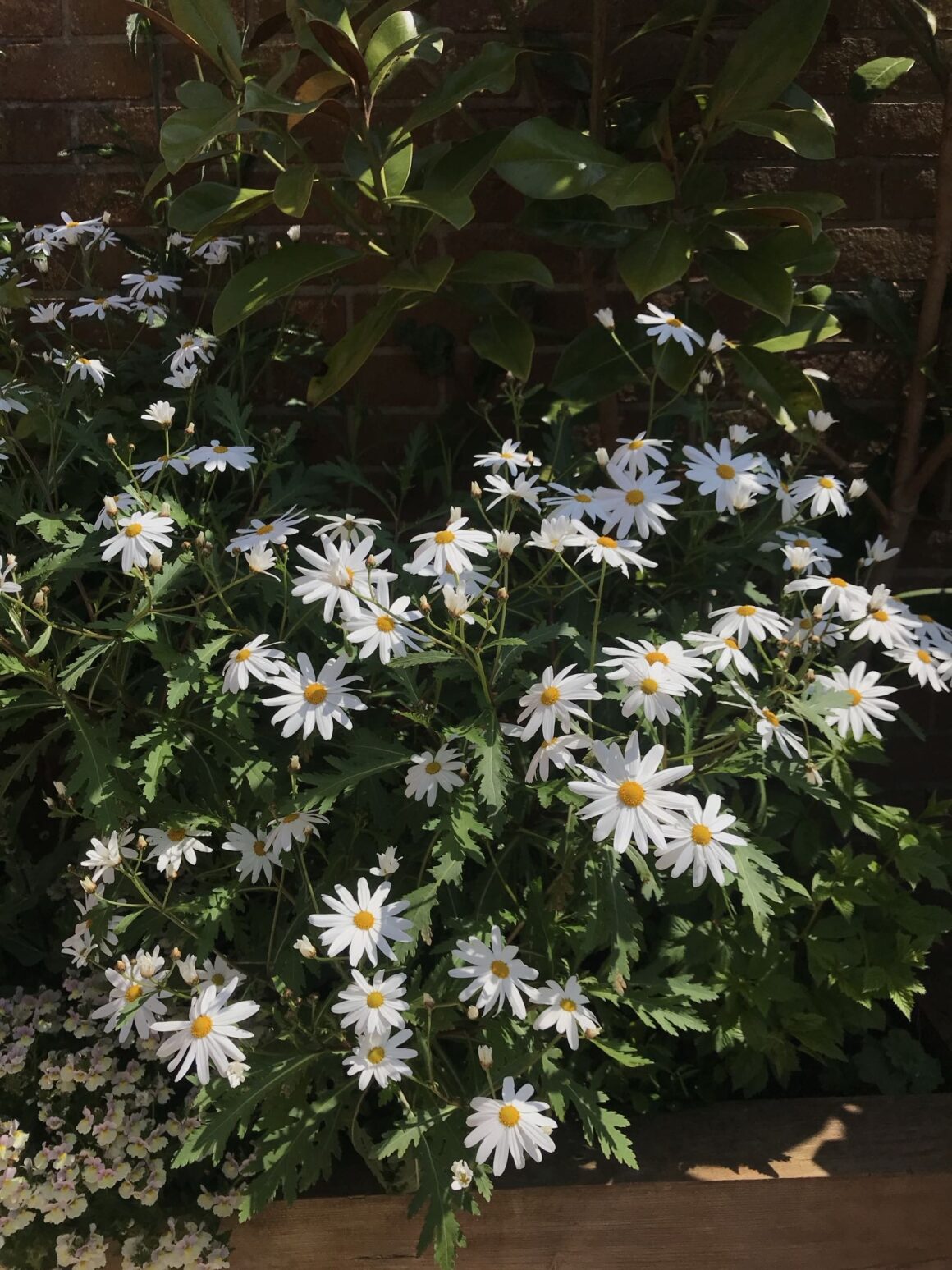
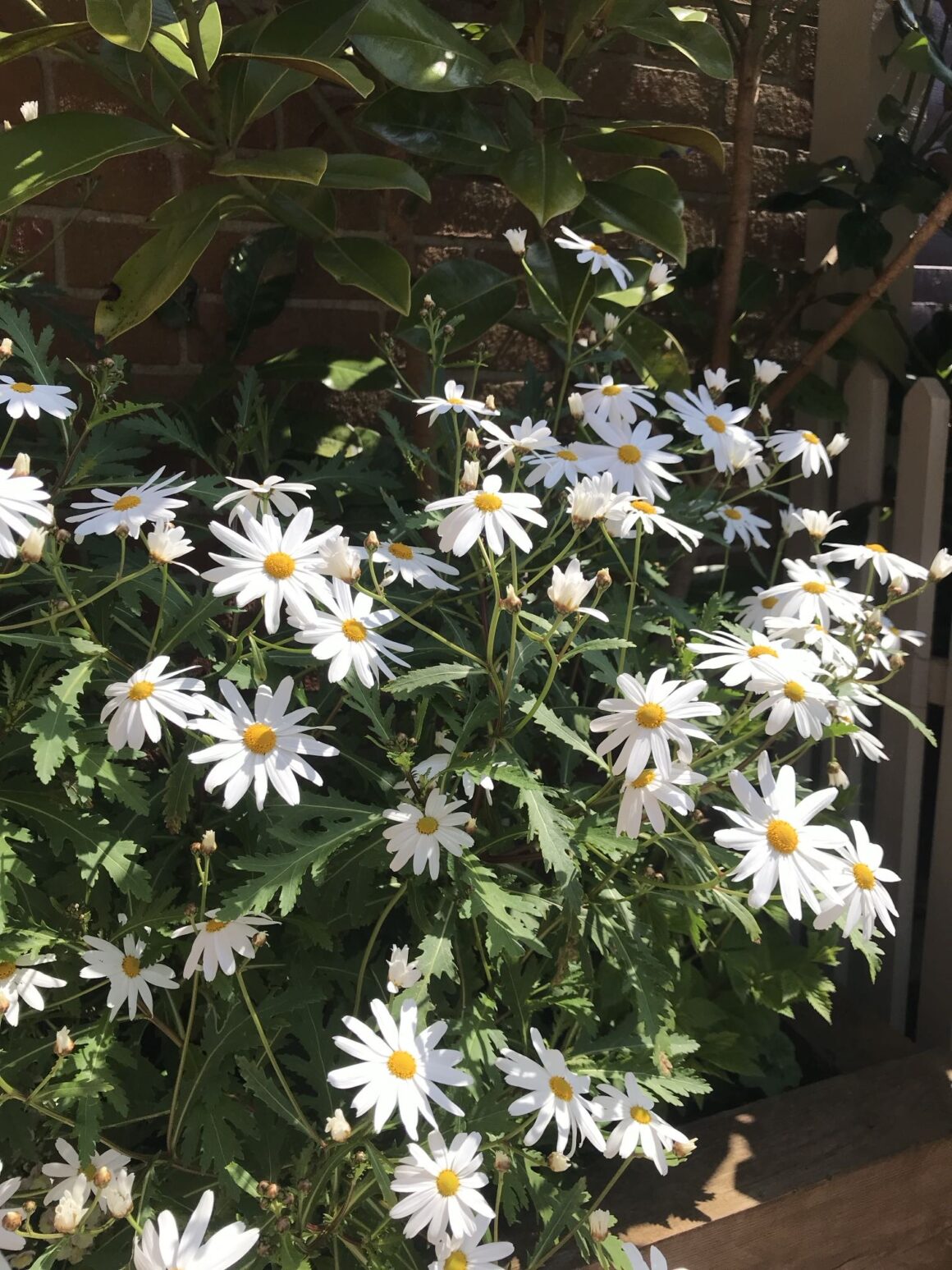
A finely cut, silvery-leaved marguerite with a long summer display of white daisy flowers.
- Full sun, Partial shade
- 45–75 cm (18–30 in)
- 45–75 cm (18–30 in)
- H2 · Zone 9
- May–October
- Evergreen
Overview
This tender sub-shrub forms a neat, rounded mound of finely divided, blue-grey foliage smothered from early summer to autumn in single white, yellow-centred daisies. Like other marguerites it is not reliably hardy through a UK winter and is usually grown as a patio or bedding plant, overwintered as young cuttings under frost-free glass.
At a Glance
Growing Conditions
Aspect Suitability
- South-facing
- West-facing
Site Tolerance
- Coastal
- Drought
Soil Tolerance
- Clay
- Sandy
- Loam
- Neutral pH
- Alkaline
Foliage
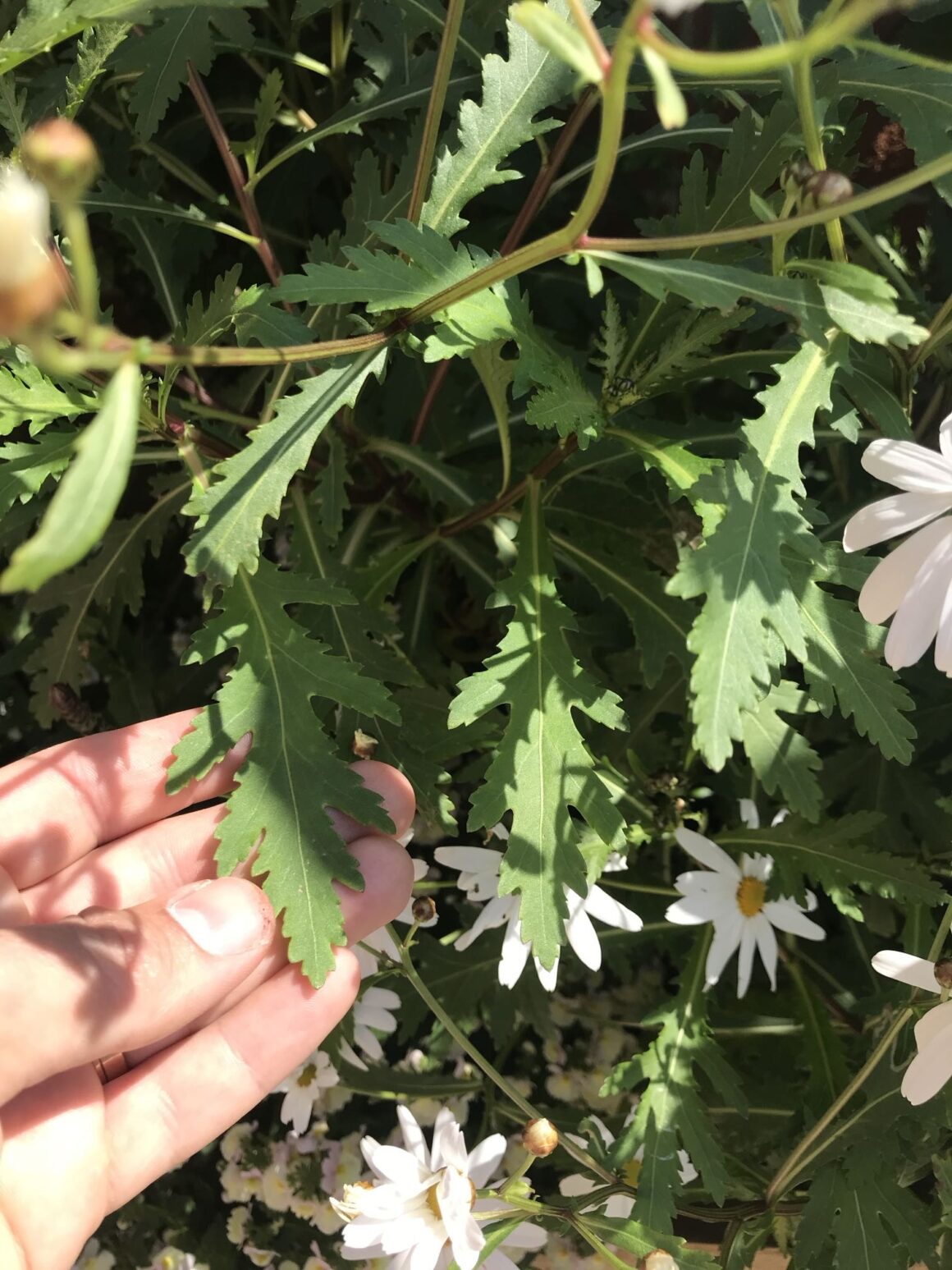
Foliage interest: April–October
Seasonal Timeline
- Flowering May Jun Jul Aug Sep Oct
- Foliage Apr May Jun Jul Aug Sep Oct
- Propagate Mar Aug Sep
Maintenance Calendar
- Mar Take spring cuttings from overwintered stock plants
- May Plant out or move containers outside after frost
- Jun Feed regularly to sustain flowering
- Aug Deadhead through summer to prolong the display
- Oct Take cuttings and move stock plants under frost-free glass
Garden Design
Works well in: Coastal, Container, Cottage, Mediterranean, Tropical / Exotic, Woodland
A reliable long-flowering patio and container plant for a sunny, sheltered spot; take cuttings each autumn as insurance against winter loss.
Companion planting: Pelargoniums, Cosmos, Mediterranean bedding
Wildlife Value
- Bees
- Butterflies
- Shelter
- Food source
Safety
No well-established toxicity; ornamental plant only.