

Perennial
Astrantia major
Great masterwort
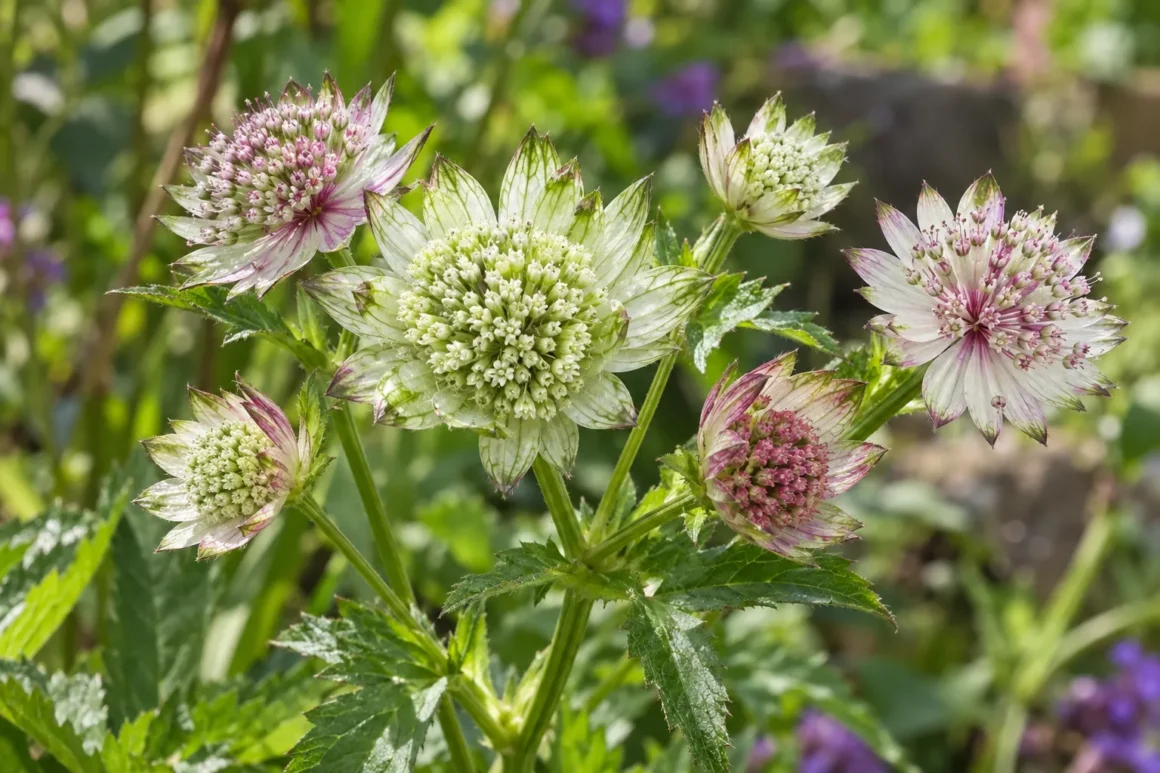
A clump-forming perennial with papery, pincushion flowers in white, green and pink all summer, superb for cutting.
- Full sun, Partial shade
- 50–90 cm (20–35 in)
- 30–45 cm (12–18 in)
- H7 · Zone 5
- June–August
- Deciduous
Overview
Great masterwort is a clump-forming perennial with deeply lobed leaves and branched stems of small domed flower heads, each a ‘pincushion’ of tiny florets inside a ruff of papery bracts, in white tinged green and pink. Garden forms range to deep red. It flowers from early summer for months and dries well.
It grows best in moist, fertile, humus-rich soil in sun or partial shade, and tolerates heavy clay. Cut back after the first flush for fresh leaves and more flowers. It self-seeds gently; named colours are best divided.
Very hardy, to below −20°C (−4°F), USDA zones 4–8. It prefers cool, moist summers; in hot or dry climates give it shade and steady moisture.
At a Glance
Growing Conditions
Aspect Suitability
- North-facing
- East-facing
- South-facing
- West-facing
Site Tolerance
- Exposed sites
Soil Tolerance
- Clay
- Loam
- Acid
- Neutral pH
- Alkaline
Foliage
Foliage interest: April–October
Seasonal Timeline
- Flowering Jun Jul Aug
- Foliage Apr May Jun Jul Aug Sep Oct
- Propagate Mar Apr Sep
How to propagate
Ways to grow more Great masterwort:
Division Mar–Apr Easy
You'll need: Spade, garden fork
- Lift the clump as growth starts.
- Split into pieces with buds and roots.
- Replant and water in.
- How long
- 15 minutes
- It's worked when
- high
- Then
- Keep moist through the first summer.
From seed Sep–Oct Takes a little care
- Sow about 2 mm deep
- Needs a cold spell first: 12 weeks in the fridge in damp compost or sand (or sow outside in autumn and let winter do it)
- Comes up in 30–180 days
- Prick out about 6 weeks after sowing
- Pot on about 12 weeks after sowing
- Needs winter cold; sow fresh.
You'll need: Seed tray, gritty compost, cold frame
- Sow fresh seed and cover lightly.
- Leave in a cold frame over winter.
- Prick out in spring.
- How long
- 10 minutes
- It's worked when
- medium
- Then
- Grow on and plant out the next autumn.
Divide in spring. Sow fresh seed in a cold frame; it needs cold to germinate.
Maintenance Calendar
- Mar Divide large clumps as growth starts
- Apr Protect new shoots from slugs
- Apr Mulch to keep the soil moist
- Jul Cut back after the first flush for new leaves and flowers
- Oct Cut down old stems and leaves
Garden Design
Works well in: Cottage, Wildlife-friendly, Woodland / Shade
Weaves between roses and taller perennials; good in partly shaded borders.
Companion planting: Geraniums, Roses, Hostas, Ferns
Wildlife Value
- Bees
- Other pollinators
- Beneficial insects
- RHS Plants for Pollinators
Safety
Not known to be toxic.