

Tender perennial
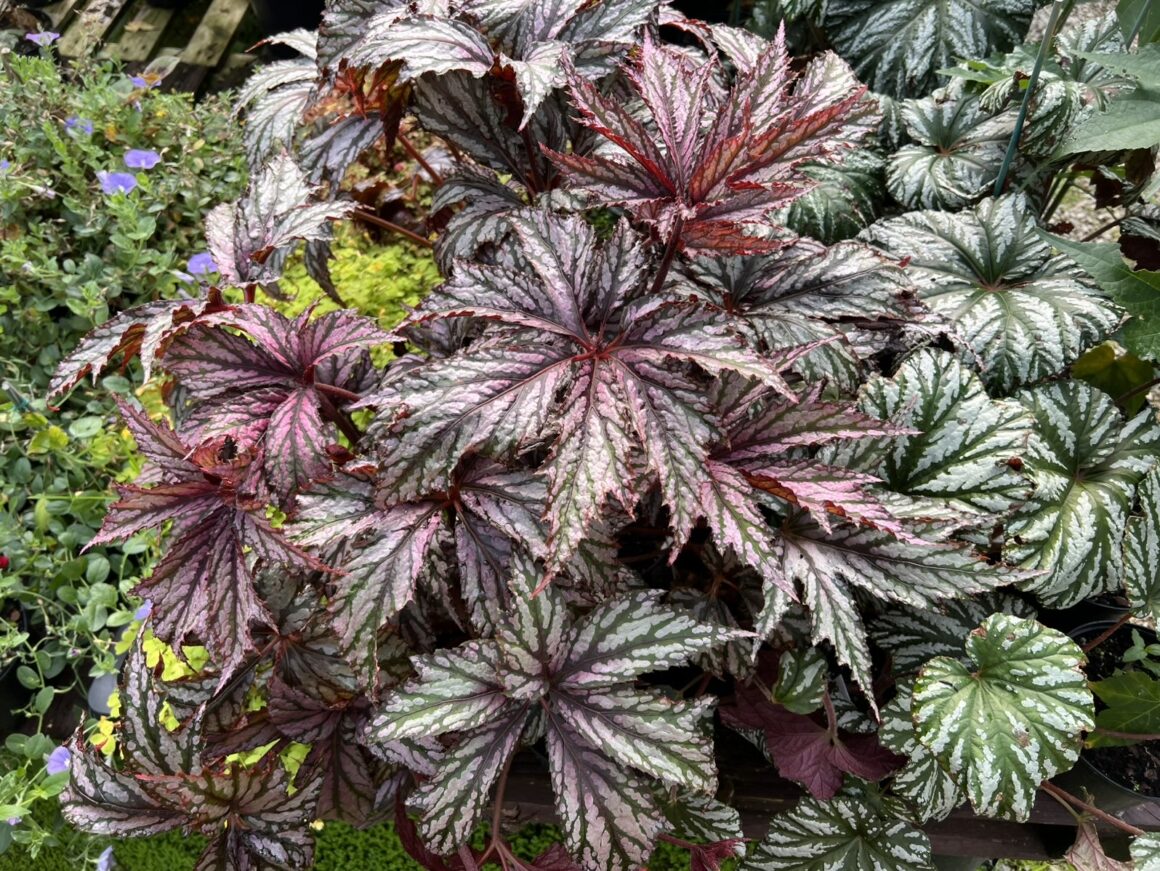
Begonia ‘Benitochiba’
Benitochiba rex begonia
Also known as: Begonia Rex Cultorum Group ‘Benitochiba’, Begonia benitochiba
A striking rex begonia with deeply divided silver leaves, dark green veins and vivid pink young growth.
- Partial shade
- 20–45 cm (8–18 in)
- 25–50 cm (10–20 in)
- H1b · Zone 10
- August–October
- Evergreen
Overview
This compact rhizomatous begonia is primarily a foliage plant, producing palmate silver leaves edged and veined in dark green, with new leaves flushed pink. It needs bright filtered light, warmth and careful watering. In temperate climates such as the UK it will lose is foliage in cooler weather.
At a Glance
Growing Conditions
Aspect Suitability
- East-facing
- West-facing
Soil Tolerance
- Chalk
- Sandy
- Loam
- Acid
- Neutral pH
- Alkaline
Foliage
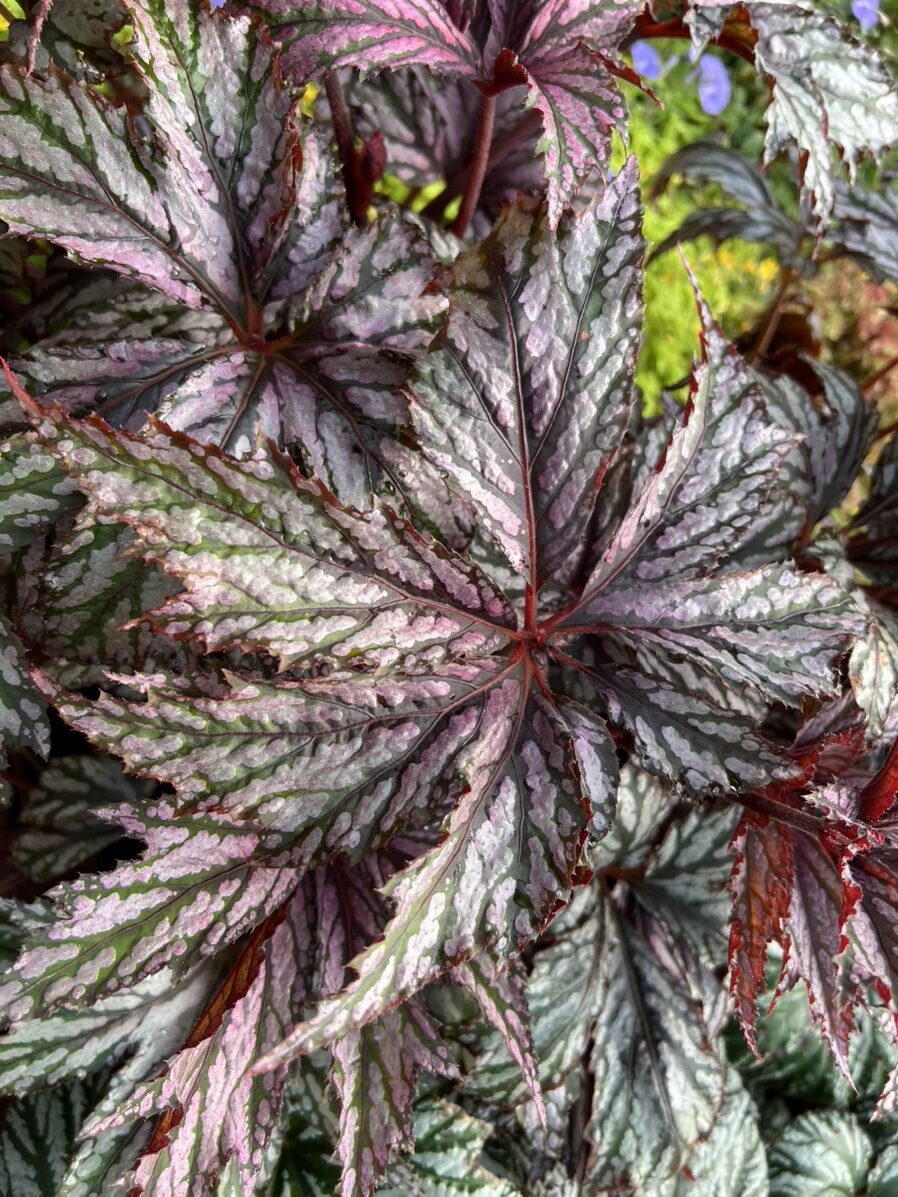
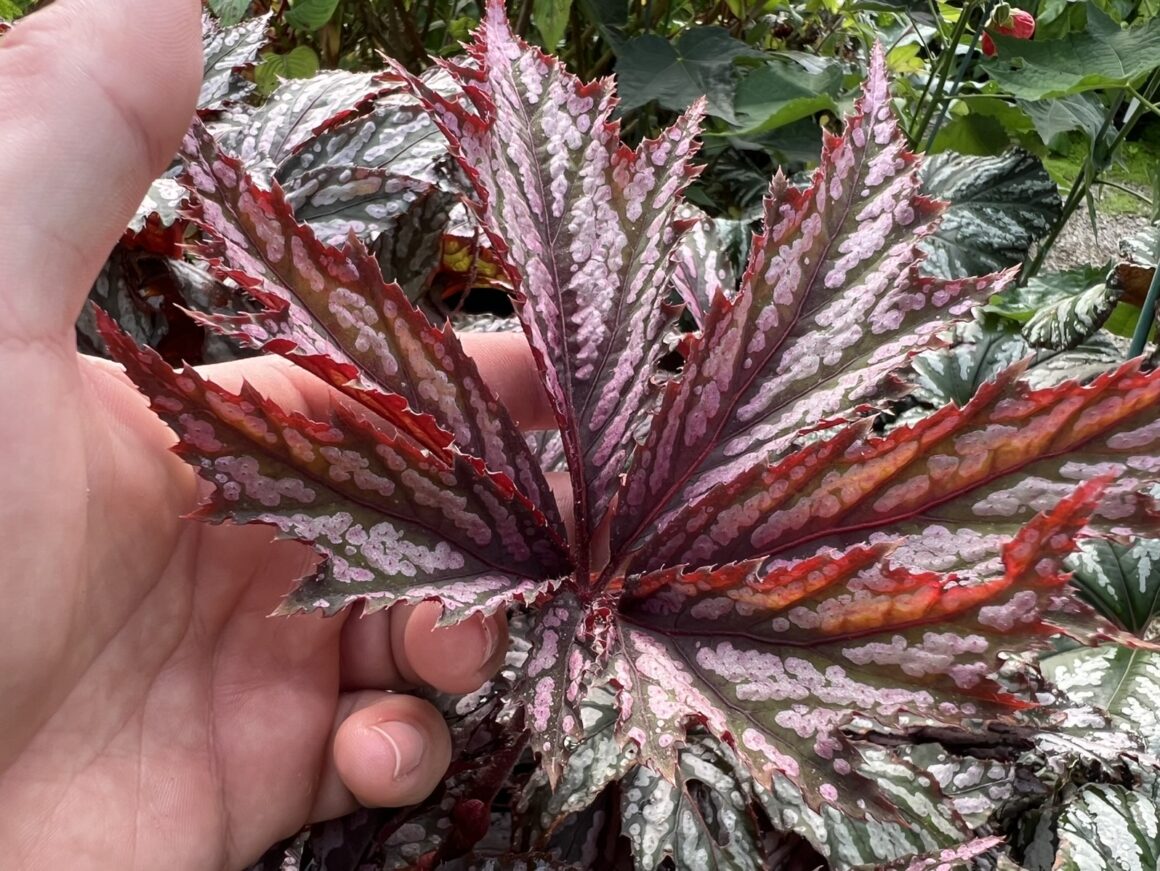
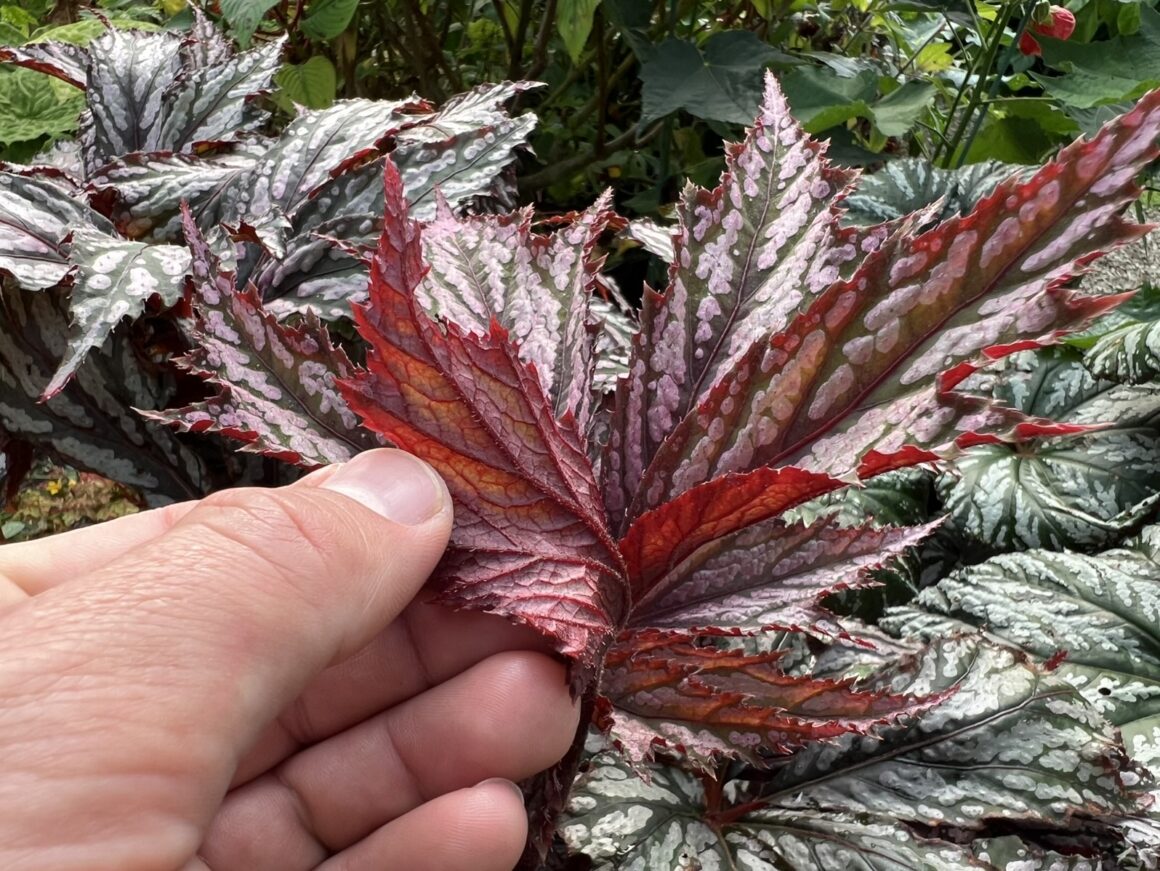
- Variegated
- Architectural foliage
Foliage interest: 12 months of the year
Seasonal Timeline
- Flowering Aug Sep Oct
- Foliage 12 months of the year
- Propagate Apr May Jun Jul Aug
Maintenance Calendar
- Mar Repot shallowly in an open free-draining mix
- May Take leaf or rhizome cuttings in warmth
- Jul Maintain humidity with good airflow and keep leaves dry
- Oct Reduce watering and keep above 10°C in bright filtered light
Garden Design
Works well in: Container, Contemporary, Specimen, Tropical, Tropical / Exotic, Underplanting
Display close to eye level where the silver patterning is visible; avoid direct midday sun.
Companion planting: Ferns, Fittonias, Peperomias, Other shade foliage plants
Wildlife Value
- Other pollinators
Safety
- Toxic to humans
- Toxic to dogs
- Toxic to cats
- Toxic to horses
- Skin irritant
Contains irritant calcium oxalates, especially in the rhizomes. Harmful if eaten; keep away from pets and wear gloves when handling sap.