

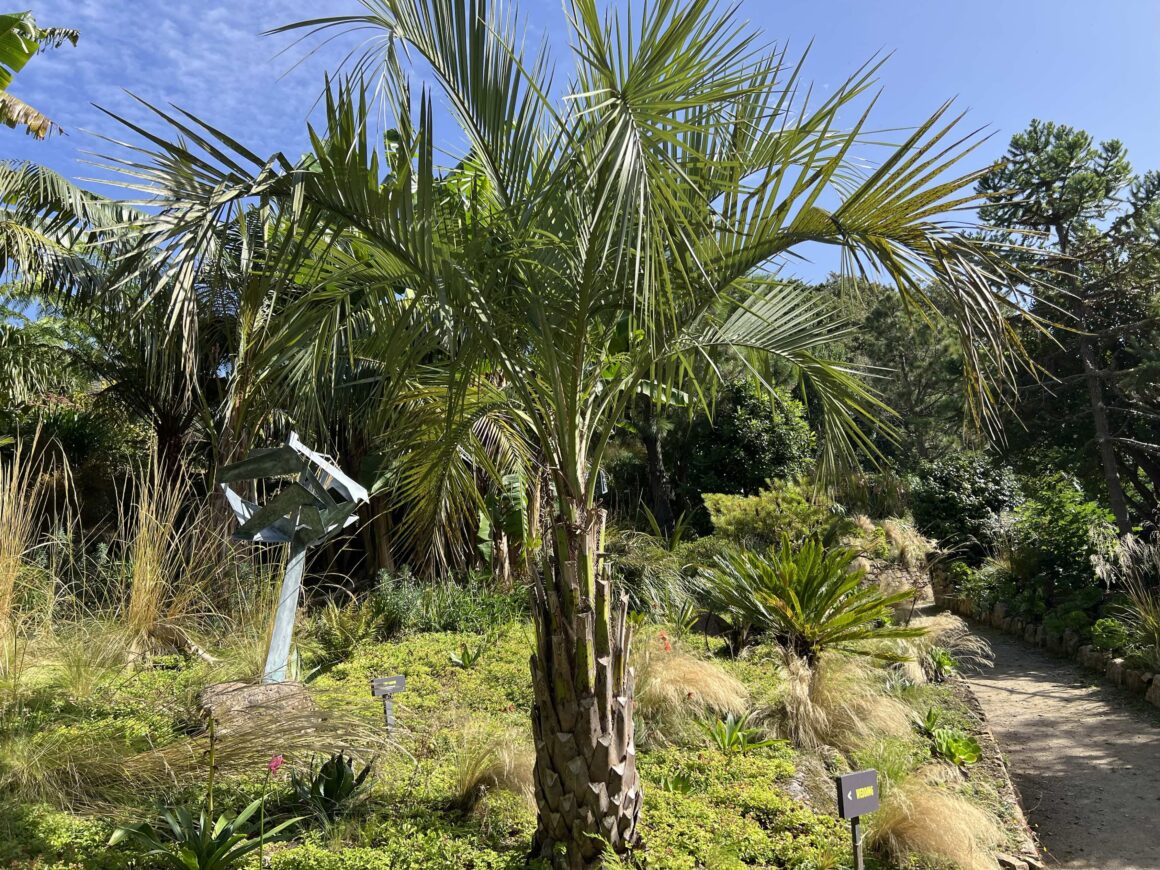
Palm
Butia odorata
Jelly palm
Also known as: Butia capitata, Pindo palm
A graceful feather palm with arching silver-grey fronds and, in favourable summers, fragrant edible fruit.
- Full sun
- 4–8 m (13–26 ft)
- 2–4 m (7–13 ft)
- H3 · Zone 8
- June–August
- Evergreen
Overview
A slow-growing evergreen palm forming a sturdy trunk beneath a rounded crown of recurving blue-green leaves. Cream flowers may be followed by aromatic orange-yellow fruit in warm, sheltered gardens.
At a Glance
Growing Conditions
Aspect Suitability
- East-facing
- South-facing
- West-facing
Site Tolerance
- Coastal
- Drought
Soil Tolerance
- Clay
- Sandy
- Loam
- Acid
- Neutral pH
- Alkaline
Foliage
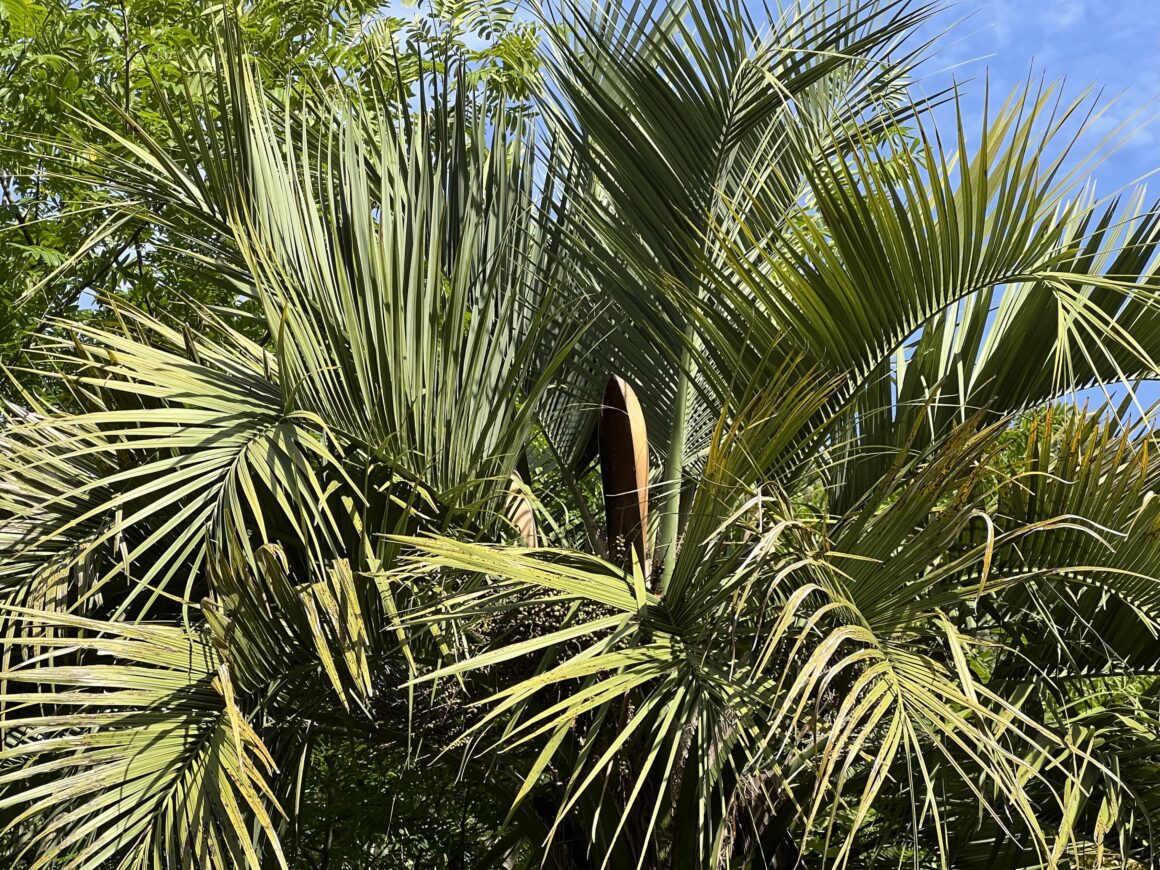
- Architectural foliage
Foliage interest: 12 months of the year
Seasonal Timeline
- Flowering Jun Jul Aug
- Foliage 12 months of the year
- Fruiting Sep Oct
- Propagate Feb Mar Apr
Maintenance Calendar
- Mar Apply a palm feed and mulch around the root zone
- May Water young plants deeply in dry spells
- Sep Clear fallen fruit from paths and paving
- Nov Protect young palms during prolonged cold or wet
Garden Design
Works well in: Desert / Dry, Mediterranean, Modern / Contemporary, Tropical / Exotic
Plant where the silver arching fronds can be viewed against a dark background and the crown has winter sun.
Companion planting: Agaves, Kniphofias, Yucca, Drought-tolerant grasses
Wildlife Value
- Bees
- Birds
Safety
Leaf bases and petioles can be sharp; wear gloves when pruning. Remove fallen fruit from paving.