

Shrub
Calluna vulgaris
Heather
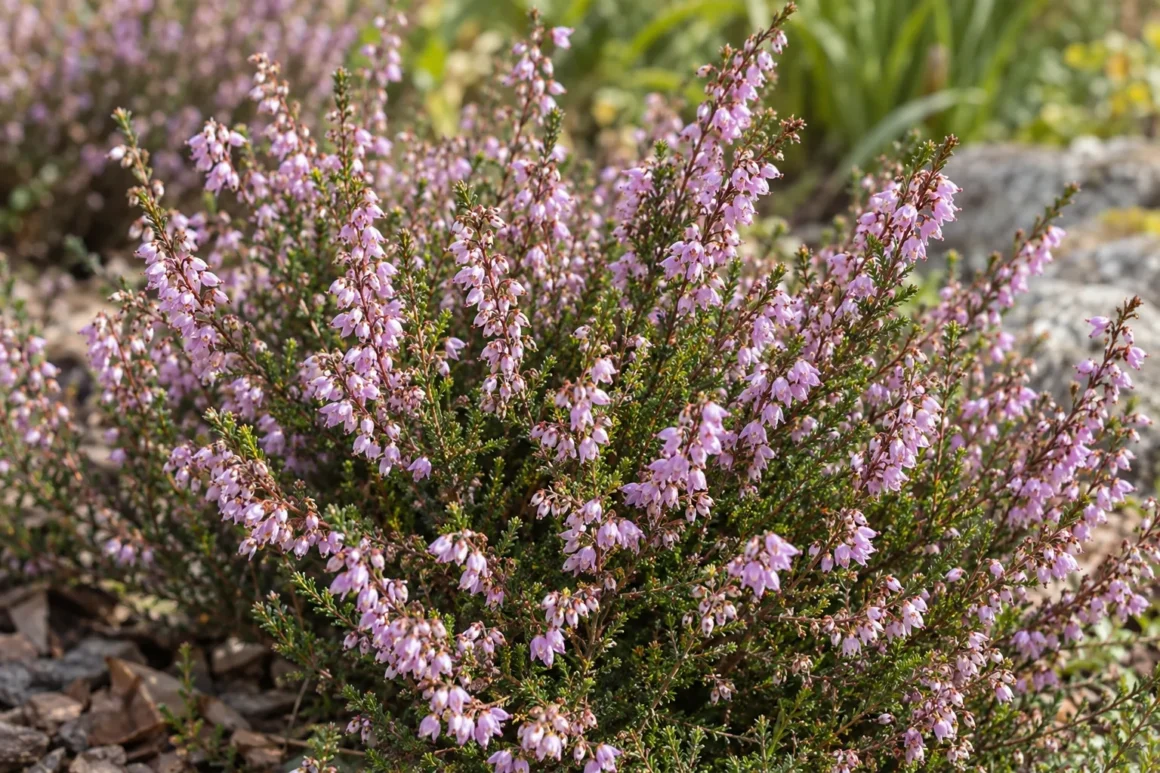
Low evergreen shrub for acid soil, smothered in spikes of pink, purple or white bells in late summer; superb for bees.
- Full sun
- 20–60 cm (8–24 in)
- 30–60 cm (12–24 in)
- H7 · Zone 5
- July–October
- Evergreen
Overview
Heather, also called ling or Scotch heather, is a low evergreen shrub of the heaths and moors of Europe and Asia Minor. Tiny scale-like leaves cover wiry stems, and spikes of small pink, mauve or white bells flower from midsummer into autumn.
It is hardy to below −25°C (−13°F), USDA zones 4–6, but needs acid, free-draining soil that doesn't dry out, and full sun. It dislikes hot, humid summers and rots where nights stay warm, so it suits cool, maritime climates best.
It has naturalised in parts of the north-eastern United States and is a declared weed in parts of New Zealand.
At a Glance
Growing Conditions
Aspect Suitability
- East-facing
- South-facing
- West-facing
Site Tolerance
- Exposed sites
- Wind
- Coastal
Soil Tolerance
- Clay
- Sandy
- Loam
- Acid
Foliage
Foliage interest: 12 months of the year
Seasonal Timeline
- Flowering Jul Aug Sep Oct
- Foliage 12 months of the year
- Propagate Jul Aug Sep
How to propagate
Ways to grow more Heather: the usual steps for each method.
Semi-ripe cuttings Jul–Sep Takes a little care
You'll need: Clean, sharp secateurs, small pots, gritty compost, and rooting powder if you have it.
- Choose this year's shoots that are firm at the base but still soft at the tip, and cut pieces 10 to 15 cm long.
- Trim just below a leaf joint and take off the lower leaves; pinch out the soft tip.
- Dip the cut end in rooting powder if you have some.
- Push them into pots of gritty compost, water them in and cover with a clear bag.
- Keep them in a cold frame, greenhouse or bright windowsill out of direct sun.
- How long
- Roots in about 6 to 10 weeks.
- It's worked when
- New leaves, and the cutting resists when you tug it gently.
- Then
- Keep them somewhere cool and frost-free over winter, and pot them up separately in spring.
Layering Jul–Aug Easy
You'll need: A bent wire or tent peg (or a stone), and a small cane.
- Choose a low, bendy stem that reaches the ground.
- Where it touches the soil, scrape away a little bark on the underside, or make a small slanting cut.
- Peg that part down into the soil and cover it, leaving the tip sticking up; tie the tip to a cane.
- Keep it moist.
- How long
- Roots in 6 to 12 months.
- It's worked when
- New growth from the tip, and roots where it was pegged down.
- Then
- Once it has rooted, cut it free from the parent and plant it where you want it.
From seed Mar–May Easy
You'll need: Seed compost, a seed tray or small pots, labels, and a clear lid or plastic bag.
- Fill a tray or pots with seed compost, level it and firm it gently.
- Water the compost and let it drain.
- Sow the seeds thinly on top. Cover them with a fine layer of compost or vermiculite about as deep as the seed is big; leave tiny seeds uncovered.
- Label them, cover with a clear lid or bag, and keep them somewhere bright but out of hot sun.
- Keep the compost just moist, and take the cover off once seedlings appear.
- How long
- Usually comes up in 1 to 3 weeks.
- It's worked when
- Seedlings with their first pair of leaves.
- Then
- When each has its first true leaves, prick them out into their own small pots, holding them by a leaf, never the stem. Harden them off for a week or two before planting out.
Take short semi-ripe cuttings, or peg low stems into the soil to layer.
Garden Design
Works well in: Japanese / Zen, Prairie / Meadow, Wildlife-friendly
Drifts of heather give late-summer colour on acid, open sites and are superb for bees.
Companion planting: Ericas, Dwarf conifers, Grasses
Wildlife Value
- Bees
- Butterflies
- Moths
- Shelter
- RHS Plants for Pollinators
- Caterpillar food plant
Caterpillars it feeds: Emperor moth, Fox moth, Silver-studded blue