

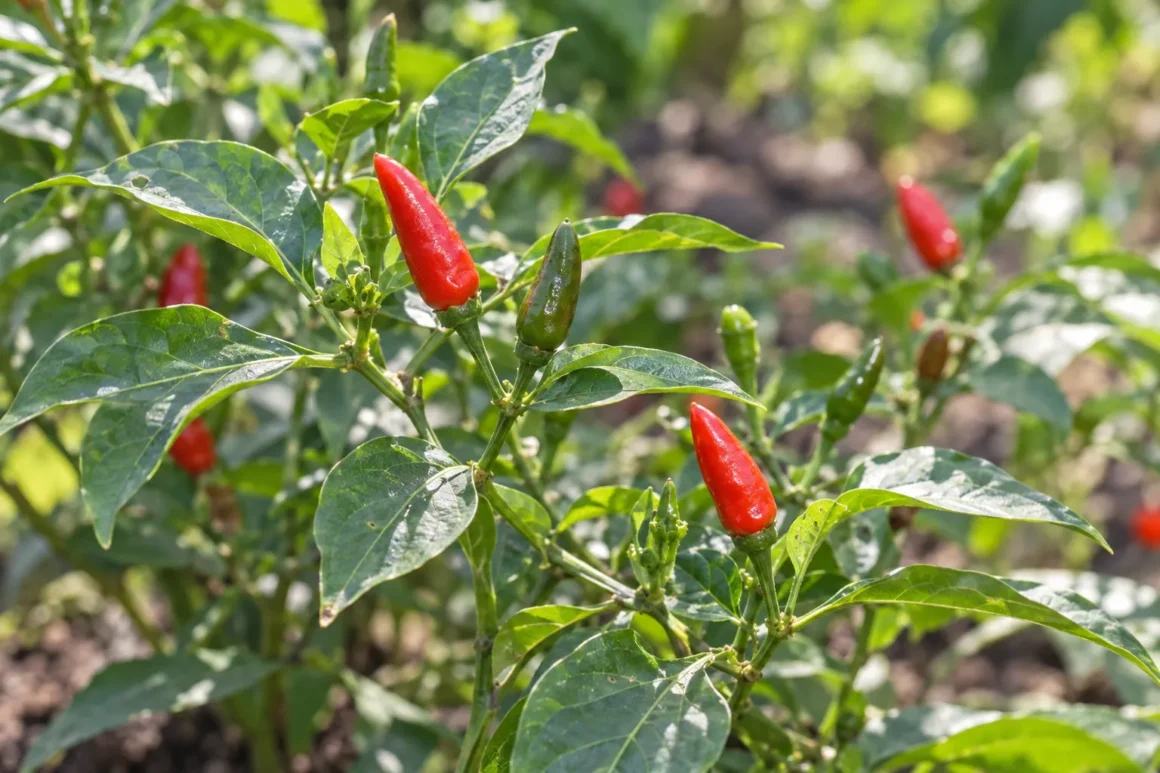
Annual · Tender perennial · Vegetable
Capsicum annuum
Sweet pepper, Bell pepper, Chilli pepper
Also known as: Capsicum frutescens (of gardens)
The species behind most sweet and bell peppers and many chillies, a bushy, heat-loving plant with glossy fruit ripening green to red, yellow or orange.
- Full sun
- 45–90 cm (18–35 in)
- 30–60 cm (12–24 in)
- H1b · Zone 10
- June–September
- Evergreen
Overview
Capsicum annuum was domesticated in Mexico and includes nearly all sweet and bell peppers as well as many popular chillies such as jalapeño and cayenne types. It forms a bushy, upright plant with glossy leaves and small white flowers, followed by fruit that is edible green but sweetest and richest when fully ripe in red, yellow, orange or purple. Peppers need a long, warm season: seed needs about 25°C (77°F) to germinate well, growth stalls below about 15°C (59°F) and frost kills the plant. In cool-summer climates they crop best under cover or in a pot against a warm wall; in hot climates they grow outdoors easily but may drop flowers in extreme heat. Though grown as an annual, it is a short-lived perennial and can be overwintered indoors in a bright, warm spot. Shape, colour and heat depend on the variety.
At a Glance
Growing Conditions
Aspect Suitability
- South-facing
- West-facing
Soil Tolerance
- Clay
- Sandy
- Loam
- Neutral pH
- Alkaline
Foliage
Foliage interest: May–October
Seasonal Timeline
- Flowering Jun Jul Aug Sep
- Foliage May Jun Jul Aug Sep Oct
- Fruiting Jul Aug Sep Oct
- Propagate Jan Feb Mar
- Sow indoors Feb Mar
- Plant out Apr May
- Harvest Jul Aug Sep Oct
How to propagate
One way to grow more Sweet pepper, Bell pepper, Chilli pepper: the usual steps for each method.
From seed Jan–Mar Easy
You'll need: Seed compost, a seed tray or small pots, labels, and a clear lid or plastic bag.
- Fill a tray or pots with seed compost, level it and firm it gently.
- Water the compost and let it drain.
- Sow the seeds thinly on top. Cover them with a fine layer of compost or vermiculite about as deep as the seed is big; leave tiny seeds uncovered.
- Label them, cover with a clear lid or bag, and keep them somewhere bright but out of hot sun.
- Keep the compost just moist, and take the cover off once seedlings appear.
- How long
- Usually comes up in 1 to 3 weeks.
- It's worked when
- Seedlings with their first pair of leaves.
- Then
- When each has its first true leaves, prick them out into their own small pots, holding them by a leaf, never the stem. Harden them off for a week or two before planting out.
Sow indoors eight to ten weeks before your last frost on a heated mat at about 25°C (77°F), as cool compost gives slow, patchy germination. Seed saved from open-pollinated types comes true if plants were kept apart from other peppers.
Maintenance Calendar
- Feb Sow seed indoors on a heated mat at about 25°C (77°F) eight to ten weeks before your last frost
- May Harden off and plant out two to three weeks after your last frost once nights stay above 12°C (54°F), as cold checks growth badly
- Jun Support stems with a short cane once fruit starts to form, as branches split under the weight
- Jul Feed weekly with a high-potash fertiliser once the first fruits set
- Jul Water evenly and mulch, as dry-wet swings cause blossom end rot
- Aug Pick some fruit green to keep plants cropping, leaving others to colour for the sweetest flavour
- Oct Before the first frost, harvest all fruit or move a potted plant indoors to a bright spot to overwinter
Garden Design
Works well in: Edible / Kitchen Garden, Modern / Contemporary
Compact and decorative enough for pots on a sunny patio or the front of an ornamental border, where the ripening fruit adds colour. Group several pots together for easier watering and better pollination.
Companion planting: Basil, Tomatoes, Onions, Marigolds
Wildlife Value
- Bees
- Food source
- Food
Safety
- Skin irritant
Fruit is edible. Hot (chilli) types contain capsaicin, which burns skin and eyes, so wear gloves when handling and cutting them and keep fruit away from children and pets. Leaves are not eaten.