

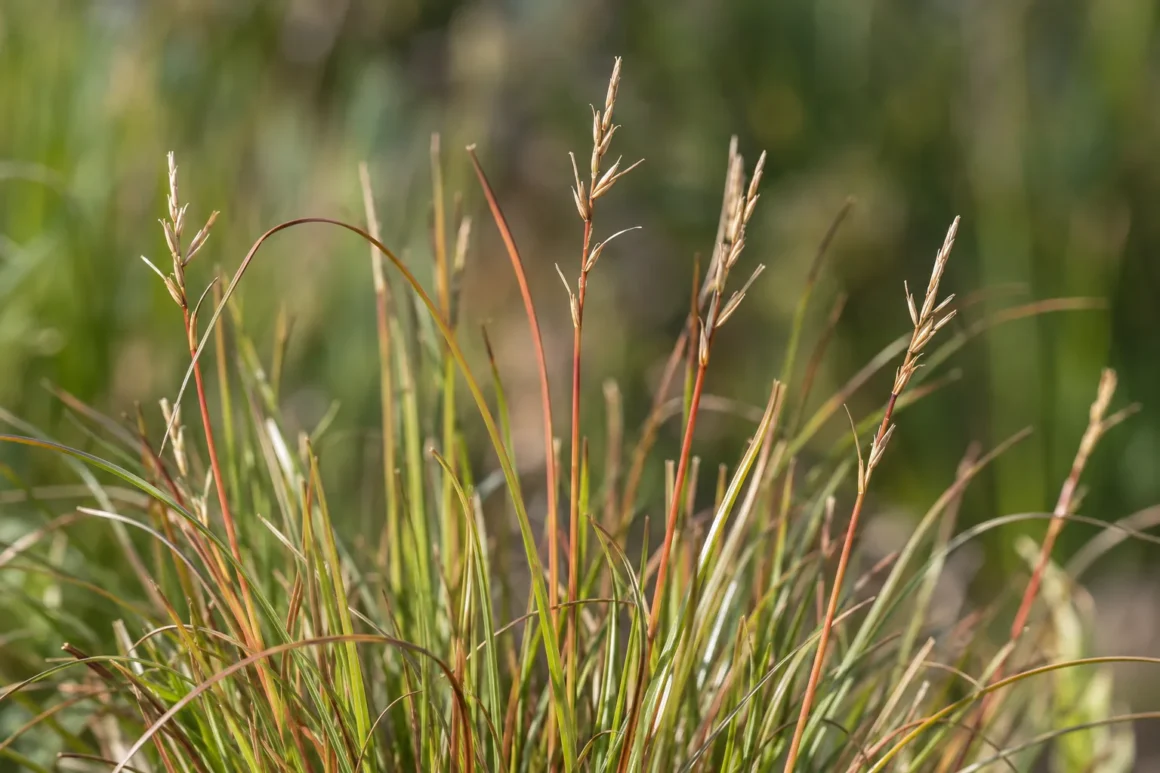
Grass · Perennial
Carex punicea
Red hook sedge
Also known as: Uncinia rubra
Small tufts of glossy, deep red evergreen leaves for a sheltered, moist corner; brightest in winter.
- Full sun, Partial shade
- 25–30 cm (10–12 in)
- 25–35 cm (10–14 in)
- H4 · Zone 8
- Evergreen
Overview
Red hook sedge, long sold as Uncinia rubra, is a small evergreen sedge from the forests and tussock grasslands of New Zealand. It forms neat tufts of narrow, glossy leaves in deep red to mahogany, brightest in cool weather, with small dark flower spikes.
It is hardy to about −10°C (14°F), USDA zones 7–9, and likes moist, humus-rich soil, including clay that is not waterlogged, in sun or light shade. It suits cool maritime climates and dislikes heat, drought and drying winds, so give it a sheltered pocket. It grows 25–30 cm (10–12 in) tall.
At a Glance
Growing Conditions
Aspect Suitability
- North-facing
- East-facing
- West-facing
Soil Tolerance
- Clay
- Loam
- Acid
- Neutral pH
Foliage
Foliage interest: 12 months of the year
Seasonal Timeline
- Foliage 12 months of the year
- Propagate Apr May
How to propagate
Ways to grow more Red hook sedge: the usual steps for each method.
Division Apr Easy
You'll need: A garden fork or spade (two forks back to back help with big clumps) and a sharp knife.
- Water the plant well the day before.
- Dig up the whole clump with a fork, keeping as much root as you can.
- Split it into pieces about the size of your fist, each with healthy roots and shoots: pull them apart by hand, or cut tough clumps with a knife or spade.
- Throw away any old, woody middle.
- Replant the pieces straight away at the same depth, and water them in well.
- How long
- Settles in within a few weeks.
- It's worked when
- Fresh new growth within a few weeks.
- Then
- Water in dry spells for the rest of the season.
From seed Apr–May Easy
You'll need: Seed compost, a seed tray or small pots, labels, and a clear lid or plastic bag.
- Fill a tray or pots with seed compost, level it and firm it gently.
- Water the compost and let it drain.
- Sow the seeds thinly on top. Cover them with a fine layer of compost or vermiculite about as deep as the seed is big; leave tiny seeds uncovered.
- Label them, cover with a clear lid or bag, and keep them somewhere bright but out of hot sun.
- Keep the compost just moist, and take the cover off once seedlings appear.
- How long
- Usually comes up in 1 to 3 weeks.
- It's worked when
- Seedlings with their first pair of leaves.
- Then
- When each has its first true leaves, prick them out into their own small pots, holding them by a leaf, never the stem. Harden them off for a week or two before planting out.
Divide in spring.
Garden Design
Works well in: Modern / Contemporary, Woodland / Shade
Small jewels of red for pots or a sheltered front edge.
Companion planting: Ferns, Heucheras, Carex