

Tree
Carpinus betulus
Hornbeam
Also known as: Carpinus betulus var. betulus
Tough native tree with ribbed leaves, superb as a clipped hedge that keeps its brown leaves through winter.
- Full sun, Partial shade
- 12–25 m (39–82 ft)
- 8–15 m (26–49 ft)
- H7 · Zone 5
- April–May
- Deciduous
- RHS Award of Garden Merit
Overview
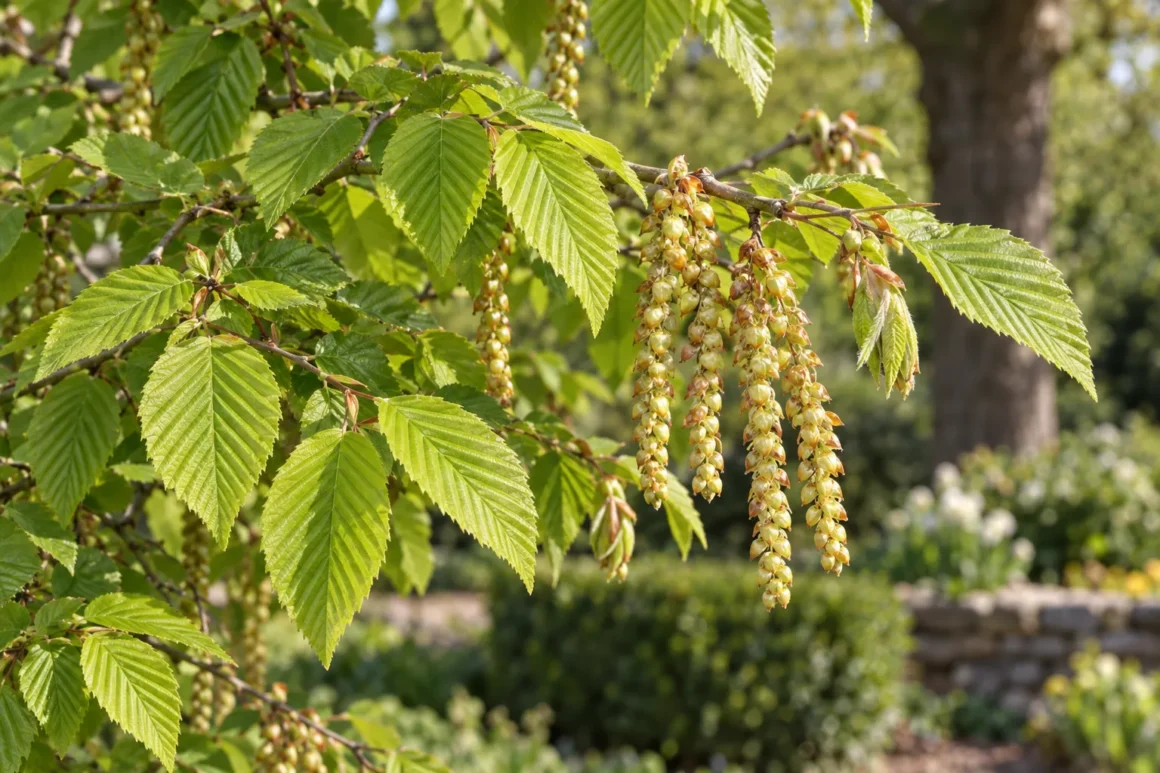
Hornbeam is a deciduous tree native to Europe and western Asia, with grey fluted bark and neat, ribbed, toothed leaves that turn yellow in autumn. Hop-like clusters of winged seeds hang in late summer.
It is hardy to below −25°C (−13°F), USDA zones 4–8, and grows in almost any soil, including heavy clay and chalk, in sun or part shade. Left alone it makes a tree of 12–25 m (40–80 ft); clipped, it makes a dense hedge that holds its dead leaves through winter, giving year-round screening.
It copes with exposure and urban conditions and supports many moths and birds.
At a Glance
Growing Conditions
Aspect Suitability
- North-facing
- East-facing
- South-facing
- West-facing
Site Tolerance
- Exposed sites
- Wind
- Coastal
- Drought
Soil Tolerance
- Clay
- Chalk
- Sandy
- Loam
- Acid
- Neutral pH
- Alkaline
Foliage
- Autumn colour
Foliage interest: April–November
Seasonal Timeline
- Flowering Apr May
- Foliage Apr May Jun Jul Aug Sep Oct Nov
- Fruiting Aug Sep Oct
- Propagate Oct Nov
How to propagate
One way to grow more Hornbeam:
From seed Oct–Nov Tricky
- Sow about 5 mm deep
- Needs a cold spell first: 20 weeks in the fridge in damp compost or sand (or sow outside in autumn and let winter do it)
- Germinates best at about 10°C
- Comes up in 180–365 days
- Prick out about 4 weeks after sowing
- Pot on about 12 weeks after sowing
- Hornbeam seed often shows double dormancy, so do not be discouraged if nothing appears until the second spring after sowing.
You'll need: Fresh hornbeam nutlets collected from the tree, pots or a prepared outdoor seed bed, sharp grit, and a lot of patience as germination can be slow.
- Collect the winged nutlets in September or October as soon as they turn brown and start to fall.
- Sow the seed straight away while still fresh, as dried seed germinates poorly.
- Sow in pots of free-draining compost topped with grit, or in a prepared outdoor seed bed, covering seed lightly.
- Stand pots outside in a sheltered spot or cold frame, protected with wire mesh against mice and squirrels.
- Leave undisturbed through winter, spring and summer; many seeds need a second winter's chill before they will germinate.
- When seedlings finally appear in spring, keep them moist and weed-free, then prick out once true leaves form.
- How long
- Germination is slow and erratic, often needing two winters outdoors before shoots appear.
- It's worked when
- Small green shoots with ribbed, toothed seedling leaves push up through the compost or soil in spring.
- Then
- Grow seedlings on in pots or a nursery bed for a year or two, feeding only lightly, before lining out or planting into their final position; protect young plants from rabbits and deer.
Sow seed outdoors in autumn; it can take two winters to germinate.
Garden Design
Works well in: Modern / Contemporary, Wildlife-friendly, Woodland / Shade
Clipped as a hedge it keeps its brown leaves through winter; also good for pleaching.
Companion planting: Bulbs, Ferns, Woodland perennials
Wildlife Value
- Moths
- Birds
- Shelter
- Food source
- Caterpillar food plant
- Nesting cover for birds
- Food
Caterpillars it feeds: Common Emerald, Scalloped Hazel, Nut-tree Tussock, Light Emerald, Winter Moth
Food for birds: October–December