

Tree
Cercis siliquastrum
Judas tree
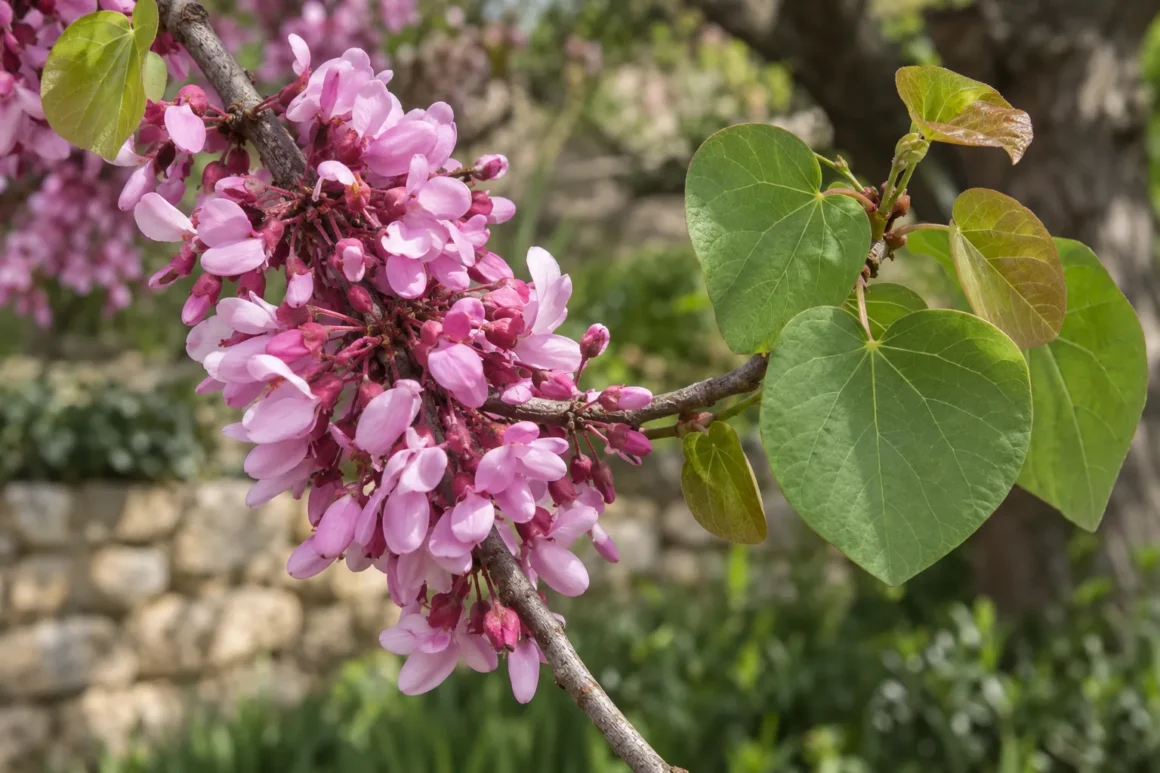
Small, spreading tree whose bare branches are smothered in magenta-pink pea flowers before the heart-shaped leaves appear.
- Full sun, Partial shade
- 5–1 m (16–33 ft)
- 5–1 m (16–33 ft)
- H5 · Zone 7
- March–May
- Deciduous
Overview
Judas tree is a small deciduous tree from southern Europe and western Asia. In spring, clusters of rosy-pink pea flowers burst straight from the bare branches and even the trunk, followed by rounded blue-green leaves and flat purplish seed pods.
It grows slowly to about 5–10 m (16–33 ft) and is hardy to about −15°C (5°F), USDA zones 6–9. It loves sun, warm summers and free-draining soil, including chalk, and copes with summer drought once established; it hates waterlogged soil. In hot, humid regions such as the south-eastern United States it is less reliable than the native redbud.
Plant it young, as it dislikes root disturbance.
At a Glance
Growing Conditions
Aspect Suitability
- North-facing
- East-facing
- South-facing
- West-facing
Site Tolerance
- Exposed sites
- Drought
Soil Tolerance
- Clay
- Chalk
- Sandy
- Loam
- Acid
- Neutral pH
- Alkaline
Foliage
- Autumn colour
Foliage interest: May–October
Seasonal Timeline
- Flowering Mar Apr May
- Foliage May Jun Jul Aug Sep Oct
- Fruiting Jul Aug Sep Oct
- Propagate Mar Jul
How to propagate
Ways to grow more Judas tree: the usual steps for each method.
From seed Mar Easy
You'll need: Seed compost, a seed tray or small pots, labels, and a clear lid or plastic bag.
- Fill a tray or pots with seed compost, level it and firm it gently.
- Water the compost and let it drain.
- Sow the seeds thinly on top. Cover them with a fine layer of compost or vermiculite about as deep as the seed is big; leave tiny seeds uncovered.
- Label them, cover with a clear lid or bag, and keep them somewhere bright but out of hot sun.
- Keep the compost just moist, and take the cover off once seedlings appear.
- How long
- Usually comes up in 1 to 3 weeks.
- It's worked when
- Seedlings with their first pair of leaves.
- Then
- When each has its first true leaves, prick them out into their own small pots, holding them by a leaf, never the stem. Harden them off for a week or two before planting out.
Semi-ripe cuttings Jul Takes a little care
You'll need: Clean, sharp secateurs, small pots, gritty compost, and rooting powder if you have it.
- Choose this year's shoots that are firm at the base but still soft at the tip, and cut pieces 10 to 15 cm long.
- Trim just below a leaf joint and take off the lower leaves; pinch out the soft tip.
- Dip the cut end in rooting powder if you have some.
- Push them into pots of gritty compost, water them in and cover with a clear bag.
- Keep them in a cold frame, greenhouse or bright windowsill out of direct sun.
- How long
- Roots in about 6 to 10 weeks.
- It's worked when
- New leaves, and the cutting resists when you tug it gently.
- Then
- Keep them somewhere cool and frost-free over winter, and pot them up separately in spring.
Soak or nick seed before sowing; plant young, as it resents being moved.
Garden Design
Works well in: Cottage, Mediterranean, Modern / Contemporary
Bare branches covered in magenta-pink flowers before the leaves; a striking small lawn tree.
Companion planting: Spring bulbs, Grasses, Mediterranean shrubs
Wildlife Value
- Bees
- Butterflies
- RHS Plants for Pollinators