

Marginal · Perennial
Colocasia esculenta
Taro
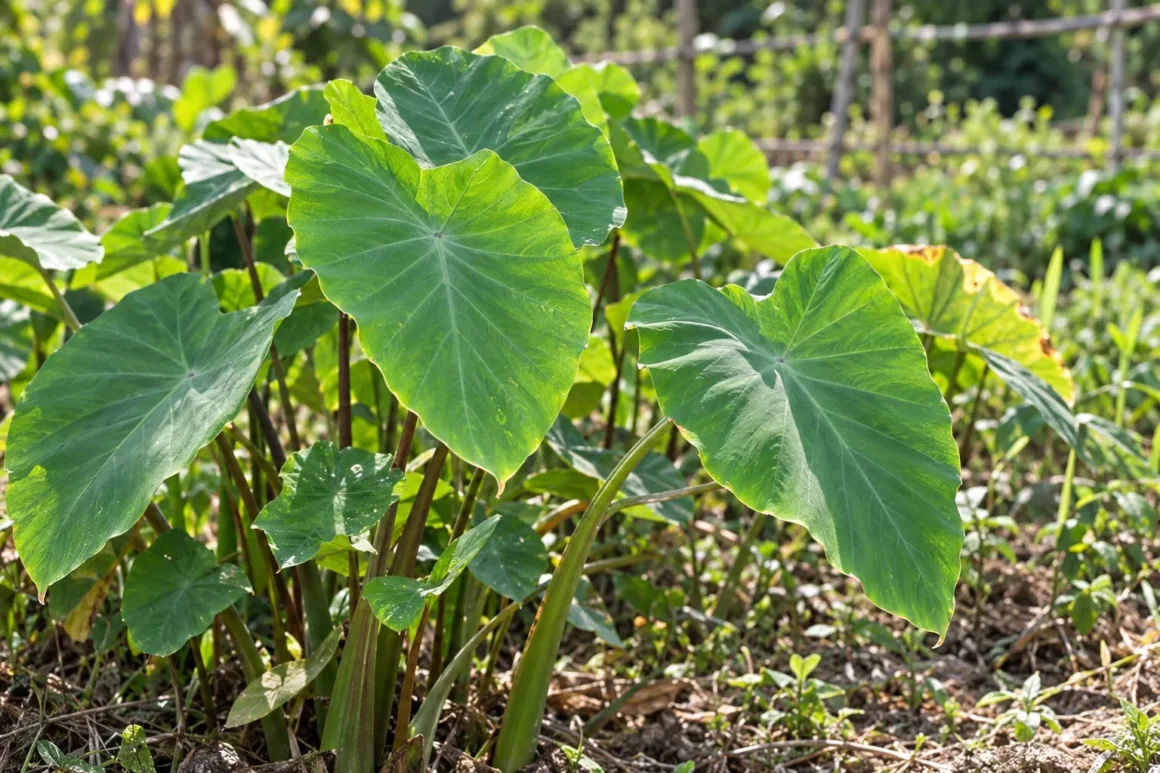
The original elephant ears: huge heart-shaped leaves on long stalks for moist, sheltered, tropical-style planting.
- Full sun, Partial shade
- 1–1.5 m (3–5 ft)
- 1–1.5 m (3–5 ft)
- H1b · Zone 12
- Deciduous
Overview
Taro, also called dasheen, eddo or elephant ears, makes clumps of arrow- to heart-shaped leaves on long stalks. Flowers are rare in cultivation; the plant is grown for its foliage.
It is tender, needing about 10°C (50°F) at night to grow well. In USDA zones 8–11 the corms often survive winter in the ground; elsewhere lift or bring in before frost. It thrives in hot, humid summers and in the tropics can be grown all year.
Grow it in rich, wet or constantly moist soil, including the shallow edge of a pond, in light shade or sun with plenty of water.
At a Glance
Growing Conditions
Aspect Suitability
- North-facing
- East-facing
- South-facing
- West-facing
Site Tolerance
- Wet soil
Soil Tolerance
- Clay
- Loam
- Acid
- Neutral pH
Foliage
- Architectural foliage
Foliage interest: May–October
Seasonal Timeline
- Foliage May Jun Jul Aug Sep Oct
- Propagate Apr May
How to propagate
One way to grow more Taro:
Division Apr Easy
You'll need: Spade or sharp knife
- Unpot or lift the corm as shoots appear
- Separate side corms or cut large corms so each piece has a bud
- Pot in moist compost in warmth
- How long
- 1 hour
- It's worked when
- high
- Then
- Water in well and keep moist while new roots form.
Divide or separate side corms as growth restarts in warmth.
Maintenance Calendar
- Apr Start stored corms in pots in warmth
- Jun Plant out once nights stay above 10°C (50°F)
- Jun Feed every two weeks while in growth
- Jul Keep the soil constantly moist
- Oct Lift corms before frost and store dry and frost-free
Garden Design
Works well in: Tropical / Exotic
Classic elephant-ear leaves for a jungle border, pond edge or large pot. Wind tears the leaves, so give shelter.
Companion planting: Cannas, Bananas, Gingers, Ferns
Wildlife Value
- Shelter
Safety
- Toxic to humans
- Toxic to dogs
- Toxic to cats
- Toxic to horses
- Skin irritant
All parts contain calcium oxalate crystals and are poisonous raw. The corms and leaves are only eaten after thorough cooking, so treat garden plants as ornamental. Sap irritates skin and eyes; wear gloves. Naturalised and invasive in wetlands in Florida, Texas and Australia; check before planting near waterways.