

Bulb · Perennial
Crocosmia × crocosmiiflora
Montbretia
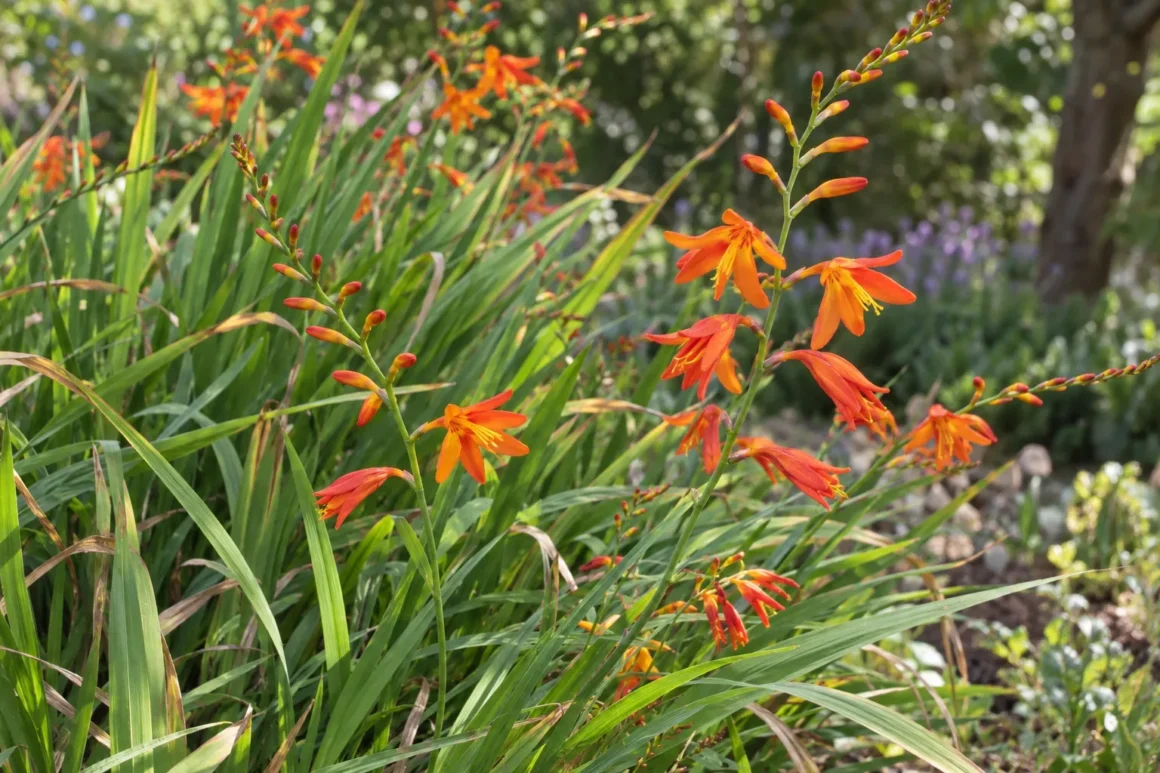
Arching sprays of fiery orange flowers over sword-shaped leaves; very tough, but spreads fast and escapes easily.
- Full sun, Partial shade
- 60–90 cm (24–35 in)
- 0.3–1 m (1–3 ft)
- H5 · Zone 7
- July–September
- Deciduous
Overview
Montbretia is a garden hybrid of two South African crocosmias, raised in France in the 1880s. From chains of corms it sends up clumps of sword-shaped leaves and, from mid- to late summer, arching, wiry stems of bright orange, funnel-shaped flowers. It has run wild along coasts and lanes in many temperate countries.
It is hardy to about −15°C (5°F), USDA zones 5–9, and grows in clay, sand or rich soil, in sun or light shade, shrugging off wind and sea air. It thrives in mild, moist maritime climates and needs summer water in hot, dry ones. It grows 60–90 cm (2–3 ft) tall and spreads quickly by corms.
At a Glance
Growing Conditions
Aspect Suitability
- North-facing
- East-facing
- South-facing
- West-facing
Site Tolerance
- Exposed sites
- Wind
- Coastal
- Salt
Soil Tolerance
- Clay
- Sandy
- Loam
- Acid
- Neutral pH
- Alkaline
Foliage
Foliage interest: April–November
Seasonal Timeline
- Flowering Jul Aug Sep
- Foliage Apr May Jun Jul Aug Sep Oct Nov
- Propagate Mar Apr
How to propagate
Ways to grow more Montbretia: the usual steps for each method.
Division Mar–Apr Easy
You'll need: A garden fork or spade (two forks back to back help with big clumps) and a sharp knife.
- Water the plant well the day before.
- Dig up the whole clump with a fork, keeping as much root as you can.
- Split it into pieces about the size of your fist, each with healthy roots and shoots: pull them apart by hand, or cut tough clumps with a knife or spade.
- Throw away any old, woody middle.
- Replant the pieces straight away at the same depth, and water them in well.
- How long
- Settles in within a few weeks.
- It's worked when
- Fresh new growth within a few weeks.
- Then
- Water in dry spells for the rest of the season.
Offsets, runners and bulblets Mar–Apr Easy
You'll need: A trowel, small pots and compost.
- Find the small plants, offsets or bulblets growing beside the parent plant, or on its runners.
- Gently separate them with some roots, cutting any runner from the parent.
- Pot them up, or replant them at the same depth, and water.
- How long
- Grows on within a few weeks.
- It's worked when
- New leaves on the young plants.
- Then
- Grow them on until they're a good size before planting out.
Lift and split clumps of corms as growth starts.
Garden Design
Works well in: Cottage, Tropical / Exotic
Hot late-summer colour; best kept in a contained bed rather than a wild garden.
Companion planting: Grasses, Hemerocallis, Kniphofias
Wildlife Value
- Bees
- Other pollinators
Listed as an invasive non-native plant in the UK: never let it spread into the wild.