

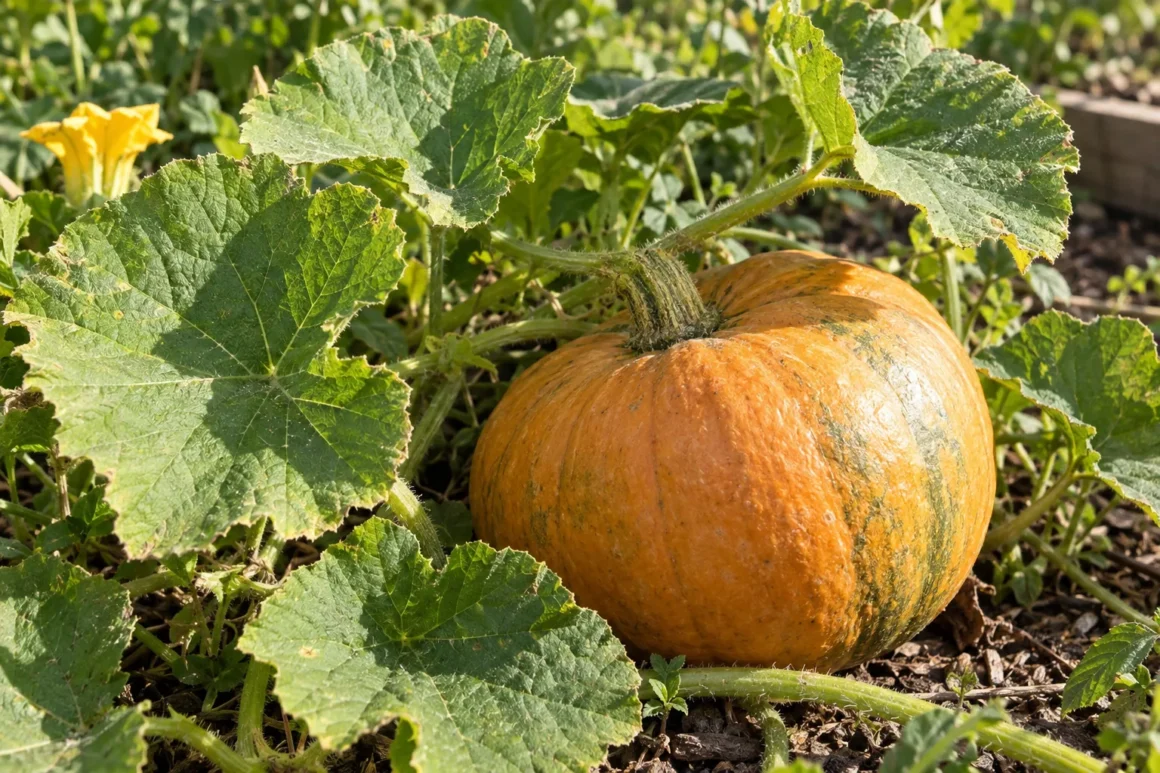
Annual · Vegetable
Cucurbita maxima
Winter squash, Pumpkin
A vigorous trailing squash grown for large, hard-skinned fruits such as Hubbard, buttercup, kabocha and giant pumpkins that store for months.
- Full sun
- 30–60 cm (12–24 in)
- 2–5 m (7–16 ft)
- H2 · Zone 10
- June–August
- Deciduous
Overview
Cucurbita maxima was domesticated in South America and includes many of the best-flavoured storing squash, including Hubbard, buttercup, kabocha and red kuri types, as well as the giant pumpkins grown for competitions. Plants send out long, trailing stems with huge, rounded leaves and big yellow flowers, and need plenty of space, rich soil and a long, warm season. Fruit is left on the plant until fully ripe and the skin hardens, then cured in the sun or a warm room so it stores for three to six months or more. Plants are killed by frost and grow slowly in cool conditions. Fruit size, shape, colour and vine length depend on the variety, and some compact bush types suit smaller gardens.
At a Glance
Growing Conditions
Aspect Suitability
- South-facing
- West-facing
Soil Tolerance
- Clay
- Sandy
- Loam
- Neutral pH
- Alkaline
Foliage
- Architectural foliage
Foliage interest: June–October
Seasonal Timeline
- Flowering Jun Jul Aug
- Foliage Jun Jul Aug Sep Oct
- Fruiting Aug Sep Oct
- Propagate Apr May Jun
- Sow indoors Mar Apr
- Sow / plant outside Apr May
- Plant out Apr May
- Harvest Sep Oct
How to propagate
One way to grow more Winter squash, Pumpkin: the usual steps for each method.
From seed Apr–Jun Easy
You'll need: Seed compost, a seed tray or small pots, labels, and a clear lid or plastic bag.
- Fill a tray or pots with seed compost, level it and firm it gently.
- Water the compost and let it drain.
- Sow the seeds thinly on top. Cover them with a fine layer of compost or vermiculite about as deep as the seed is big; leave tiny seeds uncovered.
- Label them, cover with a clear lid or bag, and keep them somewhere bright but out of hot sun.
- Keep the compost just moist, and take the cover off once seedlings appear.
- How long
- Usually comes up in 1 to 3 weeks.
- It's worked when
- Seedlings with their first pair of leaves.
- Then
- When each has its first true leaves, prick them out into their own small pots, holding them by a leaf, never the stem. Harden them off for a week or two before planting out.
Sow indoors in individual pots three to four weeks before your last frost, or direct sow once the soil reaches about 15°C (59°F). Seeds from fruit grown near other squash may cross and not come true.
Maintenance Calendar
- Apr Sow indoors in pots three to four weeks before your last frost
- May Plant out after your last frost into a bed enriched with plenty of compost or manure, as these are very hungry plants
- Jun Water deeply at the base once or twice a week in dry weather
- Jul Pinch out the tips of long vines once three to four fruits have set, which channels energy into ripening them
- Aug Raise ripening fruit off the soil on a tile or board to prevent rot
- Sep Cut fruit with a length of stalk when the skin is hard and the stem cracks, and always before frost
- Oct Cure squash in sun or at about 25°C (77°F) for one to two weeks, then store cool and dry
Garden Design
Works well in: Cottage, Edible / Kitchen Garden
Let the vines ramble over a compost heap, through sweetcorn, or along the edge of a large bed where the huge leaves smother weeds. Smaller-fruited types can be trained up a very sturdy arch or fence.
Companion planting: Sweetcorn, Beans, Nasturtiums, Marigolds
Wildlife Value
- Bees
- Other pollinators
- Food source
- Food
Safety
Fruit, seeds and flowers are edible. Very bitter fruit can contain cucurbitacins and cause severe stomach upset, so discard any that taste bitter. Stems and leaves are bristly and can scratch skin.