

Shrub
Erythrina crista-galli
Coral tree
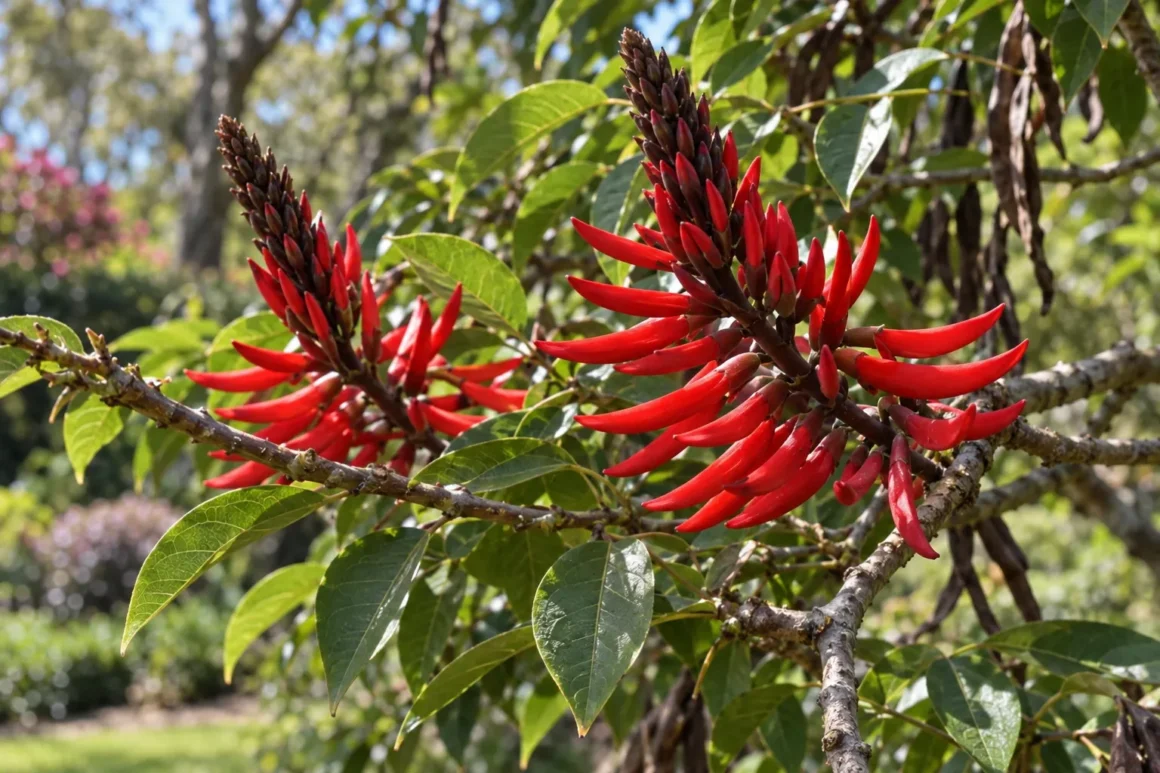
A dramatic tender shrub with glossy leaves and spikes of large, waxy, deep coral-red pea flowers.
- Full sun
- 1.5–3 m (5–10 ft)
- 1.5–2.5 m (5–8 ft)
- H3 · Zone 9
- July–September
- Deciduous
- RHS Award of Garden Merit
Overview
South America's national flower of Argentina and Uruguay, this shrub or small tree carries thorny stems and trifoliate leaves, topped in late summer with tall spikes of large, waxy, deep red flowers shaped like a cockerel's comb. In cool temperate climates it needs a warm, sheltered spot facing the midday sun and usually dies back to a woody base in winter, reshooting the following year; younger plants are best grown in a large pot and moved under cover for winter.
At a Glance
Growing Conditions
Aspect Suitability
- South-facing
Soil Tolerance
- Sandy
- Loam
- Neutral pH
Foliage
- Architectural foliage
Foliage interest: May–September
Seasonal Timeline
- Flowering Jul Aug Sep
- Foliage May Jun Jul Aug Sep
- Fruiting Oct Nov
- Propagate Jul Aug
How to propagate
Ways to grow more Coral tree: the usual steps for each method.
Semi-ripe cuttings Jul–Aug Takes a little care
You'll need: Clean, sharp secateurs, small pots, gritty compost, and rooting powder if you have it.
- Choose this year's shoots that are firm at the base but still soft at the tip, and cut pieces 10 to 15 cm long.
- Trim just below a leaf joint and take off the lower leaves; pinch out the soft tip.
- Dip the cut end in rooting powder if you have some.
- Push them into pots of gritty compost, water them in and cover with a clear bag.
- Keep them in a cold frame, greenhouse or bright windowsill out of direct sun.
- How long
- Roots in about 6 to 10 weeks.
- It's worked when
- New leaves, and the cutting resists when you tug it gently.
- Then
- Keep them somewhere cool and frost-free over winter, and pot them up separately in spring.
From seed Mar–May Easy
You'll need: Seed compost, a seed tray or small pots, labels, and a clear lid or plastic bag.
- Fill a tray or pots with seed compost, level it and firm it gently.
- Water the compost and let it drain.
- Sow the seeds thinly on top. Cover them with a fine layer of compost or vermiculite about as deep as the seed is big; leave tiny seeds uncovered.
- Label them, cover with a clear lid or bag, and keep them somewhere bright but out of hot sun.
- Keep the compost just moist, and take the cover off once seedlings appear.
- How long
- Usually comes up in 1 to 3 weeks.
- It's worked when
- Seedlings with their first pair of leaves.
- Then
- When each has its first true leaves, prick them out into their own small pots, holding them by a leaf, never the stem. Harden them off for a week or two before planting out.
Take semi-ripe cuttings in summer with bottom heat; pre-soaked seed can also be sown in warmth in spring.
Garden Design
Works well in: Mediterranean, Modern / Contemporary, Tropical / Exotic, Wildlife-friendly
Best against a warm, sheltered south-facing wall, or grown in a large pot that can be moved under cover for winter in colder regions.
Companion planting: Cannas, Bananas, Mediterranean shrubs
Wildlife Value
- Bees
- Birds