

Perennial
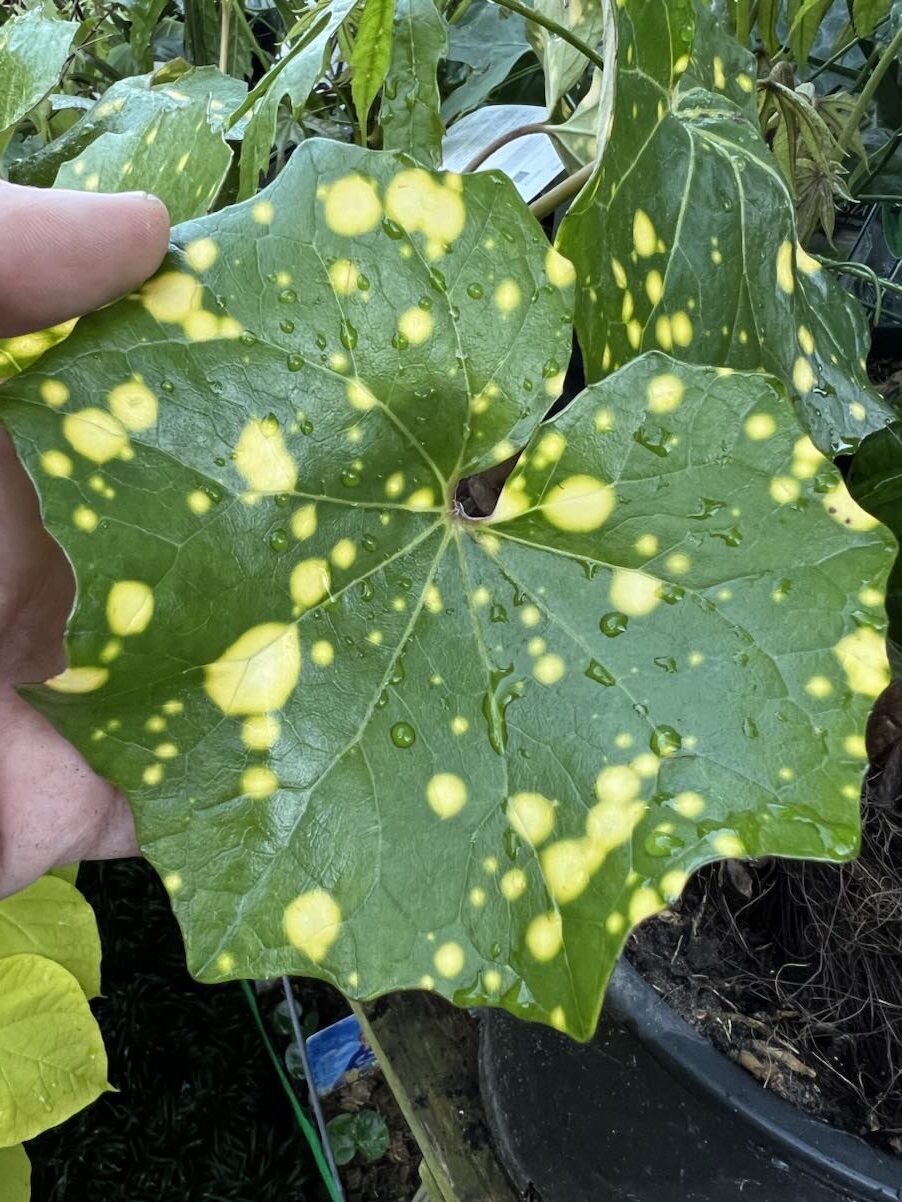
Farfugium japonicum ‘Aureomaculata’
Gold-spotted leopard plant
Also known as: Farfugium japonicum ‘Aureomaculatum’, Ligularia tussilaginea ‘Aureo-maculata’, Ligularia ‘Leopard’
An evergreen perennial with glossy, rounded leaves boldly spotted gold, followed by yellow daisy flowers in late autumn.
- Partial shade
- 40–60 cm (16–24 in)
- 30–50 cm (12–20 in)
- H3 · Zone 9
- October–December
- Evergreen
Overview
Often still sold as leopard plant or under its old name Ligularia tussilaginea, this rhizomatous evergreen forms a low clump of large, slightly fleshy, kidney-shaped leaves splashed with irregular gold spots, giving rise to its common name. Branched heads of yellow daisy flowers appear late, from autumn into early winter, when little else is in bloom. It needs shelter from cold, drying winds and a reasonably sheltered position; a deep winter mulch protects the crown in colder gardens, since foliage can be damaged by hard frost even where the roots survive.
At a Glance
Growing Conditions
Aspect Suitability
- East-facing
- South-facing
Soil Tolerance
- Clay
- Chalk
- Sandy
- Loam
- Acid
- Neutral pH
- Alkaline
Foliage
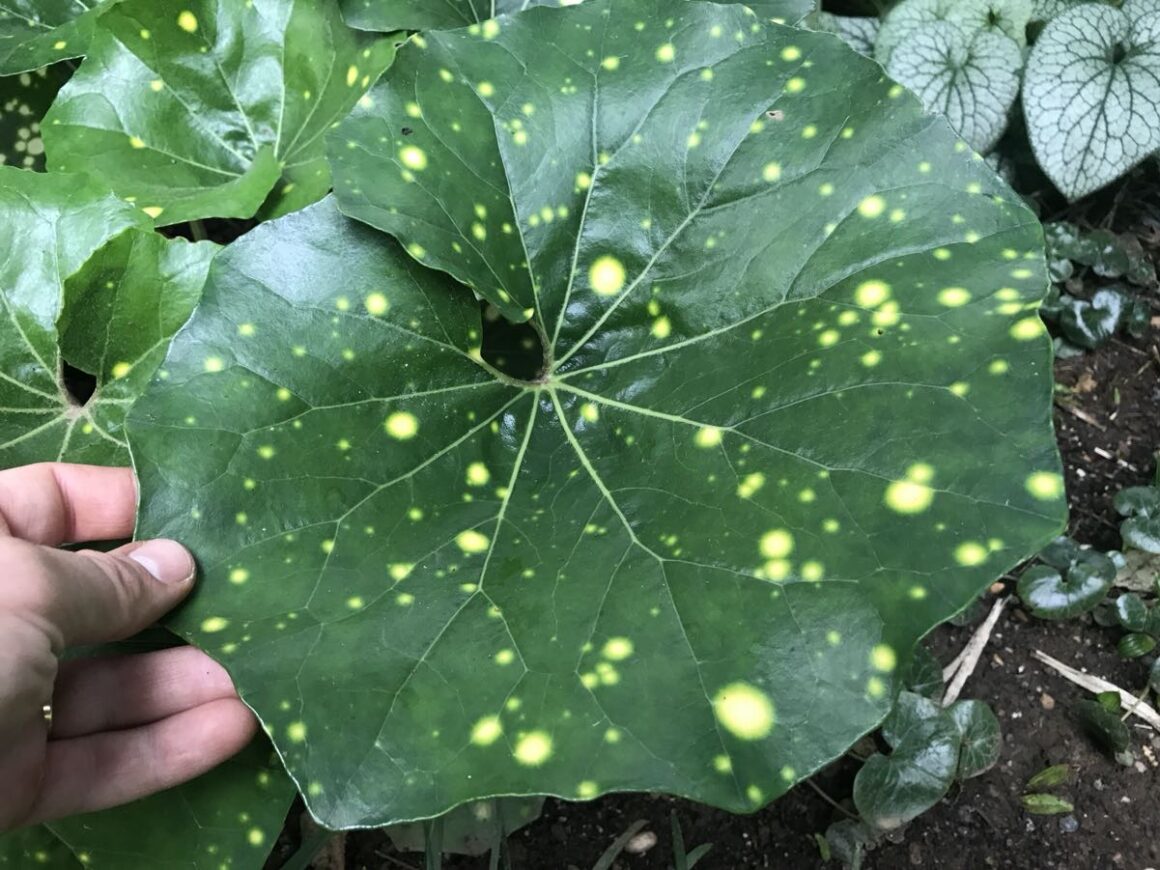
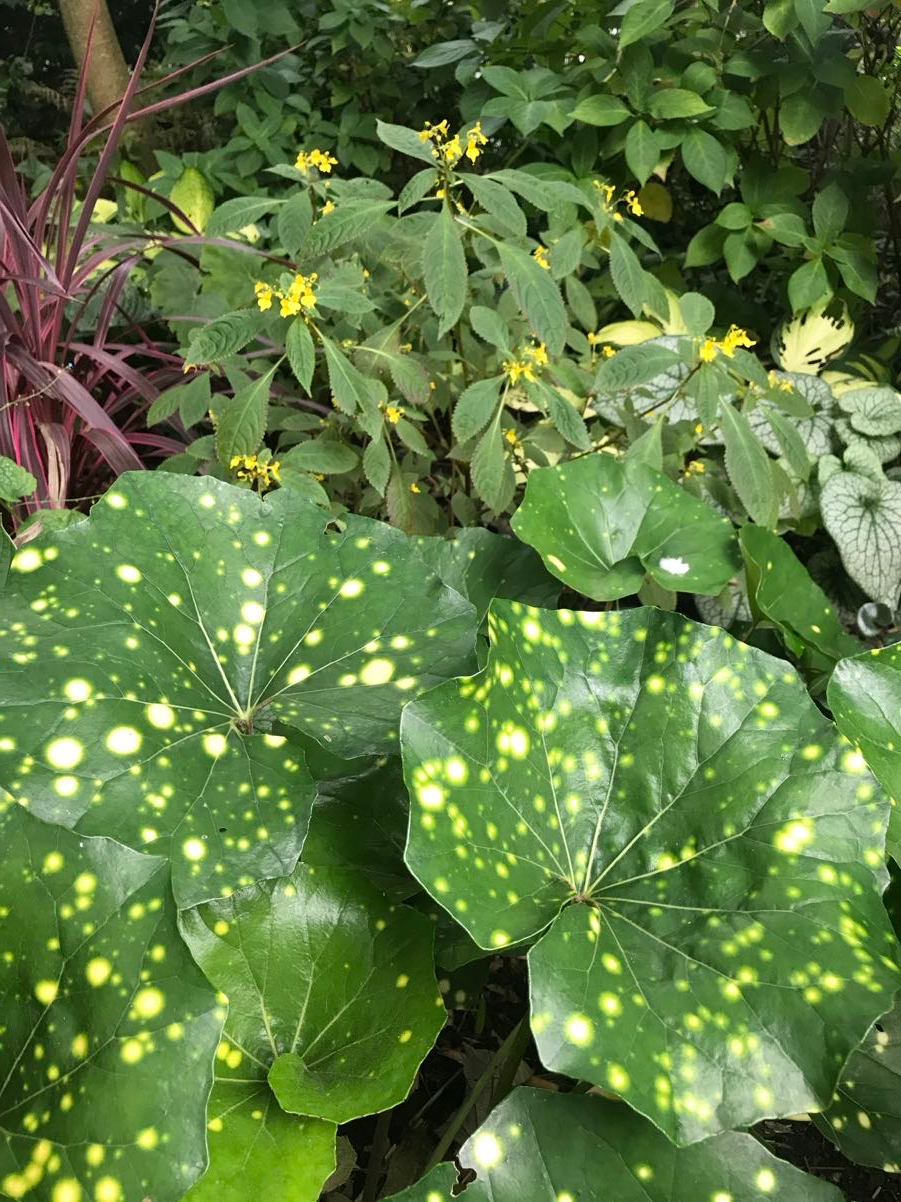
- Variegated
- Architectural foliage
Foliage interest: 12 months of the year
Seasonal Timeline
- Flowering Oct Nov Dec
- Foliage 12 months of the year
- Propagate Mar Apr
Maintenance Calendar
- Mar Remove any leaves damaged over winter
- Apr Refresh mulch around the crown
- Jun Water during dry spells to keep leaves lush
- Oct Enjoy the late daisy flowers as other plants fade
- Nov Apply a deep winter mulch in colder gardens
Garden Design
Works well in: Container, Contemporary, Woodland
Use in a sheltered courtyard border or large pot where the gold-spotted leaves catch low light; move containers somewhere sheltered for winter in colder areas.
Companion planting: Ferns, Hostas, Shade-tolerant perennials
Wildlife Value
- Bees
Safety
No well-established toxicity; keep as an ornamental plant only.