

Bulb · Perennial
Fritillaria imperialis
Crown imperial
Also known as: Petilium imperiale
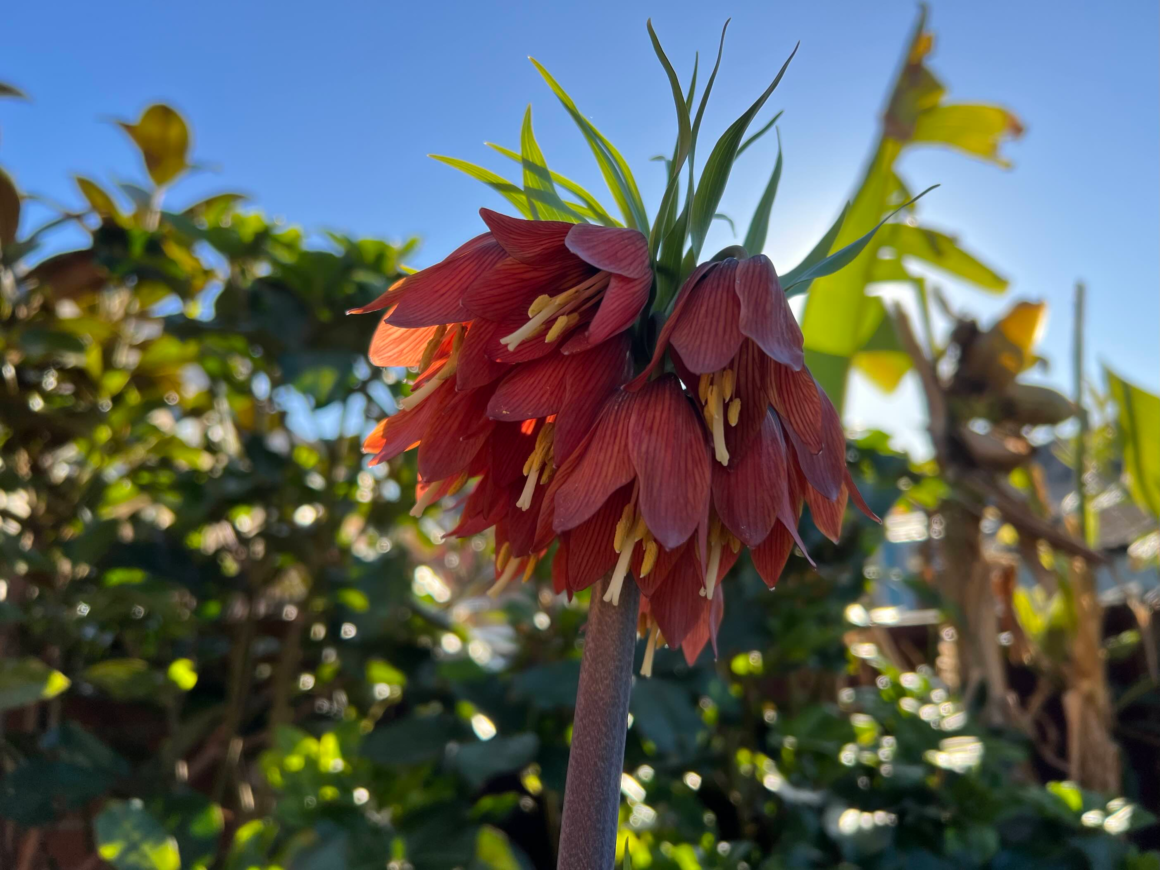
A stately spring bulb with a ring of hanging orange or yellow bells beneath a tuft of leafy bracts.
- Full sun, Partial shade
- 0.6–1 m (2–3 ft)
- 20–30 cm (8–12 in)
- H7 · Zone 4
- April–May
- Deciduous
- RHS Award of Garden Merit
Overview
Native from Turkey to the Himalaya, the crown imperial has been grown in gardens for over 400 years. In spring, stout stems up to 1m rise from large bulbs, each topped by a ring of large, hanging, bell-shaped flowers in orange, red or yellow, crowned with a tuft of green leaves. Look inside the bells to see glistening drops of nectar loved by bees. The whole plant has a musky, foxy smell. It is extremely hardy (below -20°C / -4°F) and does best in fertile, well-drained soil in full sun.
At a Glance
Growing Conditions
Aspect Suitability
- East-facing
- South-facing
- West-facing
Soil Tolerance
- Chalk
- Sandy
- Loam
- Acid
- Neutral pH
- Alkaline
Foliage
Foliage interest: March–June
Seasonal Timeline
- Flowering Apr May
- Foliage Mar Apr May Jun
- Fruiting Jun Jul
- Propagate Jul Aug Sep
Maintenance Calendar
- Mar Feed with a high-potash fertiliser as shoots appear, which builds up the bulb for flowering next year
- Apr Check for bright red lily beetles and their larvae and pick them off, as they can strip the leaves
- Jun Let the leaves die back naturally before cutting them off, since they feed the bulb for next year
- Sep Plant bulbs 20cm deep, tilted slightly on their side, so water cannot collect in the hollow top and rot the bulb
Garden Design
Works well in: Cottage, Modern / Contemporary, Wildlife-friendly
Plant in groups among later perennials, which will hide the yellowing foliage in early summer.
Companion planting: Tulips, Euphorbias, Wallflowers, Late-emerging perennials
Wildlife Value
- Bees
- Other pollinators
Safety
- Toxic to humans
- Toxic to dogs
- Toxic to cats
- Toxic to horses
- Skin irritant
Bulbs contain toxic alkaloids and are poisonous if eaten; handling them can irritate skin, so wear gloves when planting.