

Perennial
Hedychium coccineum
Red ginger lily
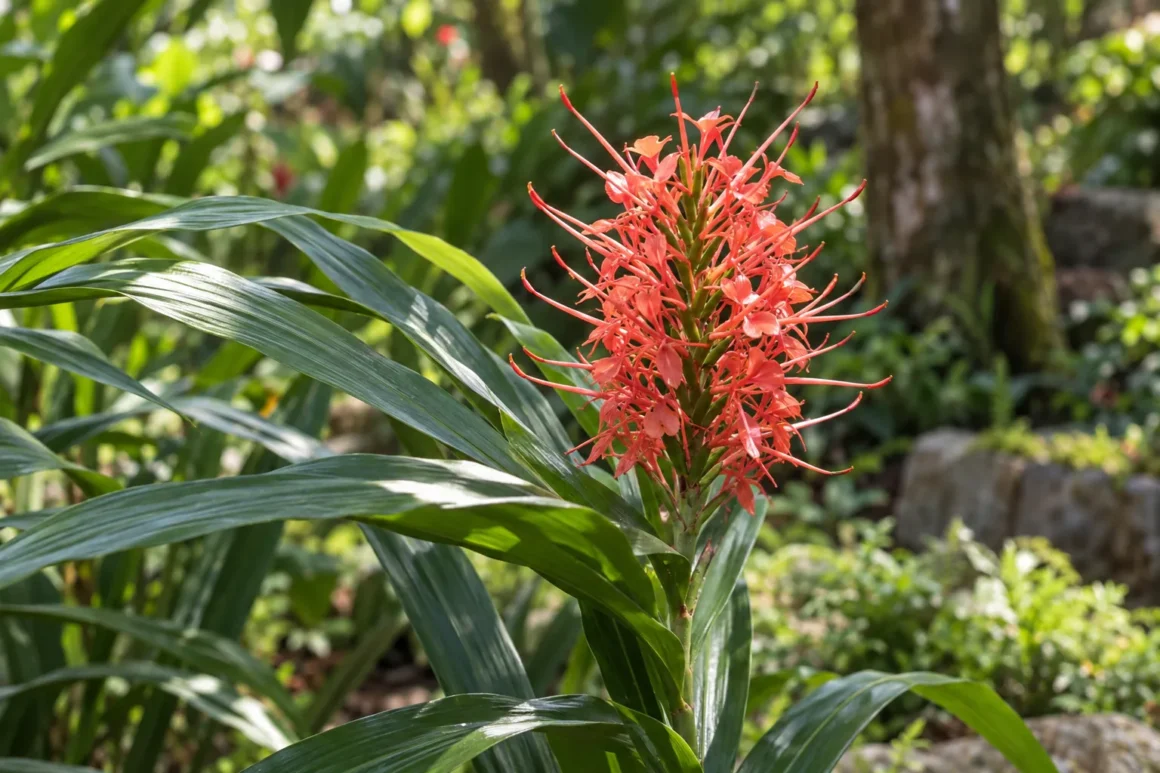
A hardy ginger lily with narrow grey-green leaves and fragrant spikes of scarlet to coral flowers late in summer.
- Full sun, Partial shade
- 1.5–2.5 m (5–8 ft)
- 0.5–1 m (2–3 ft)
- H3 · Zone 9
- August–October
- Deciduous
Overview
The red or scarlet ginger lily makes upright leafy stems carrying narrow, grey-green leaves and long spikes of fragrant, tubular flowers in scarlet, coral or orange, with prominent stamens.
It is hardy to about −5°C (23°F) with a deep winter mulch, USDA zones 7b–10. It flowers best after warm, long summers and is excellent in humid subtropical gardens; in cool, short-season climates flowering can be late.
Give it rich, moist soil, a sunny sheltered spot and plenty of water while growing. Late flowers feed hummingbirds where they occur.
At a Glance
Growing Conditions
Aspect Suitability
- South-facing
Soil Tolerance
- Clay
- Chalk
- Sandy
- Loam
- Acid
- Neutral pH
- Alkaline
Foliage
- Architectural foliage
Foliage interest: May–October
Seasonal Timeline
- Flowering Aug Sep Oct
- Foliage May Jun Jul Aug Sep Oct
- Fruiting Oct Nov
- Propagate Apr May
How to propagate
One way to grow more Red ginger lily:
Division Apr Easy
You'll need: Spade or sharp knife
- Lift or expose the clump as growth starts
- Cut into sections, each with roots and healthy buds
- Replant at the same depth in improved soil
- How long
- 1 hour
- It's worked when
- high
- Then
- Water in well and keep moist while new roots form.
Divide rhizomes as growth starts, keeping a bud on each piece.
Garden Design
Works well in: Tropical / Exotic
Narrow grey-green leaves and slender spikes of scarlet to coral flowers. Lovely with dark-leaved cannas and late salvias.
Companion planting: Bananas, Cannas, Dahlias, Grasses
Wildlife Value
- Butterflies
- Moths
- Birds