

Perennial
Hedychium gardnerianum
Kahili ginger
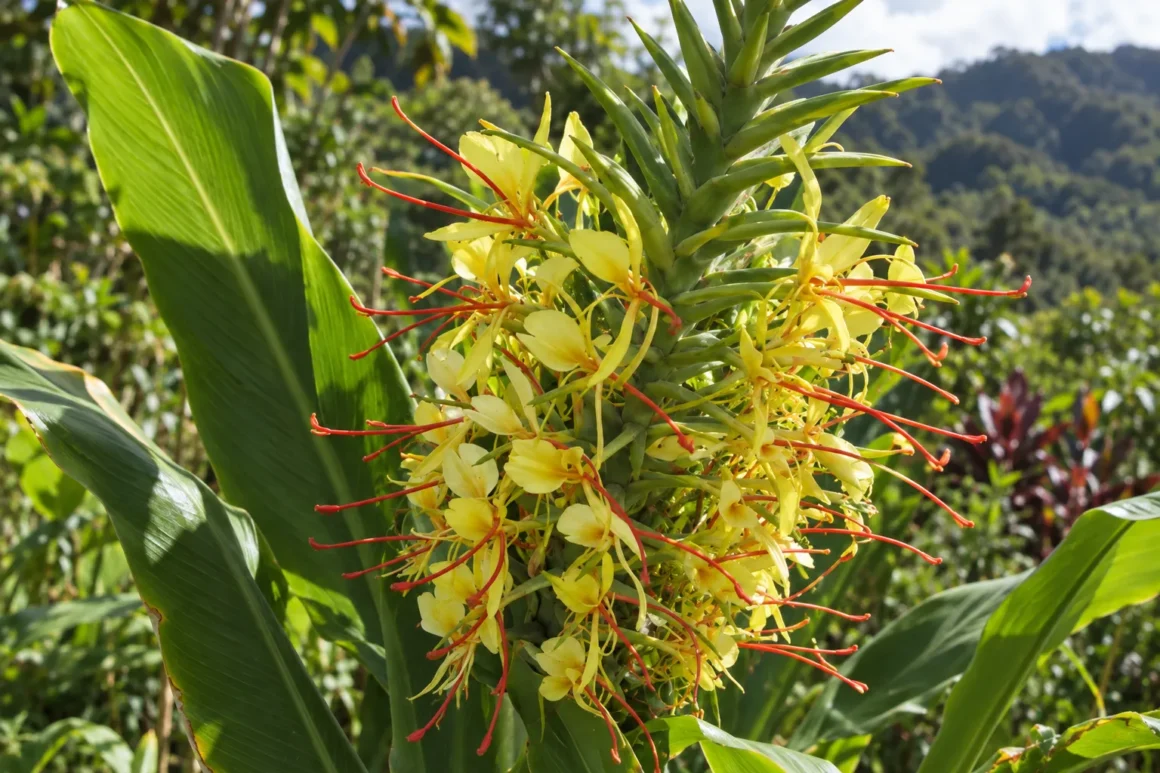
Tall, lush ginger lily with heavily scented spikes of lemon-yellow flowers and red stamens late in summer.
- Full sun, Partial shade
- 1.5–2.5 m (5–8 ft)
- 0.5–1 m (2–3 ft)
- H2 · Zone 10
- August–October
- Deciduous
- RHS Award of Garden Merit
Overview
Kahili ginger forms clumps of tall leafy stems with grey-green leaves, crowned late in the season by dense spikes of scented, lemon-yellow flowers with long red stamens. Orange seeds follow in split capsules.
It tolerates cold but not freezing in the RHS rating, around 1°C (34°F), though well-mulched rhizomes often survive brief frosts; US sources give USDA zones 7–10. It flowers best after long warm summers.
This is a serious invader of moist forest in New Zealand, Hawaii and other subtropical islands, so grow it only where it cannot spread.
At a Glance
Growing Conditions
Aspect Suitability
- East-facing
- South-facing
- West-facing
Soil Tolerance
- Chalk
- Sandy
- Loam
- Acid
- Neutral pH
- Alkaline
Foliage
- Architectural foliage
Foliage interest: May–November
Seasonal Timeline
- Flowering Aug Sep Oct
- Foliage May Jun Jul Aug Sep Oct Nov
- Fruiting Oct Nov
- Propagate Apr May
How to propagate
One way to grow more Kahili ginger:
Division Apr Easy
You'll need: Spade or sharp knife
- Lift or expose the clump as growth starts
- Cut into sections, each with roots and healthy buds
- Replant at the same depth in improved soil
- How long
- 1 hour
- It's worked when
- high
- Then
- Water in well and keep moist while new roots form.
Divide rhizomes in spring. Seed sown warm as soon as ripe; remove seed heads in high-risk regions instead.
Maintenance Calendar
- Apr Divide congested rhizomes as shoots appear
- May Feed and mulch with compost
- Jul Keep soil moist through summer
- Oct Cut off spent spikes before seed ripens
- Nov Cut down blackened stems and mulch deeply or move pots under cover
Garden Design
Works well in: Tropical / Exotic
Tall grey-green stems topped with fragrant lemon spikes with red stamens late in the season. Best in a sheltered, warm border or large pot.
Companion planting: Bananas, Cannas, Colocasias, Tree ferns
Wildlife Value
- Butterflies
- Moths
- Birds
- Food source
- Food
Food for birds: October–November
Safety
Not known to be toxic. One of the world's worst invasive plants in moist forest: banned from sale in New Zealand and invasive in Hawaii, the Azores, Réunion, South Africa and Jamaica. Do not plant in warm, wet climates near native forest, and cut off seed heads before the orange seeds ripen.