

Annual
Helianthus annuus
Sunflower
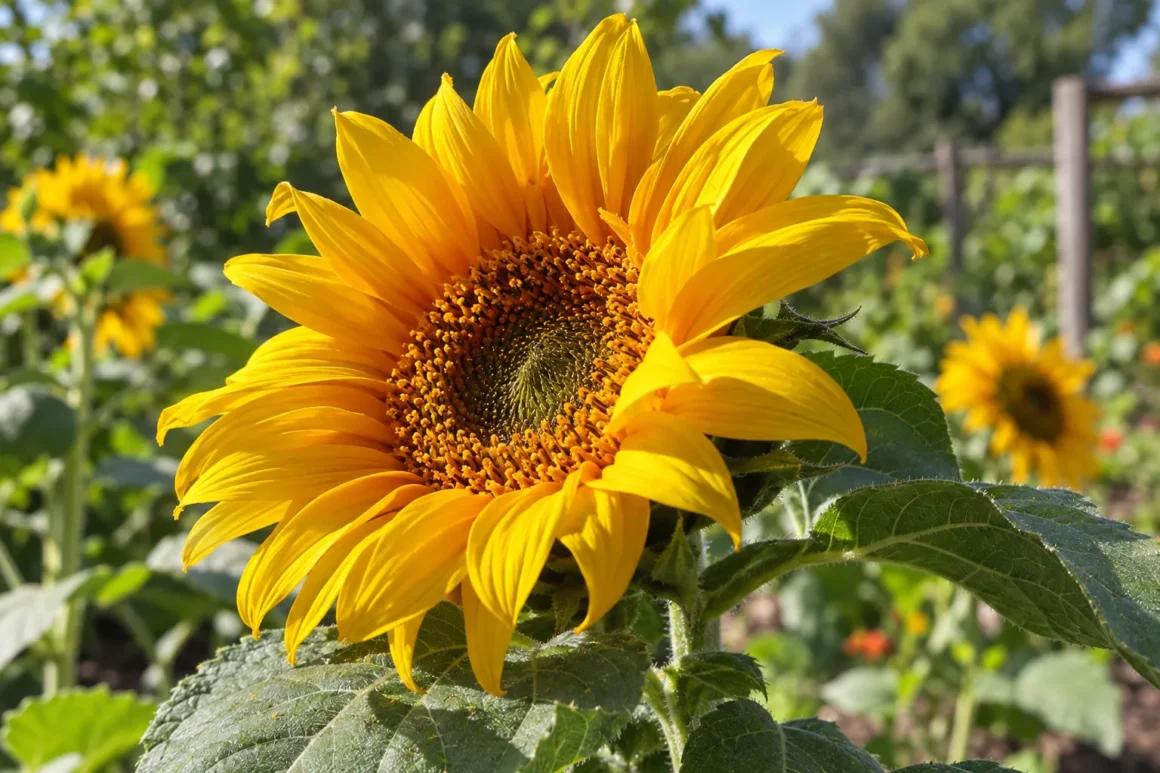
The classic tall annual with huge yellow flower heads in late summer, feeding bees and then birds.
- Full sun
- 0.6–3 m (2–10 ft)
- 30–90 cm (12–35 in)
- H3 · Zone 9
- July–September
- Deciduous
Overview
Common sunflower is a fast-growing annual with rough, heart-shaped leaves and large flower heads of yellow, orange, red or bronze petals around a dark centre from midsummer into autumn. Varieties range from 60 cm (2 ft) bushy, branching types for pots and cutting to single-stemmed giants over 3 m (10 ft).
Sow seeds after the last frost once the soil is warm, or a few weeks earlier in pots under cover, in full sun and fertile, well-drained soil sheltered from wind. Stake tall varieties, water in dry spells and protect seedlings from slugs. Leave the ripe seed heads standing for finches, tits and other birds.
It is frost-tender, killed at about 0°C (32°F), and grown as a summer annual everywhere. It thrives in long, hot summers, from continental to subtropical climates, and tolerates drought once established; in cool, short summers choose early-flowering varieties.
At a Glance
Growing Conditions
Aspect Suitability
- South-facing
- West-facing
Site Tolerance
- Drought
Soil Tolerance
- Clay
- Chalk
- Sandy
- Loam
- Neutral pH
- Alkaline
Foliage
Foliage interest: June–September
Seasonal Timeline
- Flowering Jul Aug Sep
- Foliage Jun Jul Aug Sep
- Propagate Apr May
How to propagate
One way to grow more Sunflower:
From seed Apr–May Easy
- Sow about 15 mm deep
- Germinates best at about 20°C
- Comes up in 5–14 days
- Pot on about 4 weeks after sowing
- Direct sow once soil is above about 10°C (50°F).
You'll need: Small pots or modules, multipurpose compost
- Sow one seed per pot, 1–2 cm deep.
- Keep at about 18–20°C (64–68°F).
- Grow on in good light.
- Plant out after the last frost, 45 cm (18 in) apart.
- How long
- 10 minutes
- It's worked when
- high
- Then
- Stake tall varieties early.
Sow 1–2 cm (½–¾ in) deep where it is to flower after the last frost, or in pots a few weeks earlier.
Maintenance Calendar
- Apr Sow seed in pots under cover
- May Sow outdoors after the last frost
- May Protect seedlings from slugs and snails
- Jun Stake tall varieties against wind
- Jul Water deeply in dry spells
- Sep Leave ripe seed heads for birds or hang them up to dry
Garden Design
Works well in: Cottage, Prairie / Meadow, Wildlife-friendly
Tall varieties for screens and children’s gardens; branching types for cutting.
Companion planting: Cut flowers, Cosmos, Dahlias, Vegetable garden edges
Wildlife Value
- Bees
- Butterflies
- Other pollinators
- Birds
- Food source
- RHS Plants for Pollinators
- Food
Food for birds: September–November
Safety
Not known to be toxic. Can self-seed and become weedy in warm climates.