

Climber
Lonicera periclymenum
Common honeysuckle
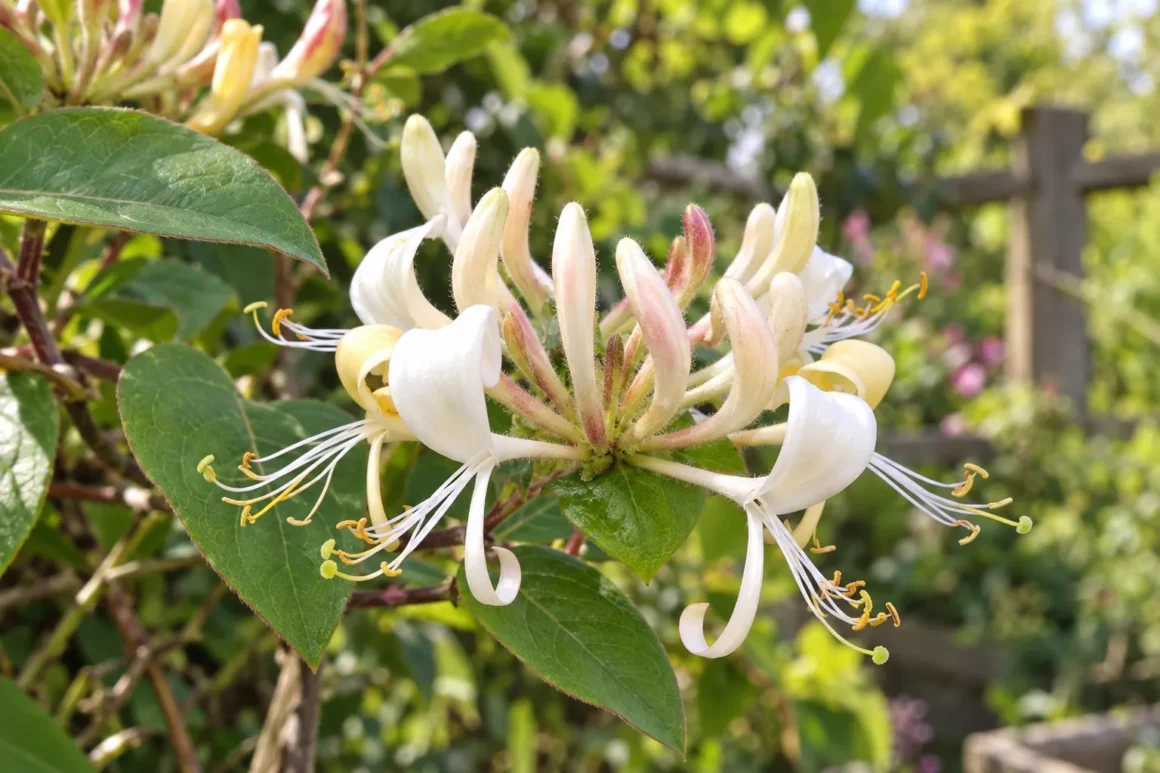
A native twining climber with richly scented cream and pink flowers in summer, followed by red berries for birds.
- Full sun, Partial shade
- 4–7 m (13–23 ft)
- 1.5–4 m (5–13 ft)
- H6 · Zone 6
- June–August
- Deciduous
Overview
Common honeysuckle, also called woodbine or European honeysuckle, is a twining deciduous climber with clusters of creamy-white to yellow, purple-flushed tubular flowers in summer. The scent is strongest in the evening, when it draws in moths, and the flowers are followed by glossy red berries that birds eat.
It grows best with its roots in shade and its stems climbing into sun, in fertile, moist but well-drained soil. Train it up a fence, trellis, arch or into a hedge or tree. Prune after flowering to keep it tidy, or leave it alone in a wildlife garden. It is one of the best climbers for moths, bees and nesting birds.
Hardy to about −20°C (−4°F), USDA zones 5–9. It prefers cooler summers and is happiest in temperate and maritime climates; in hot regions give it shade and water. The berries are mildly poisonous to people and pets.
At a Glance
Growing Conditions
Aspect Suitability
- North-facing
- East-facing
- South-facing
- West-facing
Site Tolerance
- Exposed sites
Soil Tolerance
- Clay
- Chalk
- Sandy
- Loam
- Acid
- Neutral pH
- Alkaline
Foliage
Foliage interest: March–October
Seasonal Timeline
- Flowering Jun Jul Aug
- Foliage Mar Apr May Jun Jul Aug Sep Oct
- Fruiting Aug Sep Oct
- Propagate Mar Apr Jul Aug
How to propagate
Ways to grow more Common honeysuckle:
Layering Mar–May Easy
You'll need: Wire peg, compost
- Bend a low stem to the ground.
- Wound the underside at a leaf joint.
- Peg into compost-rich soil.
- Sever and replant once rooted.
- How long
- 10 minutes
- It's worked when
- high
- Then
- Water through the first summer.
Semi-ripe cuttings Jul–Aug Easy
You'll need: Knife, pots, gritty compost
- Take 10 cm (4 in) cuttings of this year’s growth.
- Remove the lower leaves.
- Insert in gritty compost.
- Keep shaded and humid.
- How long
- 15 minutes
- It's worked when
- high
- Then
- Overwinter in a cold frame.
Layer a low stem in spring, or take semi-ripe cuttings in summer.
Maintenance Calendar
- Mar Mulch over the roots to keep them cool
- Apr Tie new shoots into supports
- Apr Layer a low stem into the soil
- May Check shoot tips for aphids
- Sep Cut back flowered shoots by a third after flowering
Garden Design
Works well in: Cottage, Wildlife-friendly, Woodland / Shade
Plant near a seat or door to enjoy the evening scent.
Companion planting: Climbing roses, Clematis, Native hedging
Wildlife Value
- Bees
- Butterflies
- Moths
- Birds
- Shelter
- Food source
- RHS Plants for Pollinators
- Night-scented for moths
- Caterpillar food plant
- Nesting cover for birds
- Food
Caterpillars it feeds: White admiral, Twenty-plume moth
Food for birds: August–October
Safety
- Toxic to humans
- Toxic to dogs
- Toxic to cats
The red berries are mildly poisonous and should not be eaten by people or pets.