

Shrub
Mahonia × media ‘Winter Sun’
Winter Sun mahonia
Also known as: Berberis × media 'Winter Sun', Mahonia 'Winter Sun'
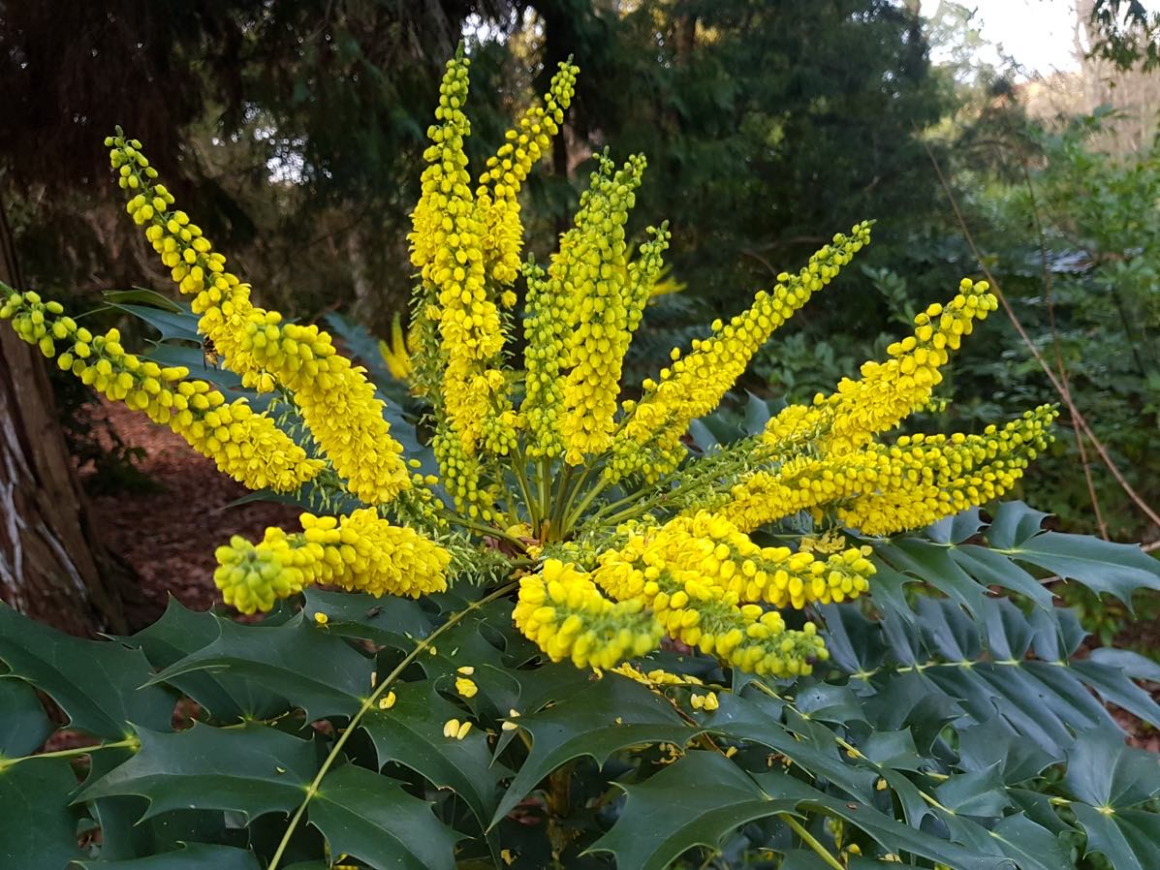
A striking evergreen shrub with spiny, architectural leaves and upright sprays of fragrant yellow flowers through winter.
- Full shade, Partial shade
- 2–4 m (7–13 ft)
- 1.5–2.5 m (5–8 ft)
- H5 · Zone 7
- January, February, November, December
- Evergreen
- RHS Award of Garden Merit
Overview
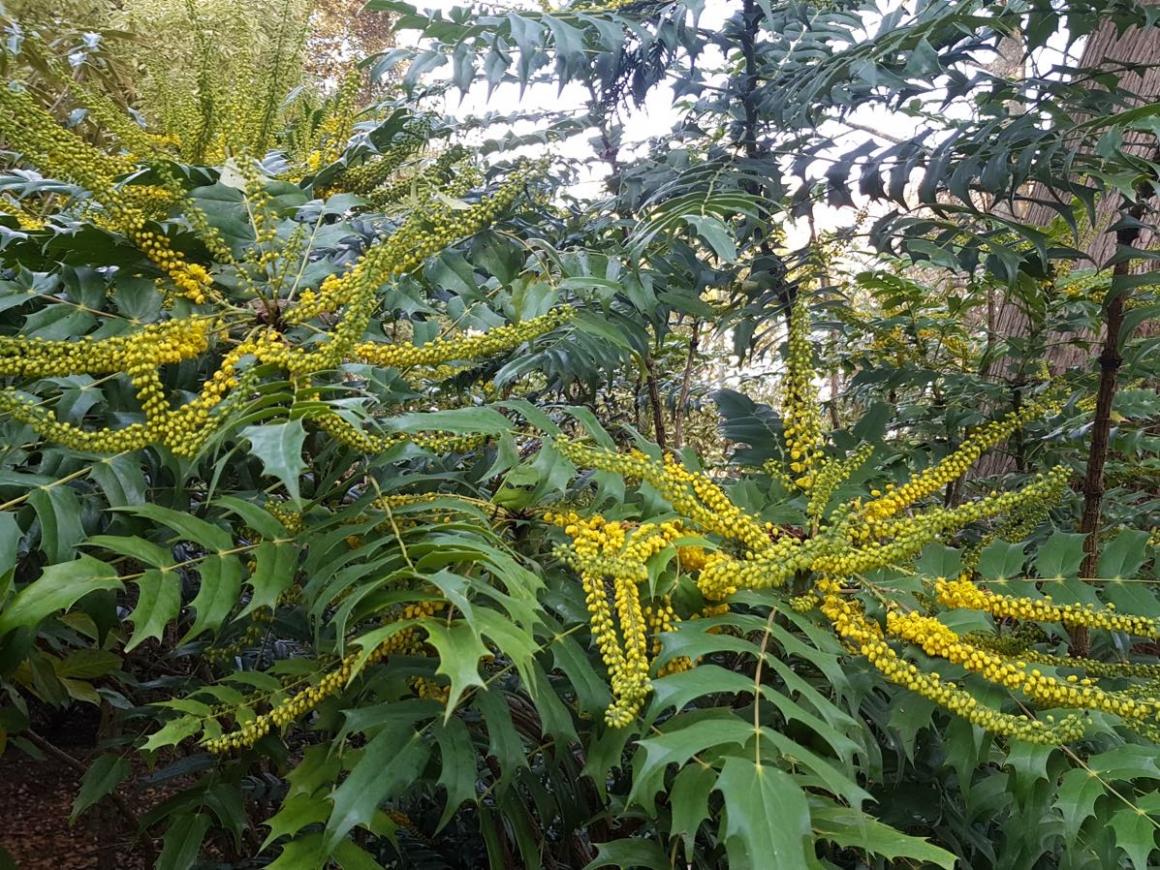
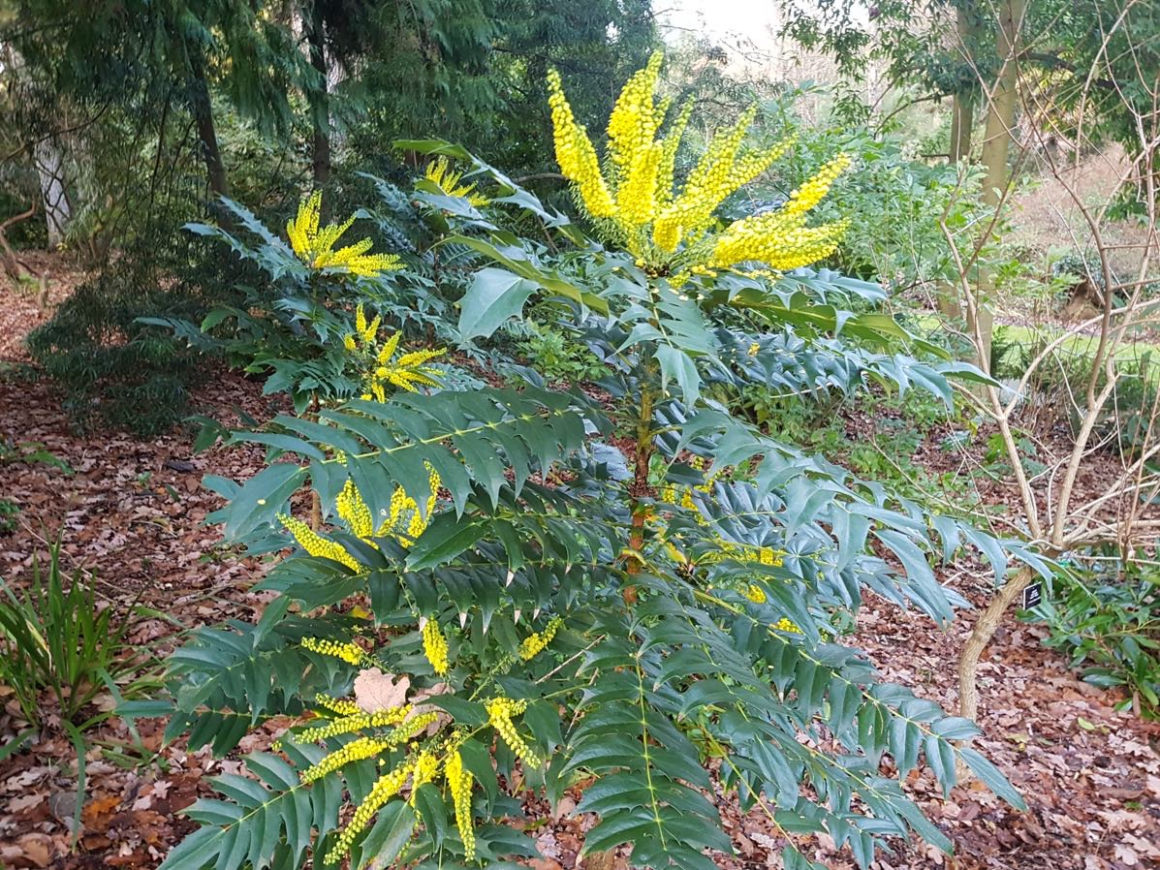
This hybrid between two Asian mahonias (Mahonia japonica and M. oiwakensis subsp. lomariifolia) forms an upright shrub with long, spiny, holly-like, dark green leaves arranged in bold ruffs. From late autumn through winter it carries dense, upright spikes of bright yellow flowers with a sweet, lily-of-the-valley scent, a valuable nectar source for early bees and, in the Americas, for overwintering hummingbirds. Blue-black berries follow, which birds eat. It is hardy to about -15°C (5°F), grows in almost any soil and thrives in shade. It holds an RHS Award of Garden Merit. Botanists now include mahonias in Berberis, but the old name is still used in gardens.
At a Glance
Growing Conditions
Aspect Suitability
- North-facing
- East-facing
- South-facing
- West-facing
Soil Tolerance
- Clay
- Chalk
- Sandy
- Loam
- Acid
- Neutral pH
- Alkaline
Foliage
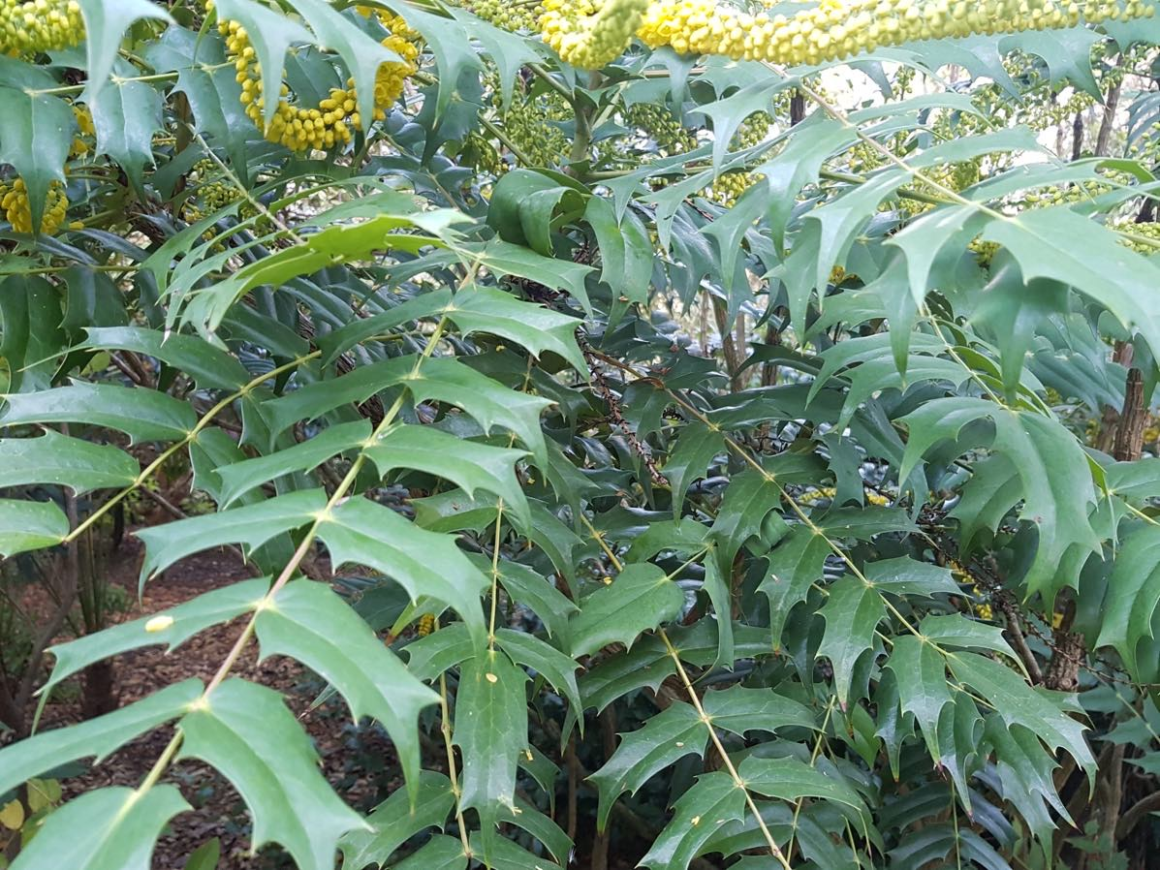
- Architectural foliage
Foliage interest: 12 months of the year
Seasonal Timeline
- Flowering Jan Feb Nov Dec
- Foliage 12 months of the year
- Fruiting Mar Apr May
- Propagate Aug Sep Oct Nov
How to propagate
Ways to grow more Winter Sun mahonia: the usual steps for each method.
Semi-ripe cuttings Aug–Sep Takes a little care
You'll need: Clean, sharp secateurs, small pots, gritty compost, and rooting powder if you have it.
- Choose this year's shoots that are firm at the base but still soft at the tip, and cut pieces 10 to 15 cm long.
- Trim just below a leaf joint and take off the lower leaves; pinch out the soft tip.
- Dip the cut end in rooting powder if you have some.
- Push them into pots of gritty compost, water them in and cover with a clear bag.
- Keep them in a cold frame, greenhouse or bright windowsill out of direct sun.
- How long
- Roots in about 6 to 10 weeks.
- It's worked when
- New leaves, and the cutting resists when you tug it gently.
- Then
- Keep them somewhere cool and frost-free over winter, and pot them up separately in spring.
Leaf cuttings Aug Easy
You'll need: A healthy leaf, a clean knife, a pot of gritty compost or cactus compost.
- Take a healthy, full-grown leaf (for succulents, twist it off cleanly).
- For succulents, leave it a few days for the cut end to dry; for others, use it straight away.
- Rest it on, or push its base just into, the compost.
- Keep it warm and bright, out of direct sun, and only just moist.
- How long
- Tiny plantlets in about 3 to 8 weeks.
- It's worked when
- Small new plants forming at the base of the leaf.
- Then
- Pot the little plants up on their own once they're big enough to handle.
Take leaf-bud or semi-ripe cuttings from late summer to autumn and root with gentle bottom heat; rooting is slow.
Maintenance Calendar
- Mar Straight after flowering, cut one or two leggy stems back by up to half to encourage bushier growth lower down
- Apr Mulch in spring to keep the roots cool and moist
- Jul Water young plants in dry spells while they establish
- Nov Leave the flowers and berries for wildlife, as they feed bees in winter and birds in spring
Garden Design
Works well in: Japanese / Zen, Modern / Contemporary, Tropical / Exotic, Wildlife-friendly, Woodland / Shade
A bold evergreen for a shady corner or woodland edge, best placed near a door or path where the winter scent can be enjoyed.
Companion planting: Hellebores, Ferns, Bergenias, Winter-flowering shrubs
Wildlife Value
- Bees
- Other pollinators
- Birds
- Shelter
- Food source
- Nesting cover for birds
- Food
Food for birds: March–May
Safety
- Toxic to humans
The berries are ornamental and should not be eaten. The leaves are edged with sharp spines, so wear thick gloves when pruning and keep it away from paths.