

Houseplant · Perennial
Musa acuminata
Banana
The wild parent of most edible bananas: fast, lush, paddle-leaved and fully tender, for tropical gardens and big pots.
- Full sun, Partial shade
- 2.5–4 m (8–13 ft)
- 1.5–2.5 m (5–8 ft)
- H1b · Zone 12
- Evergreen
Overview
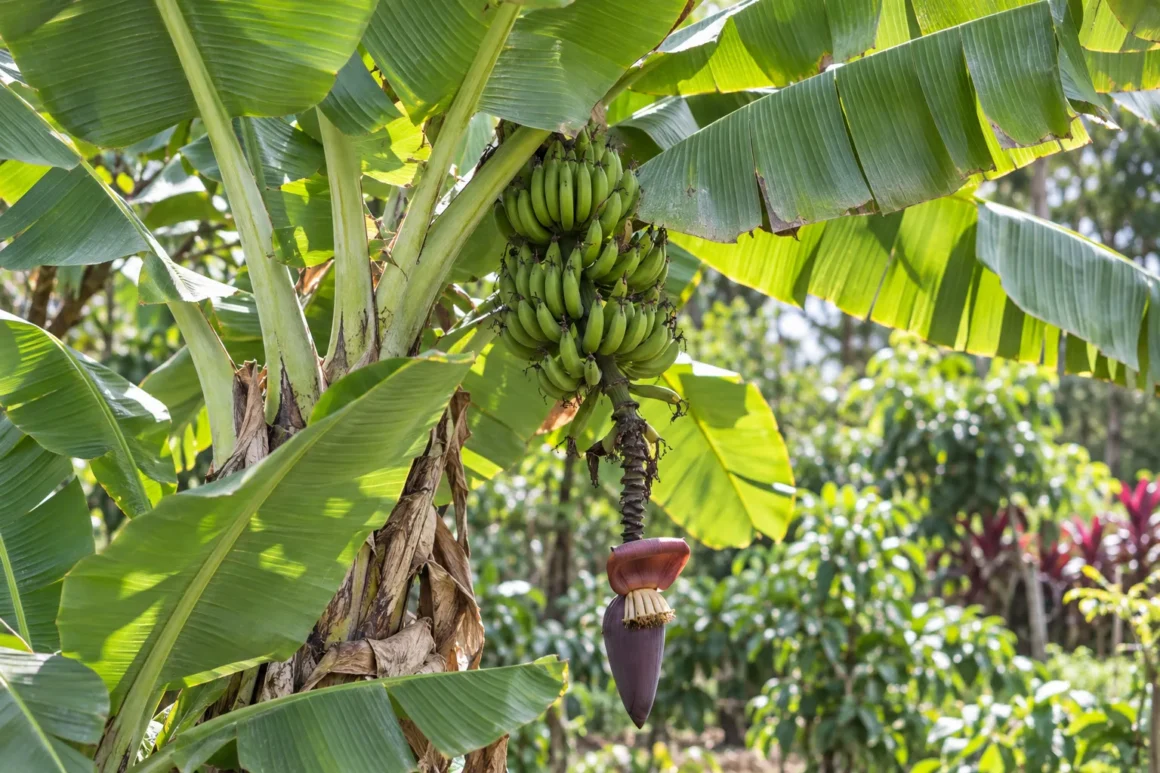
Musa acuminata is the main wild ancestor of dessert bananas. It grows quickly from a suckering rootstock into a false stem with enormous paddle-shaped leaves up to 2 m (6 ft) long. Flowering stems with purple bracts appear on mature plants, and each stem dies after fruiting.
It is fully tender, needing at least 10°C (50°F), and is hardy outdoors only in USDA zones 10–11. In the tropics it reaches 4–6 m (13–20 ft) and fruits; in cooler climates it is a large pot plant that rarely flowers.
Grow in rich, moist soil in sun with shelter from wind, and feed and water generously.
At a Glance
Growing Conditions
Aspect Suitability
- South-facing
- West-facing
Soil Tolerance
- Loam
- Acid
- Neutral pH
Foliage
- Architectural foliage
Foliage interest: 12 months of the year
Seasonal Timeline
- Foliage 12 months of the year
- Propagate Apr May Jun
How to propagate
One way to grow more Banana:
Offsets, runners and bulblets Apr Easy
You'll need: Sharp spade or knife
- Choose a sucker at least 30 cm (12 in) tall with its own roots
- Cut it cleanly from the parent
- Pot in rich compost in warmth
- How long
- 30 minutes
- It's worked when
- high
- Then
- Keep warm and moist until growing strongly.
Separate suckers (pups) with roots attached from the base in warmth.
Garden Design
Works well in: Tropical / Exotic
Huge paddle leaves on a fast-growing false stem. In cool climates use a large pot or plant out for summer in a sheltered spot.
Companion planting: Cannas, Colocasias, Gingers, Alocasias
Wildlife Value
- Shelter