

Perennial
Musa sikkimensis
Darjeeling banana
Also known as: Musa hookeri
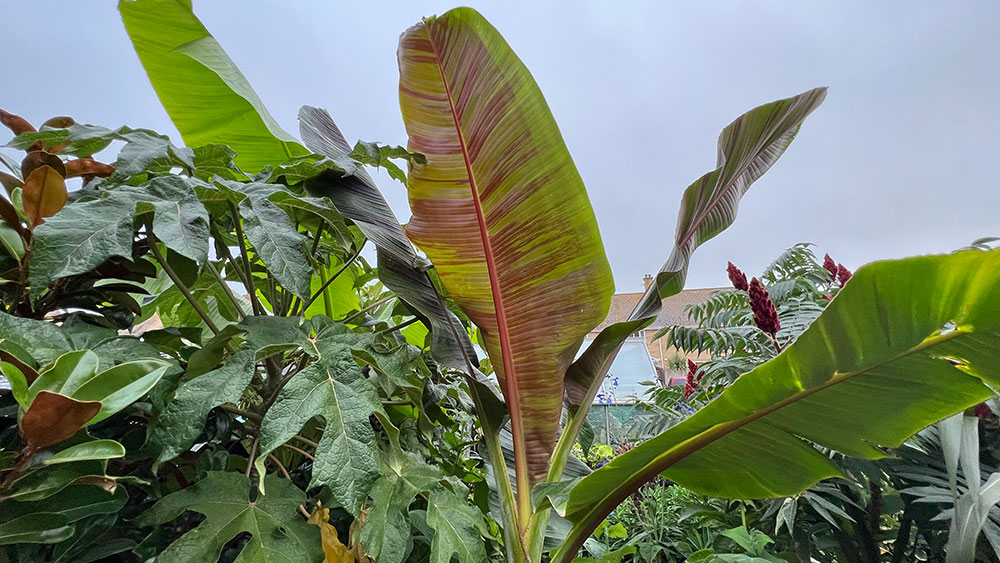
A tall Himalayan banana with broad green leaves, often reddish underneath when young.
- Full sun, Partial shade
- 2.5–5 m (8–16 ft)
- 1.5–3 m (5–10 ft)
- H3 · Zone 8
- July–September
- Deciduous
Overview
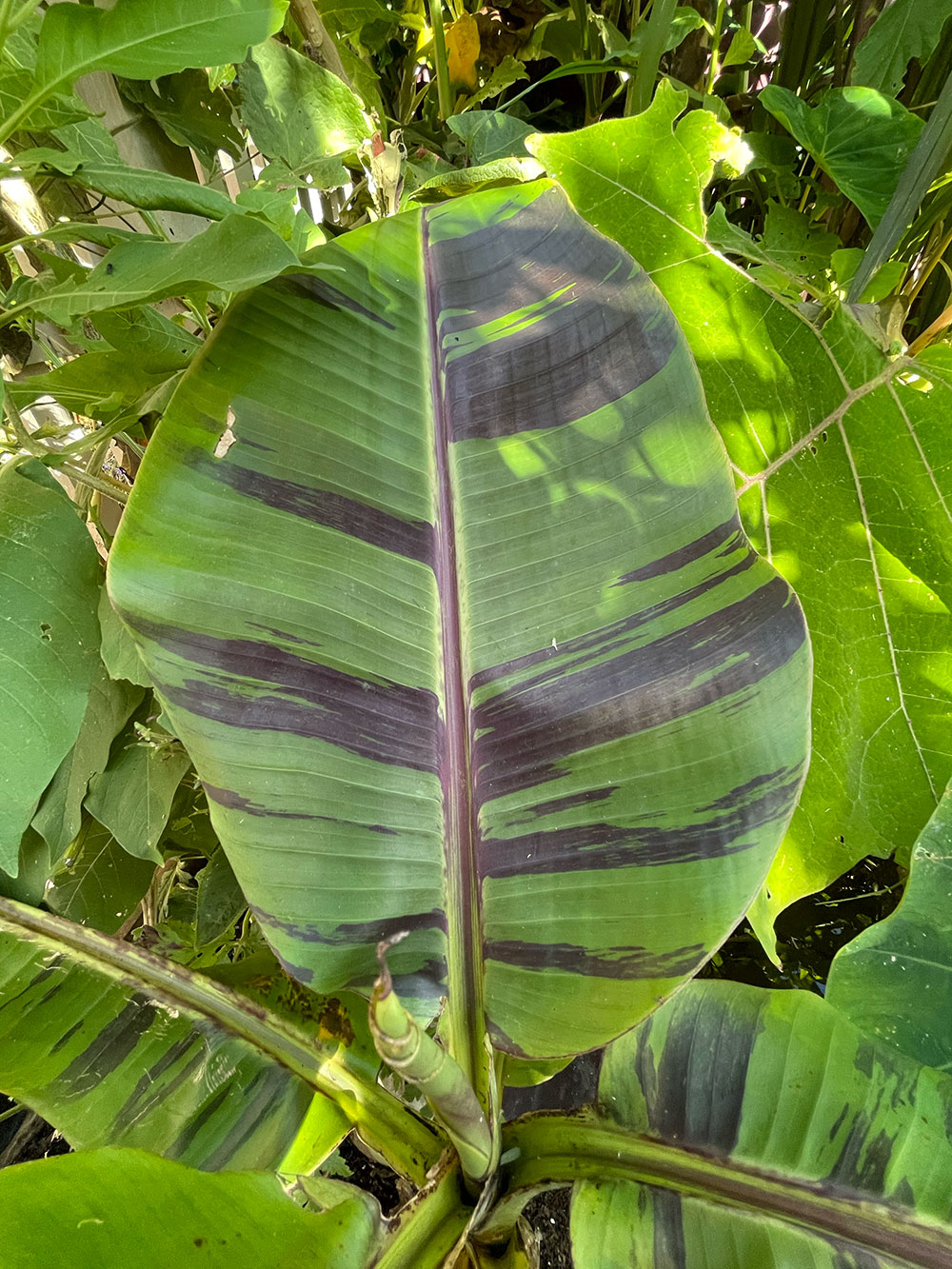
This vigorous banana forms suckering clumps and broad leaves that may show red colouring, especially on young growth. Seedlings vary and plain species plants are not necessarily strongly striped. Protect leaves from wind and retain pseudostems with winter insulation; cold wet roots and prolonged freezing are damaging.
At a Glance
Growing Conditions
Aspect Suitability
- South-facing
- West-facing
Soil Tolerance
- Clay
- Sandy
- Loam
- Acid
- Neutral pH
- Alkaline
Foliage
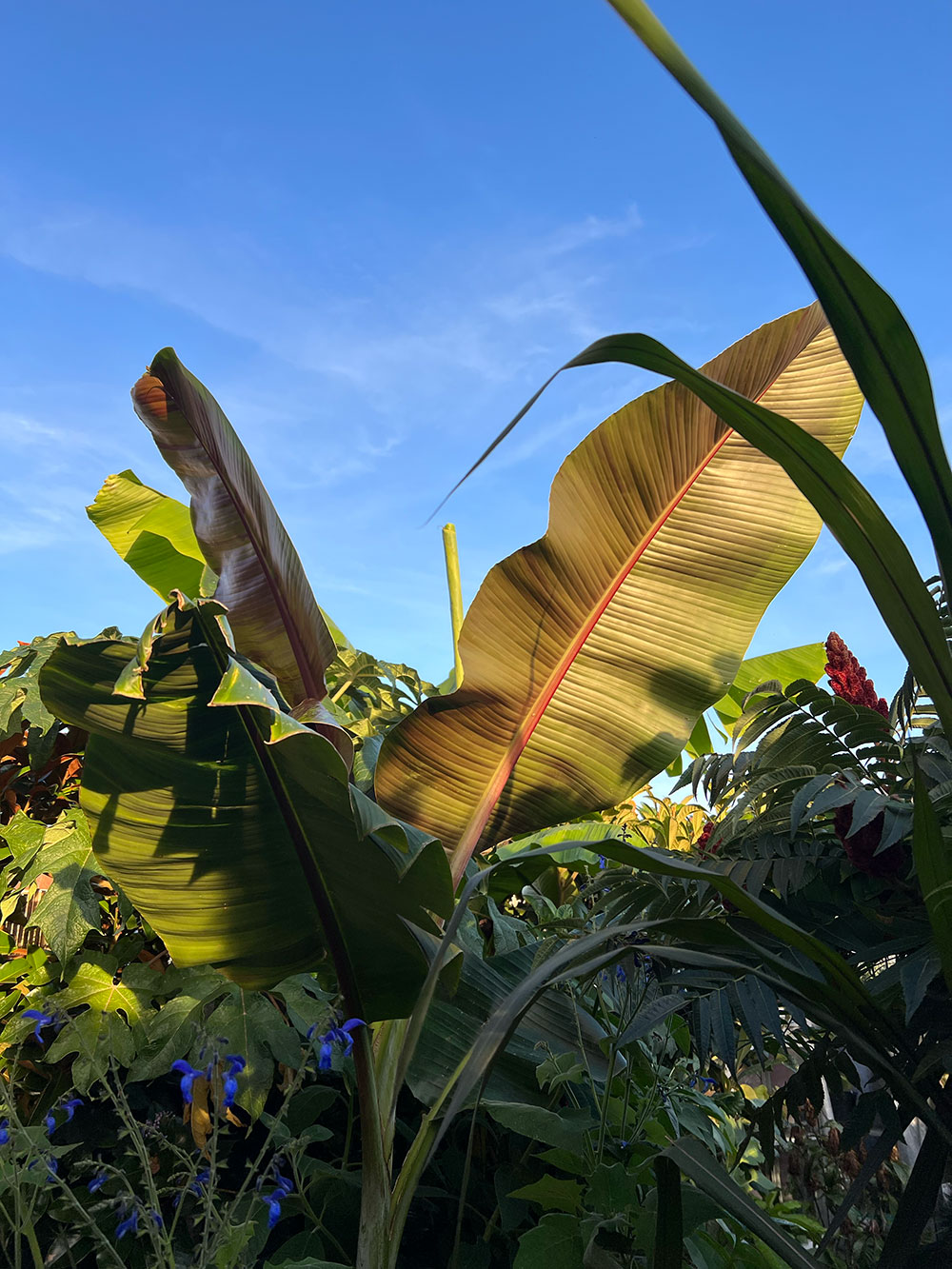
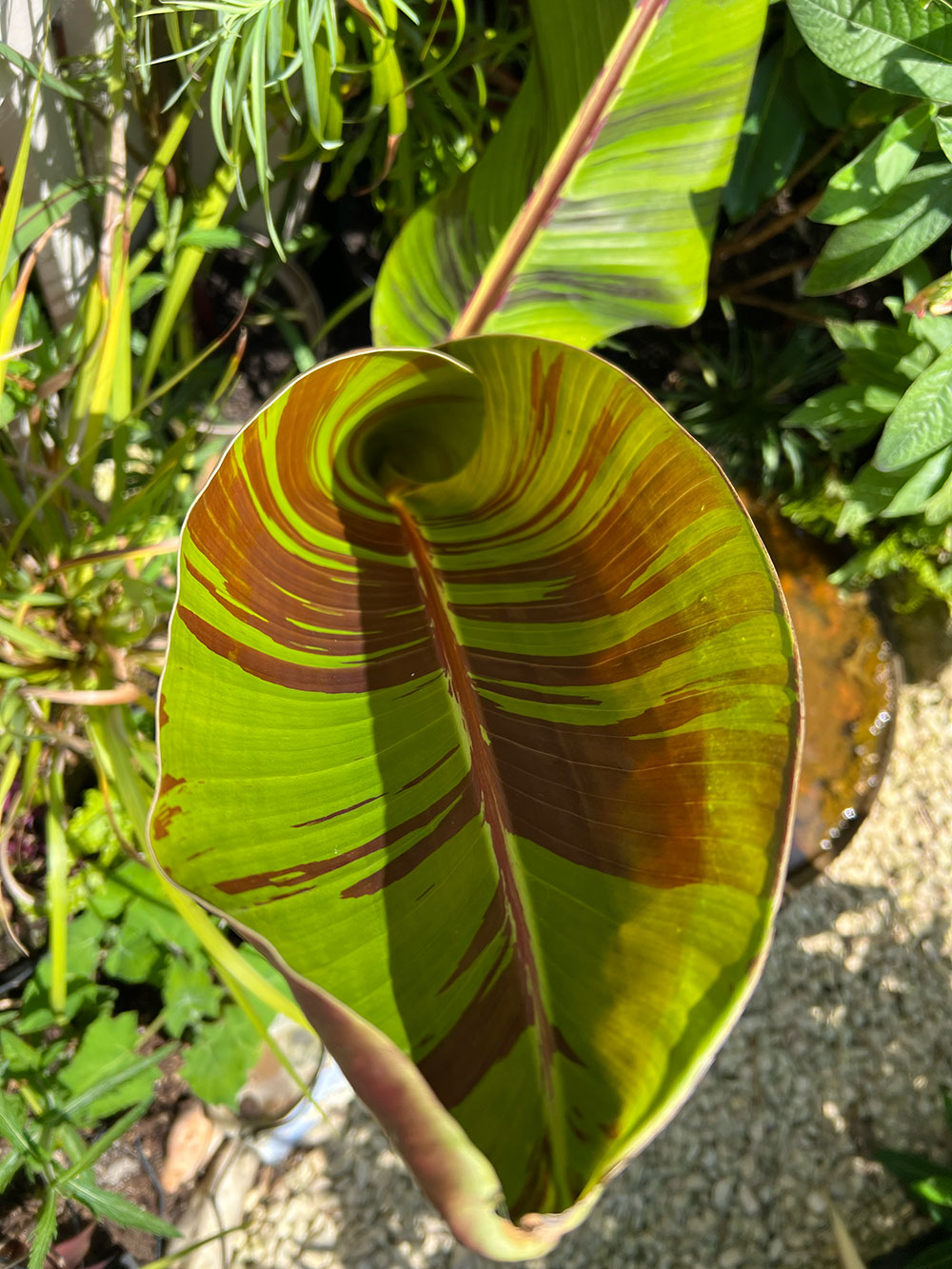
- Architectural foliage
Foliage interest: May–November
Seasonal Timeline
- Flowering Jul Aug Sep
- Foliage May Jun Jul Aug Sep Oct Nov
- Propagate Mar Apr May Jun Jul
Maintenance Calendar
- Apr Inspect protected stems and uncover gradually after frost
- May Apply feed and organic mulch as growth starts
- Jun Water generously throughout active summer growth
- Jul Separate well-rooted offsets in warm weather
- Oct Insulate stems and shelter pots before hard frost
- Dec Check crowns and insulation for wet rot
Garden Design
Works well in: Contemporary, Tropical
Use in a warm, sheltered border with generous space. Flowers are uncommon in UK gardens and depend on retaining mature stems through winter.
Companion planting: Cannas, Gingers, Ferns, Large grasses
Wildlife Value
- Shelter
Safety
No well-established major toxicity. Fruit is full of hard seeds and is not a typical eating banana.