

Climber
Passiflora caerulea
Blue passion flower
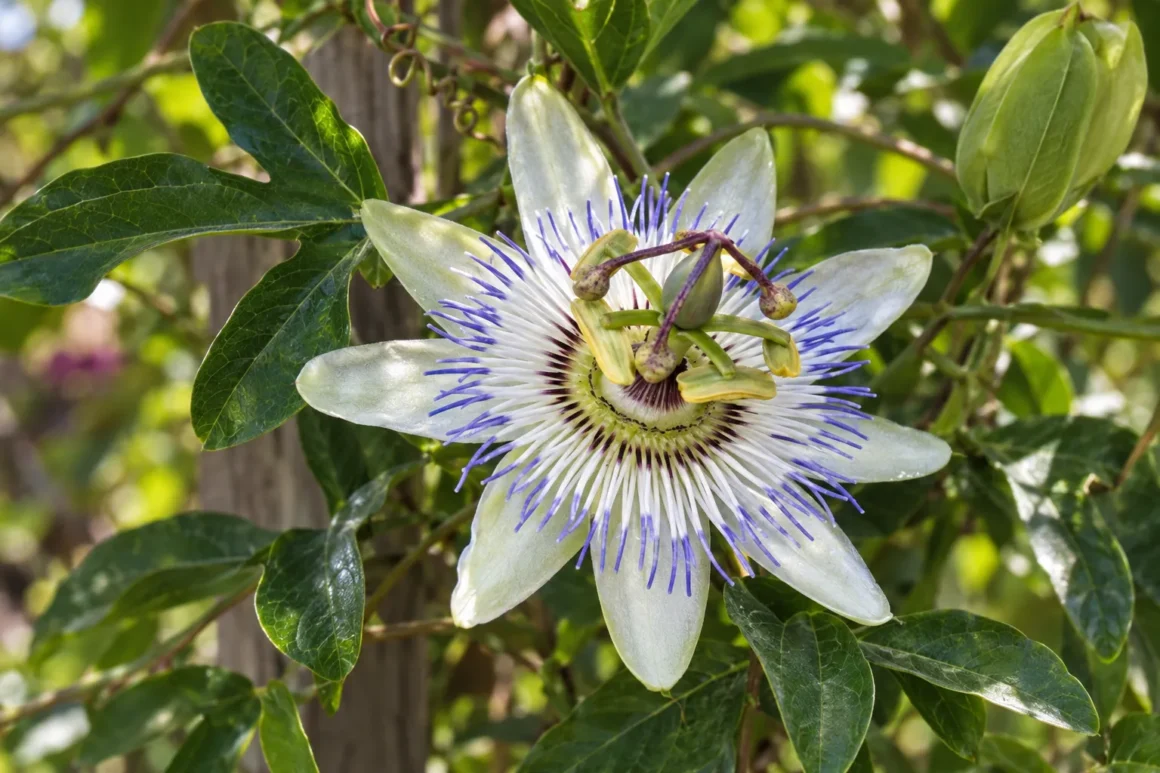
A vigorous hardy climber with intricate white, blue and purple flowers and orange fruits, the toughest passion flower.
- Full sun, Partial shade
- 8–12 m (26–39 ft)
- 2.5–4 m (8–13 ft)
- H4 · Zone 8
- June–October
- Evergreen
- RHS Award of Garden Merit
Overview
Blue passion flower is an evergreen climber with five-lobed leaves and intricate white flowers crowned with blue, white and purple filaments from summer to autumn, followed by egg-shaped orange fruits.
It is hardy to about −10°C (14°F), USDA zones 6–10, and in cold winters may be cut back but regrows from the base. It thrives in Mediterranean and warm-temperate gardens and is a caterpillar food plant for passion-vine butterflies in the Americas.
Grow on a sunny, sheltered wall in any well-drained soil and prune hard each spring to keep it in check.
At a Glance
Growing Conditions
Aspect Suitability
- South-facing
- West-facing
Soil Tolerance
- Clay
- Chalk
- Sandy
- Loam
- Acid
- Neutral pH
- Alkaline
Foliage
Foliage interest: 12 months of the year
Seasonal Timeline
- Flowering Jun Jul Aug Sep Oct
- Foliage 12 months of the year
- Fruiting Aug Sep Oct Nov
- Propagate Apr May Jun Jul Aug
How to propagate
One way to grow more Blue passion flower:
Semi-ripe cuttings Jun Easy
You'll need: Sharp knife, gritty compost
- Take 10 cm (4 in) cuttings below a node
- Remove lower leaves and tendrils
- Insert in gritty compost under cover
- How long
- 15 minutes
- It's worked when
- high
- Then
- Pot on and plant out the following spring.
Semi-ripe cuttings root easily in summer. Sow seed in spring after soaking.
Maintenance Calendar
- Mar Cut side shoots back to two or three buds and remove weak growth
- May Tie in new shoots to supports
- Jul Take semi-ripe cuttings
- Jul Water young plants in dry spells
Garden Design
Works well in: Cottage, Tropical / Exotic, Wildlife-friendly
Exotic-looking flowers on a reliably hardy climber; give it a sunny wall or fence with wires. Can become rampant, so prune each spring.
Companion planting: Clematis, Trachelospermum, Roses, Salvias
Wildlife Value
- Bees
- Butterflies
- Birds
- Food source
- Food
Food for birds: August–November
Safety
- Toxic to humans
- Toxic to dogs
- Toxic to cats
- Toxic to horses
Leaves and stems contain cyanogenic glycosides and are harmful if eaten. Ripe fruit is edible but bland; unripe fruit should not be eaten. An environmental weed in New South Wales and other Australian states and in parts of New Zealand; birds spread the seed.