

Climber · Tender perennial · Vegetable
Phaseolus coccineus
Runner bean, Scarlet runner bean
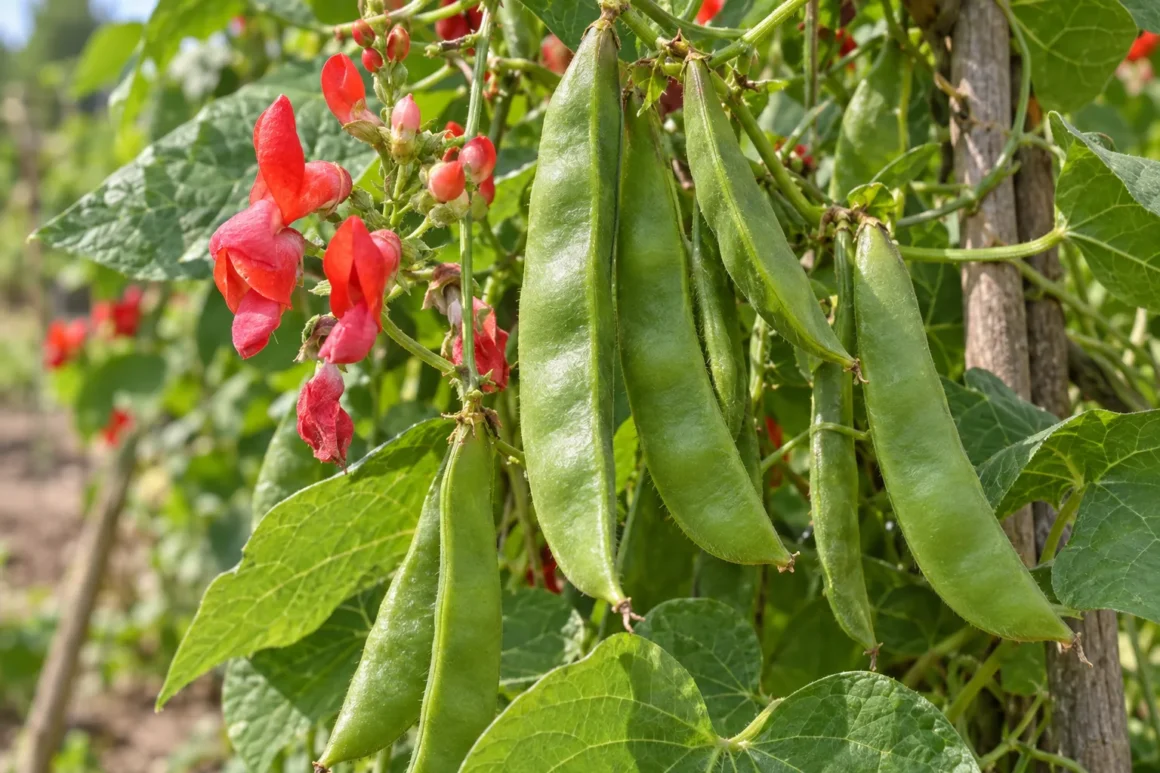
A vigorous twining climber with bright scarlet, white or pink flowers and long green pods, grown for food and ornament.
- Full sun
- 2–3 m (7–10 ft)
- 30–60 cm (12–24 in)
- H2 · Zone 10
- July–September
- Deciduous
Overview
Runner beans come from the cool mountains of Mexico and Central America, where they are a perennial with a fleshy root. In gardens they are usually grown as an annual, twining quickly up tall supports to produce clusters of bright scarlet, white, pink or bicoloured flowers that hummingbirds and bees love, followed by long, flat pods. Pick pods young and often for tender eating; mature pods give large, colourful dried beans that must be thoroughly cooked. Runner beans prefer warm but not hot conditions and drop their flowers when days are above about 27°C (81°F) or nights are very warm, so they thrive in cool-summer climates and do best as an early or late crop where summers are hot. Frost kills the top growth. Flower colour and pod length depend on the variety.
At a Glance
Growing Conditions
Aspect Suitability
- South-facing
- West-facing
Soil Tolerance
- Clay
- Sandy
- Loam
- Neutral pH
- Alkaline
Foliage
Foliage interest: June–October
Seasonal Timeline
- Flowering Jul Aug Sep
- Foliage Jun Jul Aug Sep Oct
- Fruiting Jul Aug Sep Oct
- Propagate Apr May Jun
- Sow indoors Mar Apr
- Sow / plant outside Apr May
- Plant out Apr May
- Harvest Jul Aug Sep Oct
How to propagate
One way to grow more Runner bean, Scarlet runner bean: the usual steps for each method.
From seed Apr–Jun Easy
You'll need: Seed compost, a seed tray or small pots, labels, and a clear lid or plastic bag.
- Fill a tray or pots with seed compost, level it and firm it gently.
- Water the compost and let it drain.
- Sow the seeds thinly on top. Cover them with a fine layer of compost or vermiculite about as deep as the seed is big; leave tiny seeds uncovered.
- Label them, cover with a clear lid or bag, and keep them somewhere bright but out of hot sun.
- Keep the compost just moist, and take the cover off once seedlings appear.
- How long
- Usually comes up in 1 to 3 weeks.
- It's worked when
- Seedlings with their first pair of leaves.
- Then
- When each has its first true leaves, prick them out into their own small pots, holding them by a leaf, never the stem. Harden them off for a week or two before planting out.
Sow indoors in deep pots two to three weeks before your last frost, or direct sow 5cm (2in) deep at the base of supports once the soil has warmed to about 12°C (54°F). In frost-free areas the fleshy roots can be lifted and stored, or left in the ground, to resprout.
Maintenance Calendar
- Apr Dig compost into a trench where the beans will grow, as rich, moisture-holding soil gives the heaviest crops
- May Put up canes or poles at least 2m (6ft) tall before sowing or planting
- May Sow direct or plant out after your last frost, one bean per cane, and protect from slugs
- Jun Guide young stems anticlockwise around the supports until they take hold
- Jul Water deeply in dry spells and mist flowers in hot weather, which helps pods set
- Jul Pinch out the tips once plants reach the top of their supports
- Aug Pick pods every two or three days while 15-20cm (6-8in) long, before the beans swell
- Oct Cut stems off at ground level after cropping, leaving the nitrogen-rich roots in the soil
Garden Design
Works well in: Cottage, Edible / Kitchen Garden
Grow up a tall wigwam, an arch or a row of crossed canes, where the scarlet flowers make a showy summer screen in a vegetable bed or flower border.
Companion planting: Sweetcorn, Squash, Sweet peas, Avoid planting next to onions and garlic
Wildlife Value
- Bees
- Birds
- Food source
- Food
Safety
Pods are edible when cooked. Raw beans, especially the mature seeds, contain lectins (phytohaemagglutinin) and cause severe stomach upset unless boiled thoroughly, so never eat raw dried beans.