

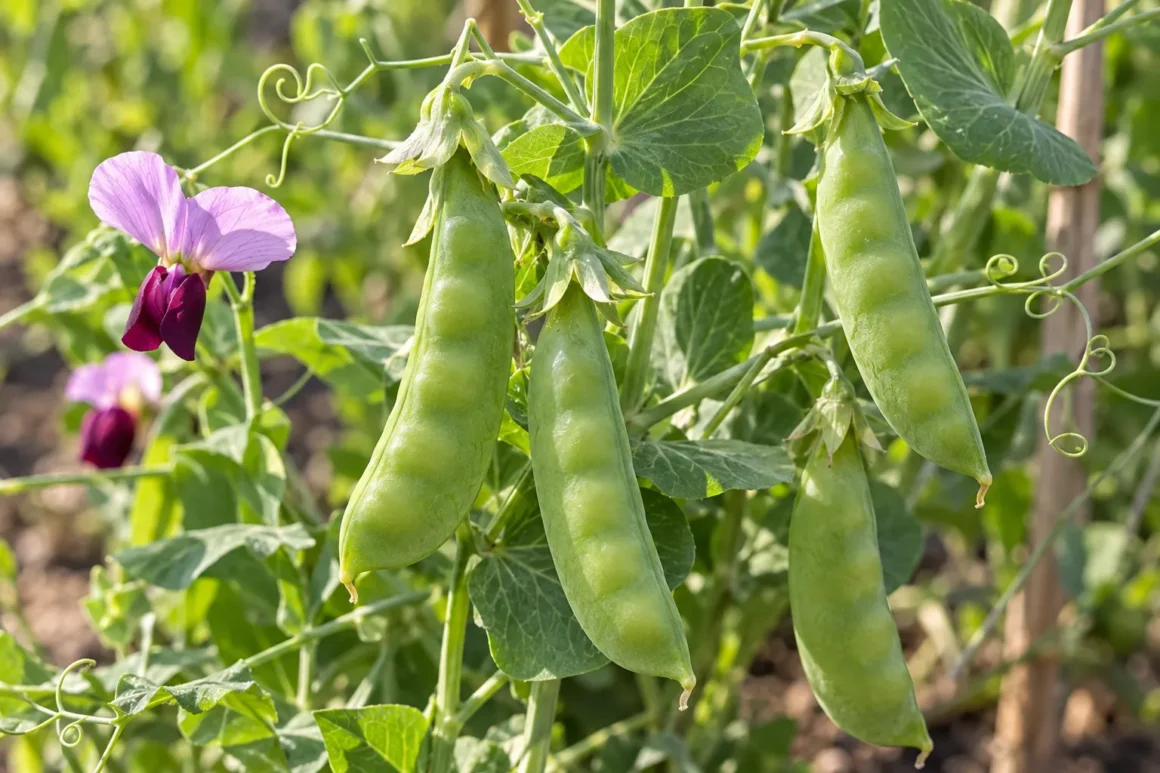
Annual · Climber · Vegetable
Pisum sativum
Pea, Garden pea, Mangetout, Snow pea, Sugar snap pea
A cool-season climbing crop grown for sweet shelling peas, flat snow pea (mangetout) pods or crunchy sugar snaps.
- Full sun
- 0.5–2 m (1–7 ft)
- 20–30 cm (8–12 in)
- H3 · Zone 9
- May–July
- Deciduous
Overview
Peas were among the first crops ever domesticated, in the Near East and Mediterranean. They are hardy, cool-season annuals that climb by tendrils, with soft blue-green leaves, white or purple flowers and pods that are either shelled for the sweet peas inside or, in snow pea (mangetout) and sugar snap types, eaten whole. Peas tolerate light frost and grow best at about 13-18°C (55-65°F); hot weather above about 25°C (77°F) ends cropping, so sow them early in spring where summers are hot, or as an autumn and winter crop in mild-winter climates. Heights range from 45cm dwarf types to 2m climbers, so check the details for the variety you choose.
At a Glance
Growing Conditions
Aspect Suitability
- South-facing
- West-facing
Soil Tolerance
- Clay
- Sandy
- Loam
- Neutral pH
- Alkaline
Foliage
Foliage interest: April–July
Seasonal Timeline
- Flowering May Jun Jul
- Foliage Apr May Jun Jul
- Fruiting Jun Jul
- Propagate Feb Mar Apr Oct Nov
- Sow / plant outside Mar Apr May Jun Jul Oct Nov
- Harvest May Jun Jul
How to propagate
One way to grow more Pea, Garden pea, Mangetout, Snow pea, Sugar snap pea: the usual steps for each method.
From seed Feb–Apr, Oct–Nov Easy
You'll need: Seed compost, a seed tray or small pots, labels, and a clear lid or plastic bag.
- Fill a tray or pots with seed compost, level it and firm it gently.
- Water the compost and let it drain.
- Sow the seeds thinly on top. Cover them with a fine layer of compost or vermiculite about as deep as the seed is big; leave tiny seeds uncovered.
- Label them, cover with a clear lid or bag, and keep them somewhere bright but out of hot sun.
- Keep the compost just moist, and take the cover off once seedlings appear.
- How long
- Usually comes up in 1 to 3 weeks.
- It's worked when
- Seedlings with their first pair of leaves.
- Then
- When each has its first true leaves, prick them out into their own small pots, holding them by a leaf, never the stem. Harden them off for a week or two before planting out.
Direct sow 3-5cm (1-2in) deep four to six weeks before your last frost, once the soil can be worked, or in autumn in mild-winter climates. Sowing in lengths of guttering under cover protects seed from mice and wet, cold soil.
Maintenance Calendar
- Mar Sow direct four to six weeks before your last frost, as peas grow best in cool conditions
- Mar Protect fresh sowings from mice and birds with netting or by starting them under cover
- Apr Put up netting or twiggy sticks as the first tendrils appear, as plants left to sprawl rot and crop poorly
- May Sow again every three weeks until early summer for a longer harvest
- Jun Water well once flowering starts, as dry soil reduces the crop
- Jun Pick pods every few days as they fill, starting from the bottom, which keeps plants producing
- Jul Cut plants off at soil level when cropping ends, leaving the nitrogen-rich roots in the ground
- Oct In mild-winter climates sow a hardy variety for an early crop next spring
Garden Design
Works well in: Cottage, Edible / Kitchen Garden
Grow up twiggy sticks, netting or a mesh fence, or let dwarf types scramble in containers. Purple-podded and pink-flowered types are pretty enough for a flower border.
Companion planting: Carrots, Lettuce, Radishes, Spinach, Avoid planting next to onions and garlic
Wildlife Value
- Bees
- Food source
- Food
Safety
Pods and peas are edible and not known to be toxic to people or pets. Do not confuse them with ornamental sweet peas (Lathyrus odoratus), whose pods and seeds are poisonous.