

Tree
Pseudopanax crassifolius
Lancewood
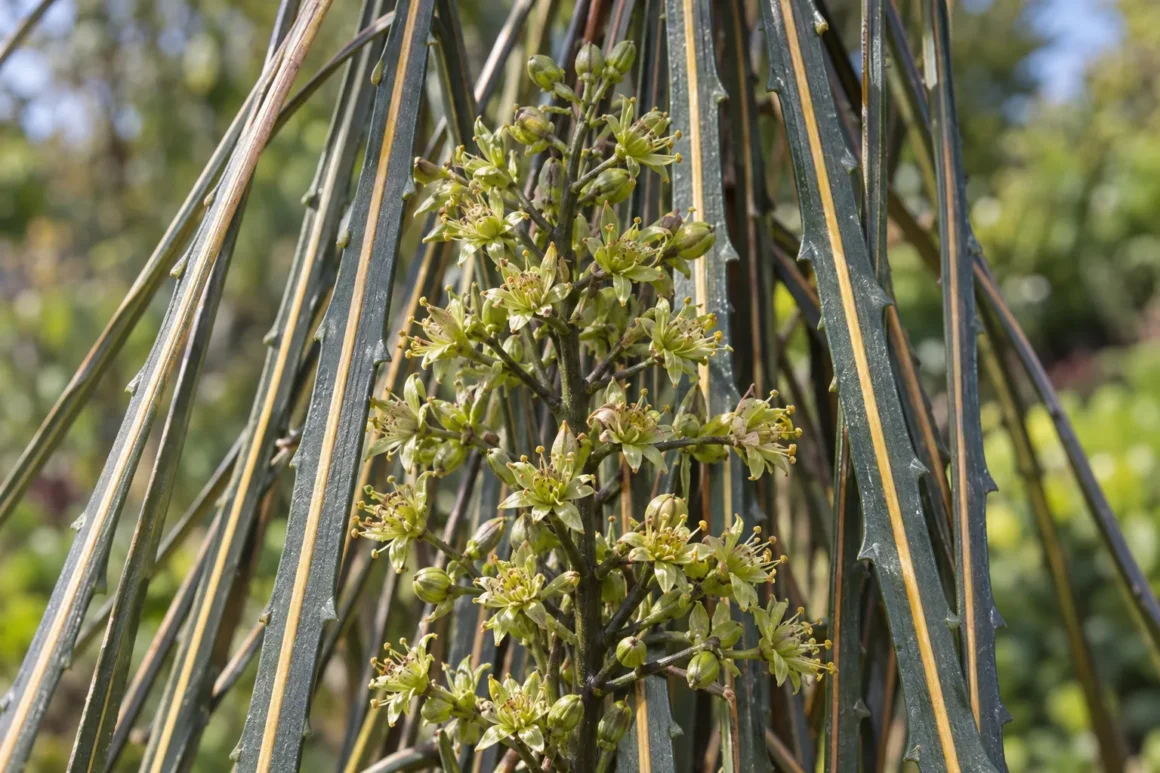
A New Zealand tree whose young plants are living sculptures of long, rigid, saw-edged leaves pointing downwards.
- Full sun, Partial shade
- 8–12 m (26–39 ft)
- 1.5–2.5 m (5–8 ft)
- H4 · Zone 8
- July–September
- Evergreen
Overview
Lancewood or horoeka is endemic to New Zealand. Young plants form a single stem with stiff, narrow, dark bronze-green leaves up to 1 m (3 ft) long, toothed and angled downwards. After 15–20 years it changes to a round-headed tree with short leaves, small flowers and dark purple berries.
It is hardy to about −10°C (14°F), USDA zone 8 with shelter. It grows best in mild, moist oceanic climates and dislikes hot, humid summers.
Grow in well-drained soil in sun or light shade, sheltered from cold, drying winds.
At a Glance
Growing Conditions
Aspect Suitability
- South-facing
- West-facing
Soil Tolerance
- Sandy
- Loam
- Acid
- Neutral pH
- Alkaline
Foliage
- Architectural foliage
Foliage interest: 12 months of the year
Seasonal Timeline
- Flowering Jul Aug Sep
- Foliage 12 months of the year
- Fruiting Oct Nov
- Propagate Mar Apr Aug Sep
How to propagate
One way to grow more Lancewood:
Semi-ripe cuttings Aug Takes a little care
You'll need: Rooting hormone, bottom heat
- Take semi-ripe side shoots
- Dip in rooting hormone
- Root in gritty compost under cover
- How long
- 15 minutes
- It's worked when
- low
- Then
- Grow on under cover for a year.
Seed sown fresh; semi-ripe cuttings or air layering.
Garden Design
Works well in: Modern / Contemporary, Tropical / Exotic
The juvenile form is a bizarre, narrow, downward-pointing rosette of saw-edged leaves up to 1 m (3 ft) long — a living sculpture for gravel and modern gardens. After many years it becomes a round-headed tree.
Companion planting: Phormiums, Astelias, Grasses, Cordylines
Wildlife Value
- Birds
- Food source
- Food
Food for birds: October–November