

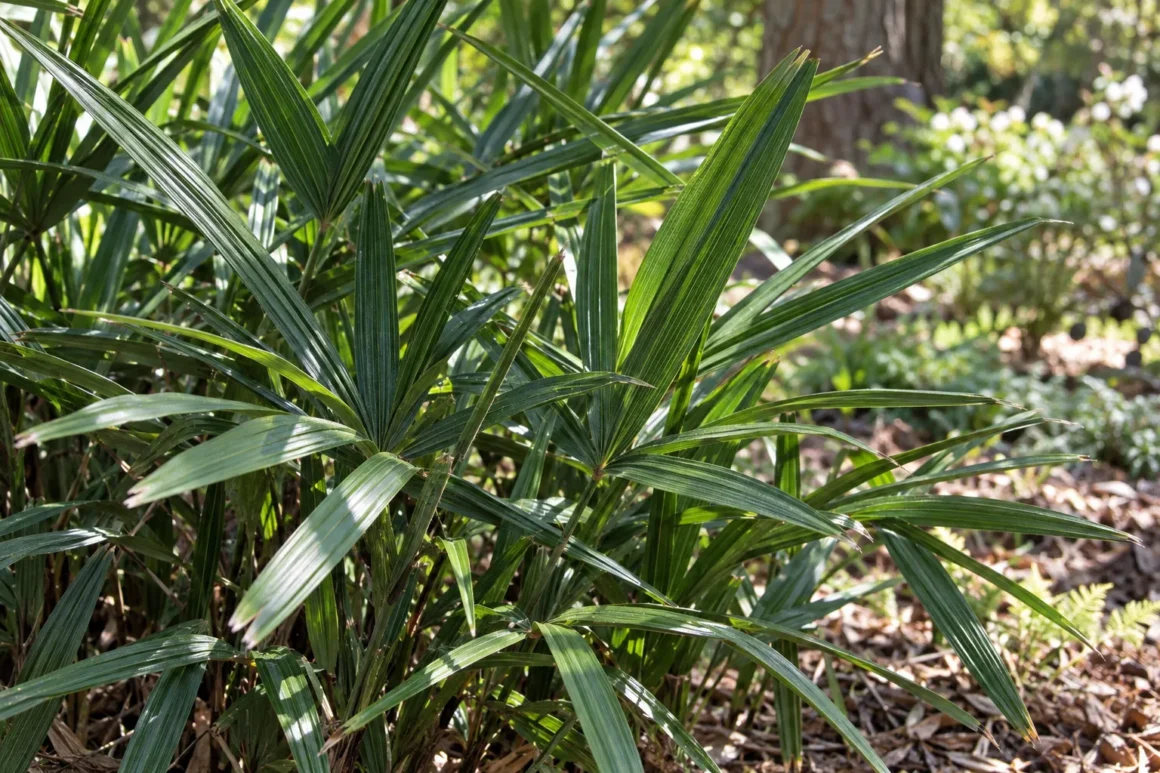
Shrub
Rhapidophyllum hystrix
Needle palm
Possibly the hardiest palm in the world: a slow, shrubby clump of glossy fan leaves guarded by long black needles.
- Full shade, Full sun, Partial shade
- 1–1.5 m (3–5 ft)
- 1–1.5 m (3–5 ft)
- H6 · Zone 6
- Evergreen
Overview
Needle palm is a slow, clump-forming palm from swampy forests of the south-eastern USA. It makes a low mound of glossy, deep green fan leaves, silvery beneath, with long black needles hidden around the base. Flowers and fuzzy reddish fruits are mostly hidden among the spines.
It is hardy to about −20°C (−4°F), USDA zones 6b–10. It grows best where summers are hot and humid but survives in cool climates, just more slowly.
Grow in sun or shade, ideally part shade, in rich moist soil; it tolerates wet ground and, once established, drought.
At a Glance
Growing Conditions
Aspect Suitability
- North-facing
- East-facing
- South-facing
- West-facing
Site Tolerance
- Drought
- Wet soil
Soil Tolerance
- Chalk
- Sandy
- Loam
- Acid
- Neutral pH
- Alkaline
Foliage
- Architectural foliage
Foliage interest: 12 months of the year
Seasonal Timeline
- Foliage 12 months of the year
- Propagate Apr May
How to propagate
Ways to grow more Needle palm: the usual steps for each method.
From seed Apr–May Easy
- Needs light to germinate: press onto the surface, don't cover
- Soak in warm water for 48 hours before sowing
- Germinates best at about 25°C
- Comes up in 90–365 days
- Prick out about 10 weeks after sowing
- Pot on about 30 weeks after sowing
- Very slow and erratic.
You'll need: Seed compost, a seed tray or small pots, labels, and a clear lid or plastic bag.
- Fill a tray or pots with seed compost, level it and firm it gently.
- Water the compost and let it drain.
- Sow the seeds thinly on top. Cover them with a fine layer of compost or vermiculite about as deep as the seed is big; leave tiny seeds uncovered.
- Label them, cover with a clear lid or bag, and keep them somewhere bright but out of hot sun.
- Keep the compost just moist, and take the cover off once seedlings appear.
- How long
- Usually comes up in 1 to 3 weeks.
- It's worked when
- Seedlings with their first pair of leaves.
- Then
- When each has its first true leaves, prick them out into their own small pots, holding them by a leaf, never the stem. Harden them off for a week or two before planting out.
Offsets, runners and bulblets Apr Easy
You'll need: A trowel, small pots and compost.
- Find the small plants, offsets or bulblets growing beside the parent plant, or on its runners.
- Gently separate them with some roots, cutting any runner from the parent.
- Pot them up, or replant them at the same depth, and water.
- How long
- Grows on within a few weeks.
- It's worked when
- New leaves on the young plants.
- Then
- Grow them on until they're a good size before planting out.
Seed is slow, taking up to a year; dividing suckers is possible but hazardous because of the spines.
Garden Design
Works well in: Tropical / Exotic, Woodland / Shade
One of the world's hardiest palms: a shrubby clump of glossy fans, silvery beneath, for a jungle look in cold gardens.
Companion planting: Ferns, Aspidistras, Fatsias, Sabals
Wildlife Value
- Shelter