

Perennial · Shrub
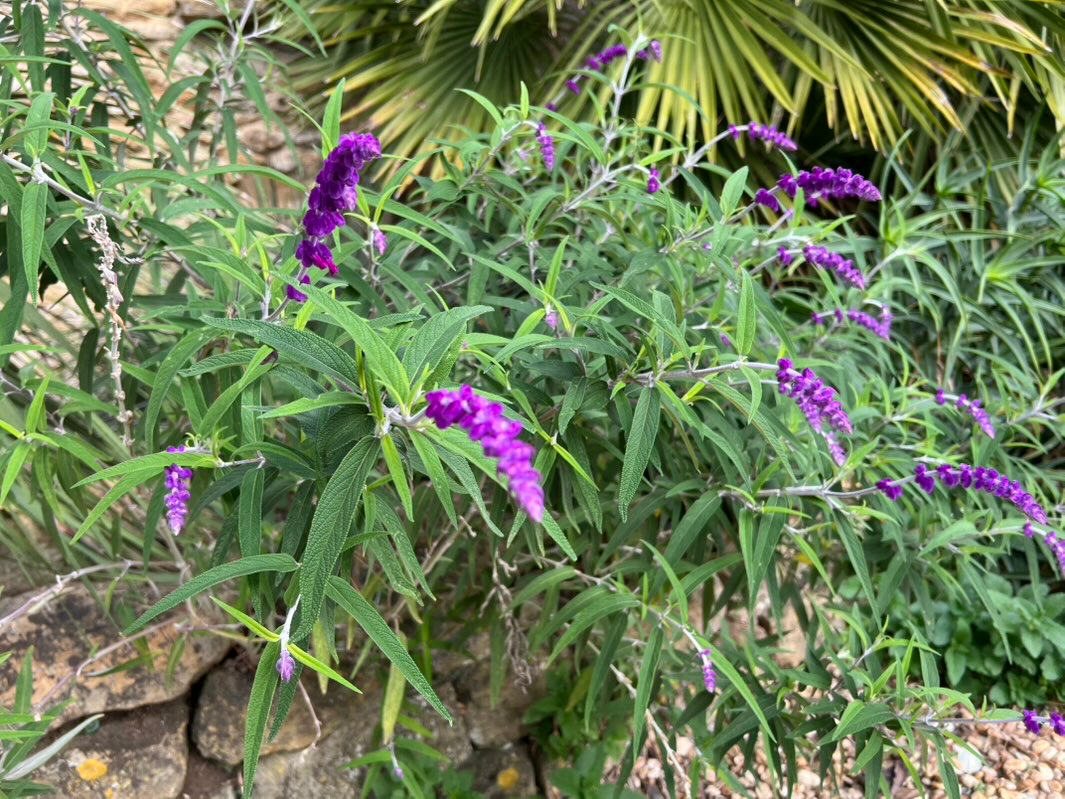
Salvia leucantha
Mexican bush sage
Also known as: Salvia bicolor
A late-flowering, shrubby sage with soft grey-green leaves and arching spikes of velvety purple and white flowers.
- Full sun
- 0.6–1.2 m (2–4 ft)
- 0.5–1 m (2–3 ft)
- H2 · Zone 10
- August–November
- Evergreen
- RHS Award of Garden Merit
Overview
From Mexico and Central America, this bushy sage has narrow, grey-green, aromatic leaves with felted white undersides. From late summer until the frosts it produces long, arching spikes of fuzzy purple calyces from which small white flowers emerge, giving a soft, velvety effect loved by bees and butterflies. It is frost tender (RHS H2) in the UK and similar climates, so grow it in a sunny border as a late-season showpiece and either lift it, keep it in a pot that can come under cover, or take cuttings.
At a Glance
Growing Conditions
Aspect Suitability
- South-facing
- West-facing
Site Tolerance
- Drought
Soil Tolerance
- Chalk
- Sandy
- Loam
- Acid
- Neutral pH
- Alkaline
Foliage
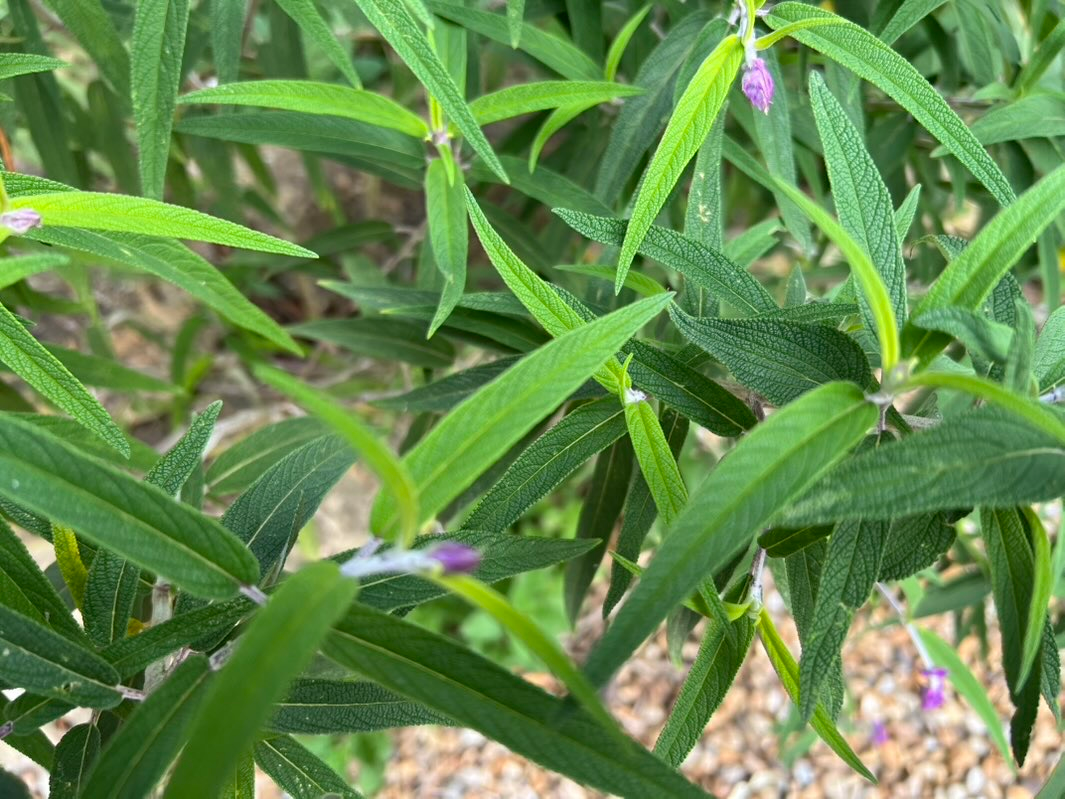
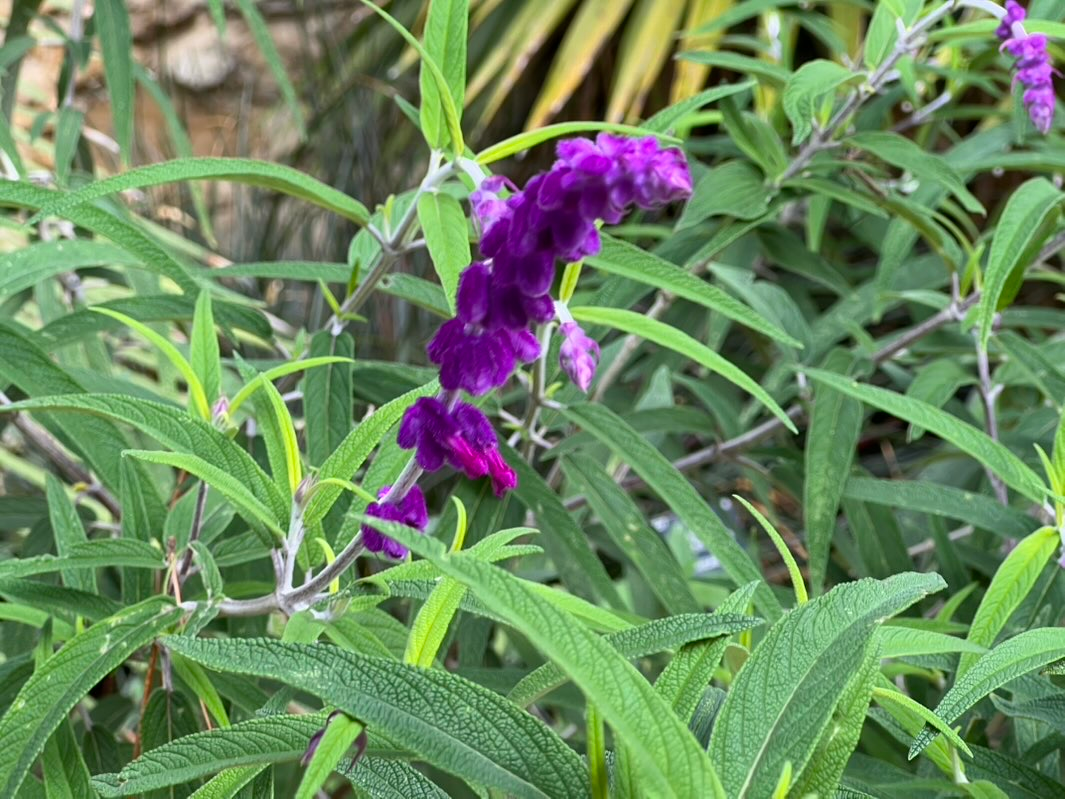
Foliage interest: May–November
Seasonal Timeline
- Flowering Aug Sep Oct Nov
- Foliage May Jun Jul Aug Sep Oct Nov
- Propagate Apr May Aug Sep
Maintenance Calendar
- Apr Cut overwintered plants back hard to fresh shoots, as new growth produces the best autumn flower spikes
- May Plant out after the last frost into a sunny, well-drained spot
- Aug Take cuttings now as an insurance, since it rarely survives a cold winter outdoors
- Oct Move pots under frost-free cover or lift a plant before the first frost, keeping it barely moist through winter
Garden Design
Works well in: Cottage, Mediterranean, Modern / Contemporary, Wildlife-friendly
Use for late-season colour in a sunny border or big pot; it looks especially good beside silver foliage and pink or orange dahlias.
Companion planting: Ornamental grasses, Asters, Dahlias, Silver foliage
Wildlife Value
- Bees
- Butterflies
- Other pollinators
- Birds
Safety
Not known to be toxic; ornamental sage, not for culinary use.