

Shrub
Sambucas nigra ‘Blue Sheen’
Elder, Black Elder, Elderberry
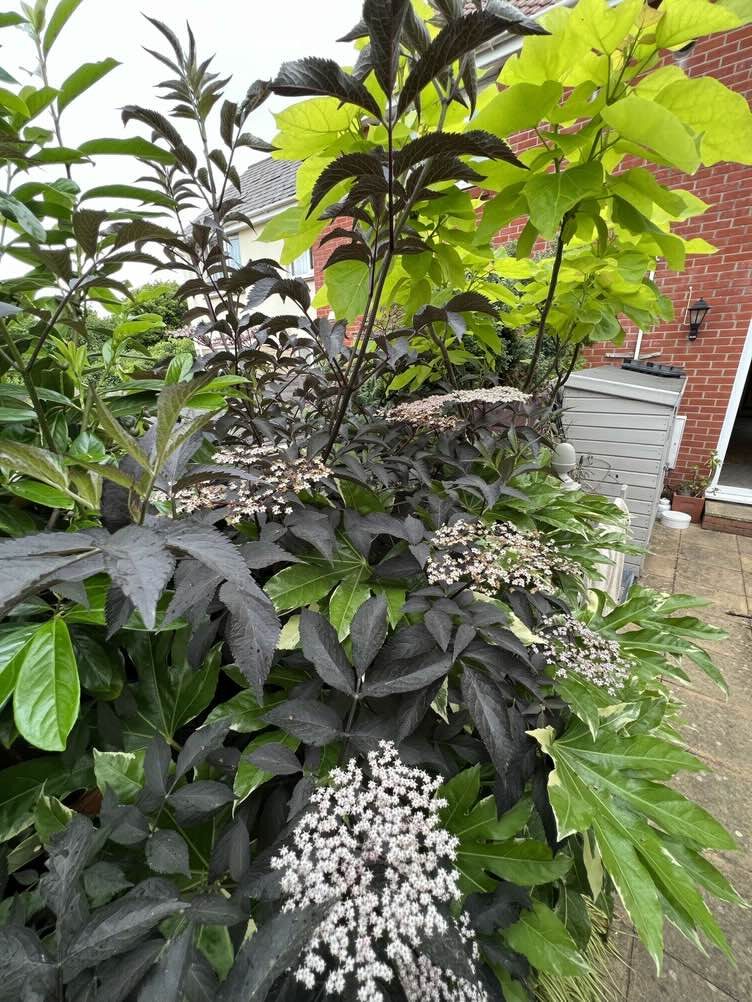
A compact form of black elder with attractive foliage, creamy summer flowers and dark berries loved by birds.
- Full sun, Partial shade
- 3–4 m (10–13 ft)
- 3–4 m (10–13 ft)
- H6 · Zone 6
- June–July
- Deciduous
Overview
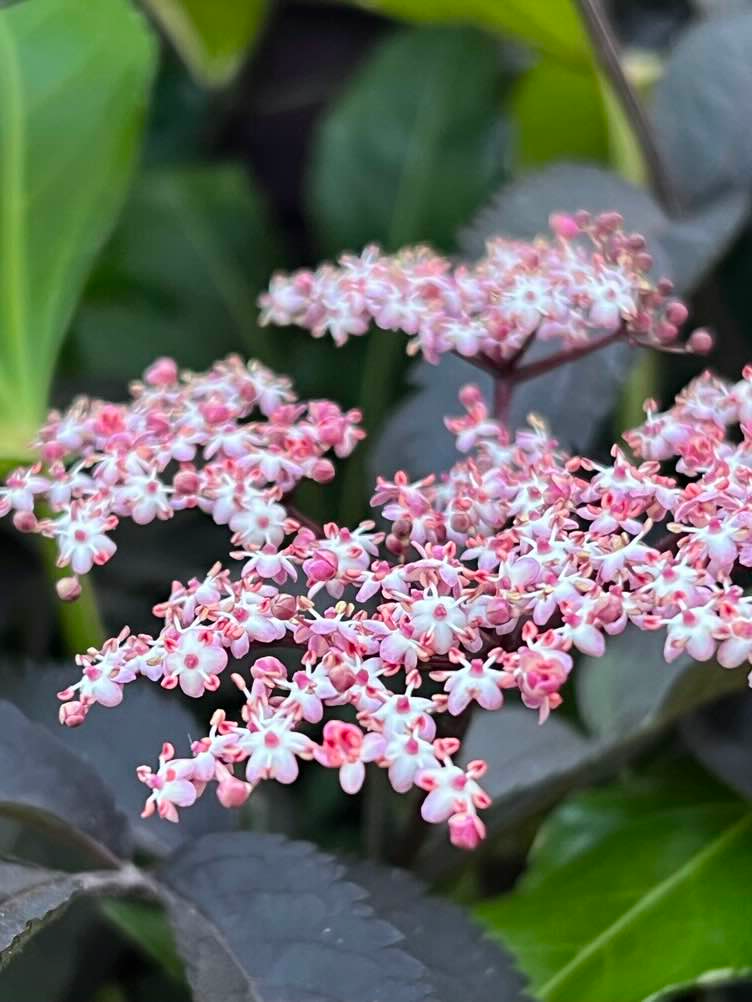
Sambucus nigra ‘Blue Sheen’ is a deciduous shrub belonging to the elder family, valued for its ornamental foliage and its generous crops of dark, glossy berries that develop a subtle blue-black sheen as they ripen. In early summer it produces broad, flattened heads of creamy-white, faintly scented flowers that are a magnet for pollinating insects.
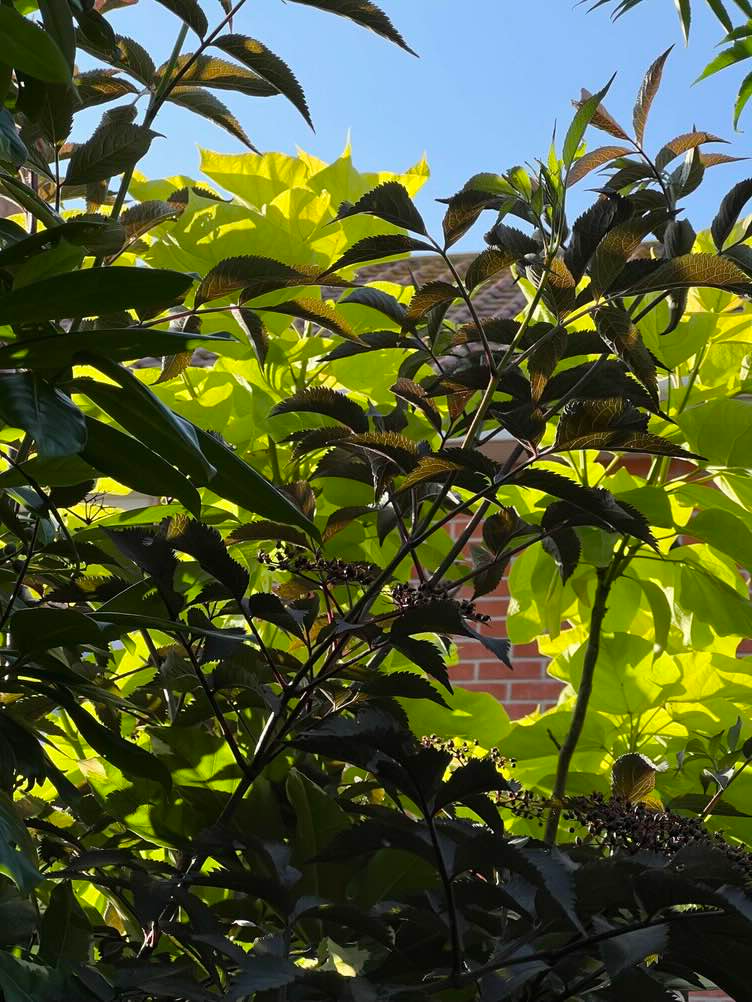
As the season progresses the flowers give way to heavy clusters of small, dark fruit that hang attractively from the branches and provide a valuable late-summer feast for garden birds. The pinnate, mid-green leaves give the plant a soft, airy texture, making it a useful backdrop in a mixed border or informal hedge.
Like other elders, this is an easy-going, tough shrub that copes well with a wide range of soils and situations, making it a reliable choice for wildlife gardens, cottage gardens and informal country plots. It responds well to pruning, allowing gardeners to keep its size in check or encourage fresh, vigorous growth each year.
At a Glance
Growing Conditions
Aspect Suitability
- East-facing
- South-facing
- West-facing
Site Tolerance
- Exposed sites
- Wind
- Coastal
- Drought
Soil Tolerance
- Clay
- Chalk
- Sandy
- Loam
- Acid
- Neutral pH
- Alkaline
Foliage
- Autumn colour
- Architectural foliage
Foliage interest: April–October
Seasonal Timeline
- Flowering Jun Jul
- Foliage Apr May Jun Jul Aug Sep Oct
- Fruiting Aug Sep
- Propagate Jan Jun Jul Nov Dec
How to propagate
Ways to grow more Elder, Black Elder, Elderberry:
Softwood cuttings Jun–Jul Easy
You'll need: Non-flowering shoot tips, free-draining cuttings compost, pots and a sheltered bright spot or propagator.
- Choose healthy, non-flowering shoot tips about 10-15cm long in early summer
- Cut just below a leaf node and remove the lower leaves
- Dip the cut end in rooting hormone if you have it
- Insert cuttings around the edge of a pot filled with a free-draining compost and perlite mix
- Cover with a clear plastic bag or propagator lid and keep out of direct sun
- Keep the compost moist and check for roots after four to six weeks
- How long
- Roots in around four to six weeks.
- It's worked when
- New leaves appear and the cutting resists a gentle tug, often with roots visible through the drainage holes.
- Then
- Pot on into individual pots once well rooted, grow on in a sheltered spot over summer, and plant out the following spring after hardening off.
Hardwood cuttings Nov–Jan Easy
You'll need: Dormant pencil-thick stems, a sheltered bed or pots of free-draining soil.
- Take 20-25cm lengths of straight, pencil-thick dormant stems in late autumn or winter
- Cut the top just above a bud at a slant and the base straight just below a bud
- Insert cuttings two-thirds deep into a trench of free-draining soil outdoors or into pots
- Firm in well and water, then leave undisturbed over winter
- Keep the area weed-free and firm back in if frost lifts the cuttings
- How long
- Roots slowly over winter, with growth visible by spring.
- It's worked when
- Fresh leaf buds break in spring and the cutting resists a gentle tug.
- Then
- Leave in place until well rooted by autumn, then transplant to its final position or pot on.
Layering Sep–Nov Takes a little care
You'll need: A low, flexible one-year-old stem, soil pegs or a stone, and patience.
- Select a low, flexible stem from the current or previous year's growth in early autumn
- Lightly wound the underside of the stem where it will touch the soil
- Peg the wounded section into a shallow trench, leaving the growing tip exposed above ground
- Cover with soil, firm gently and water well
- Leave undisturbed for around twelve months while roots form
- Once well rooted, sever from the parent plant and transplant or pot up
- How long
- Takes about a year to form a well-rooted layer.
- It's worked when
- The layered section resists a gentle tug and shows new growth from the tip.
- Then
- Sever from the parent plant, pot on or plant into its final position, and keep well watered until established.
Take softwood cuttings in early summer from non-flowering shoots and root them in a free-draining compost mix in a sheltered spot. Hardwood cuttings taken in late autumn or winter and inserted straight into the ground or pots are an easy, reliable way to get new plants true to the parent. As a named cultivar, 'Blue Sheen' won't come true from seed, so cuttings or layering are the best options.
Maintenance Calendar
- Jan Prune out dead or crossing stems while dormant
- Jan Take hardwood cuttings from healthy one-year shoots
- Mar Apply a mulch of well-rotted compost around the base
- Mar Apply a balanced general feed as growth begins
- Apr Check new growth for aphid clusters
- May Trim out any frost-damaged tips
- Jun Take softwood cuttings from non-flowering shoots
- Jun Watch for elder leaf beetle on leaves
- Jul Pick flower heads for cordial or wine
- Aug Harvest ripe black berries for cooking
- Sep Continue picking berries, leaving some for birds
- Oct Check leaves for signs of mildew before leaf fall
- Nov Carry out main structural pruning once leaves have fallen
- Nov Take hardwood cuttings and insert into open ground or pots
Garden Design
Works well in: Cottage, Modern / Contemporary, Wildlife-friendly, Woodland / Shade
Use as a specimen or informal screen where its dark, lacy foliage and summer blooms can stand out against lighter planting. Works well in a wildlife border or cottage-style hedge, combined with other native shrubs for year-round interest.
Companion planting: Wildlife plants, Hedgerow mix, Native-style planting
Wildlife Value
- Bees
- Butterflies
- Moths
- Other pollinators
- Birds
- Beneficial insects
- Shelter
- Food source
- RHS Plants for Pollinators
- Caterpillar food plant
- Nesting cover for birds
- Food
Caterpillars it feeds: Swallow-tailed moth, White-spotted pug, Dot moth
Food for birds: August–October
Spreads or self-seeds freely: keep it in check.
Safety
- Toxic to humans
- Toxic to dogs
- Toxic to cats
- Toxic to horses
All parts except the fully ripe, cooked berries and the cooked flowers are mildly toxic if eaten raw, including leaves, bark, roots and unripe berries, and can cause stomach upset or nausea. Keep children and pets from nibbling on leaves or raw fruit, and always cook berries before eating them.