

Perennial · Tuber
Sauromatum venosum 'Indian Giant'
Giant voodoo lily
Also known as: Sauromatum guttatum, Typhonium venosum
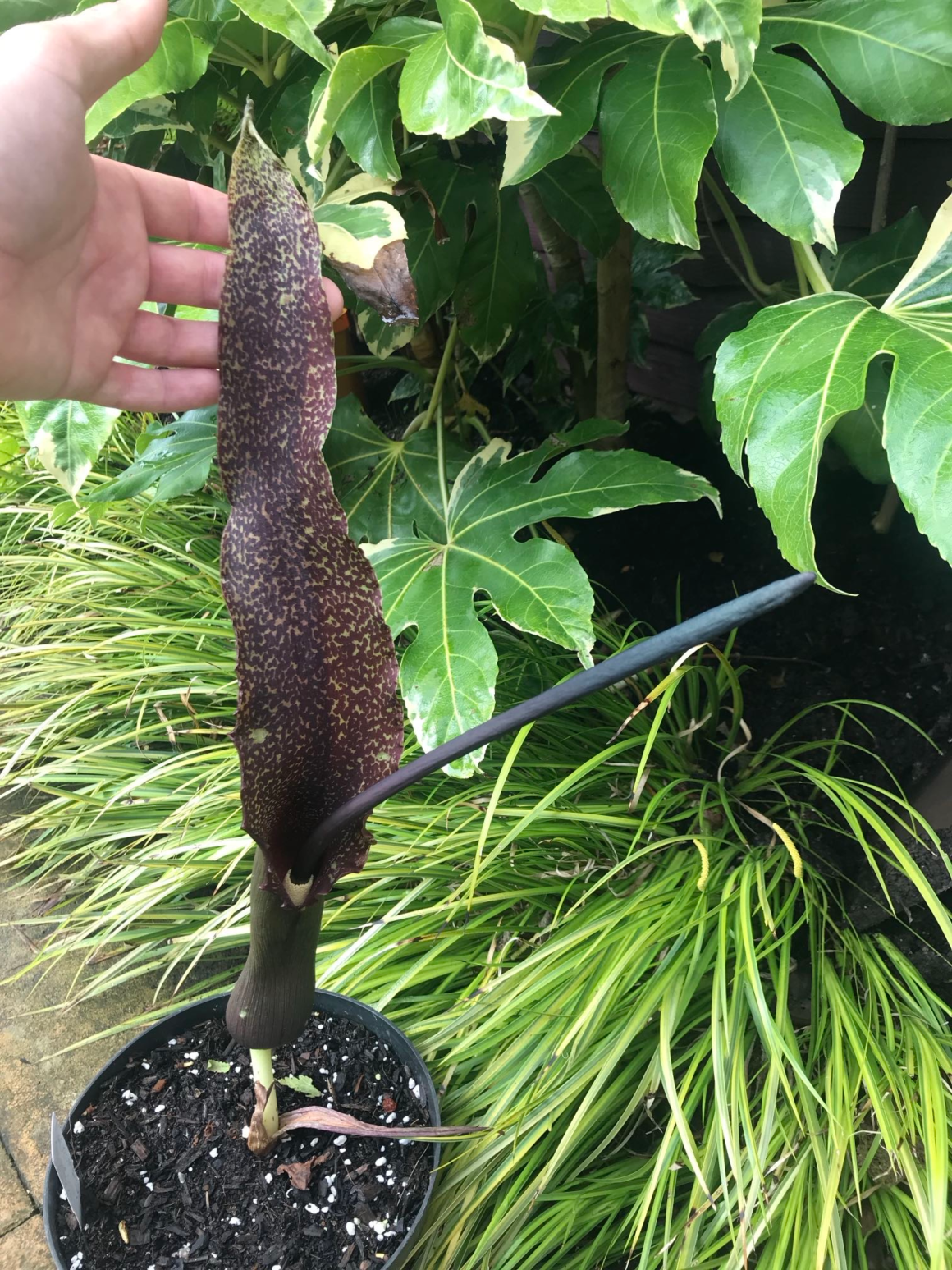
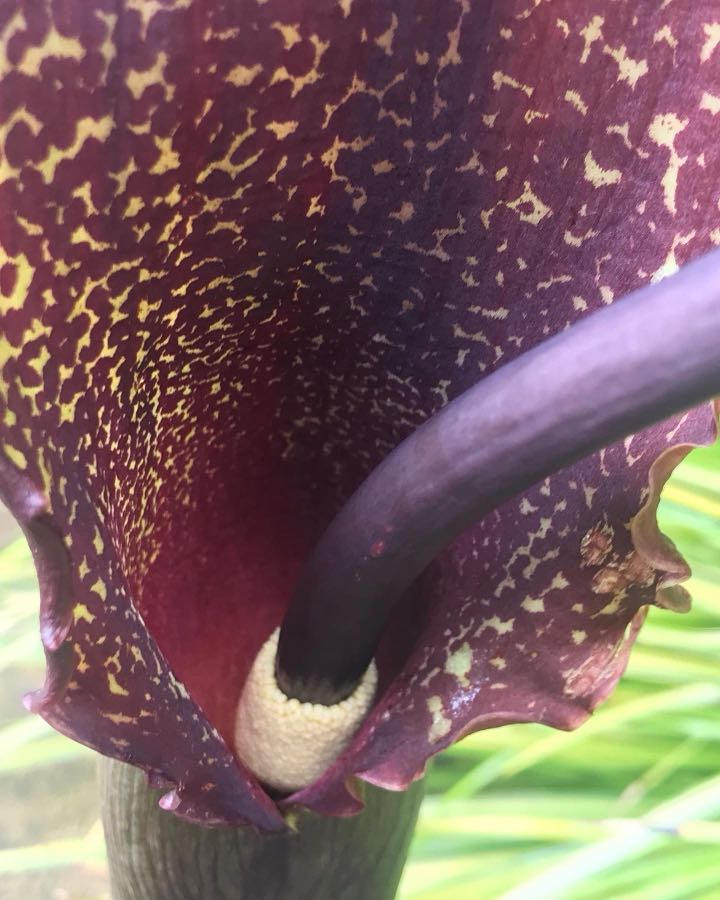
An extra-large voodoo lily whose bizarre mottled flower spike appears from a bare tuber before the leaf.
- Full shade, Partial shade
- 60–90 cm (24–35 in)
- 40–60 cm (16–24 in)
- H3 · Zone 8
- April–May
- Deciduous
Overview
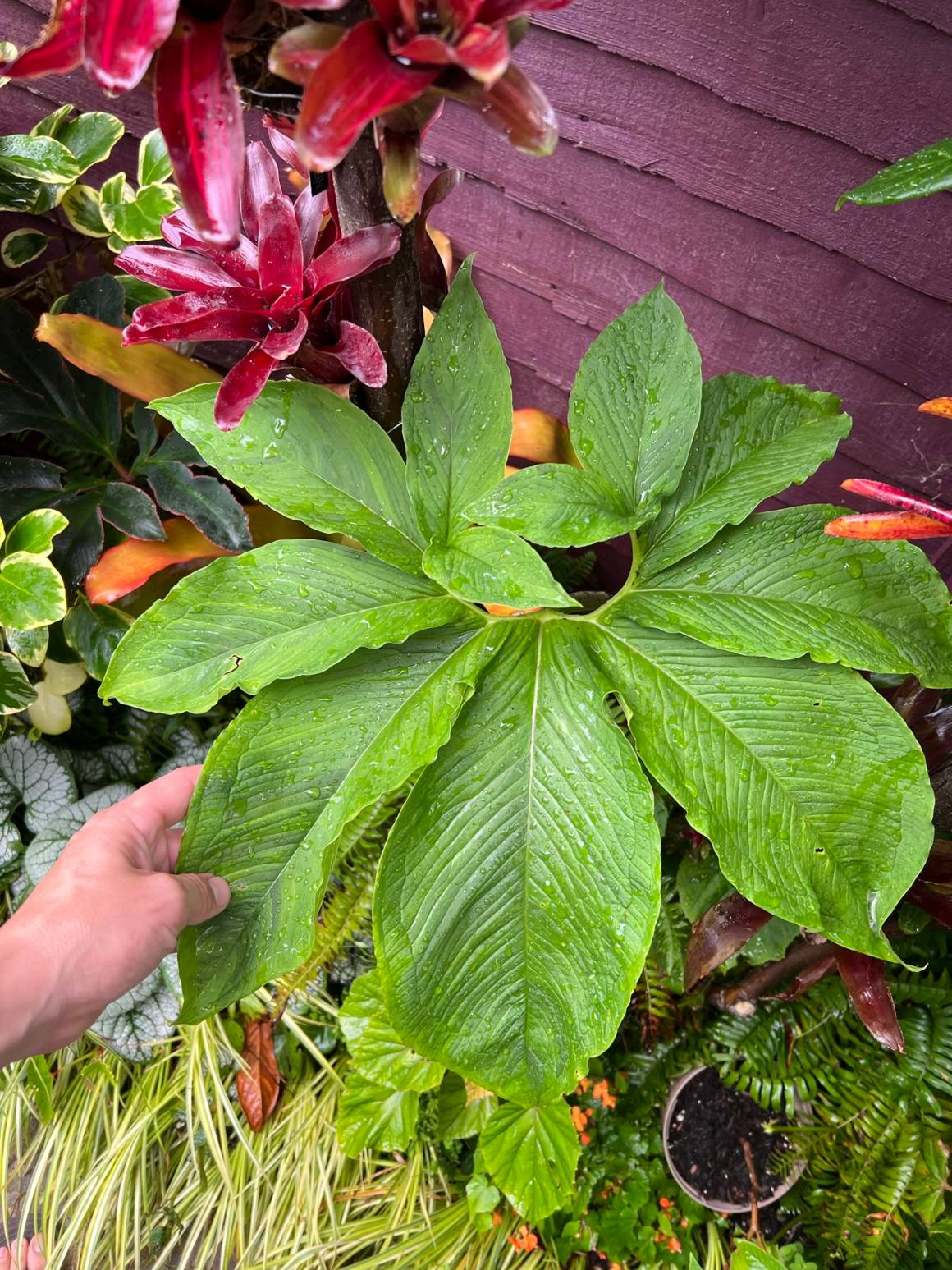
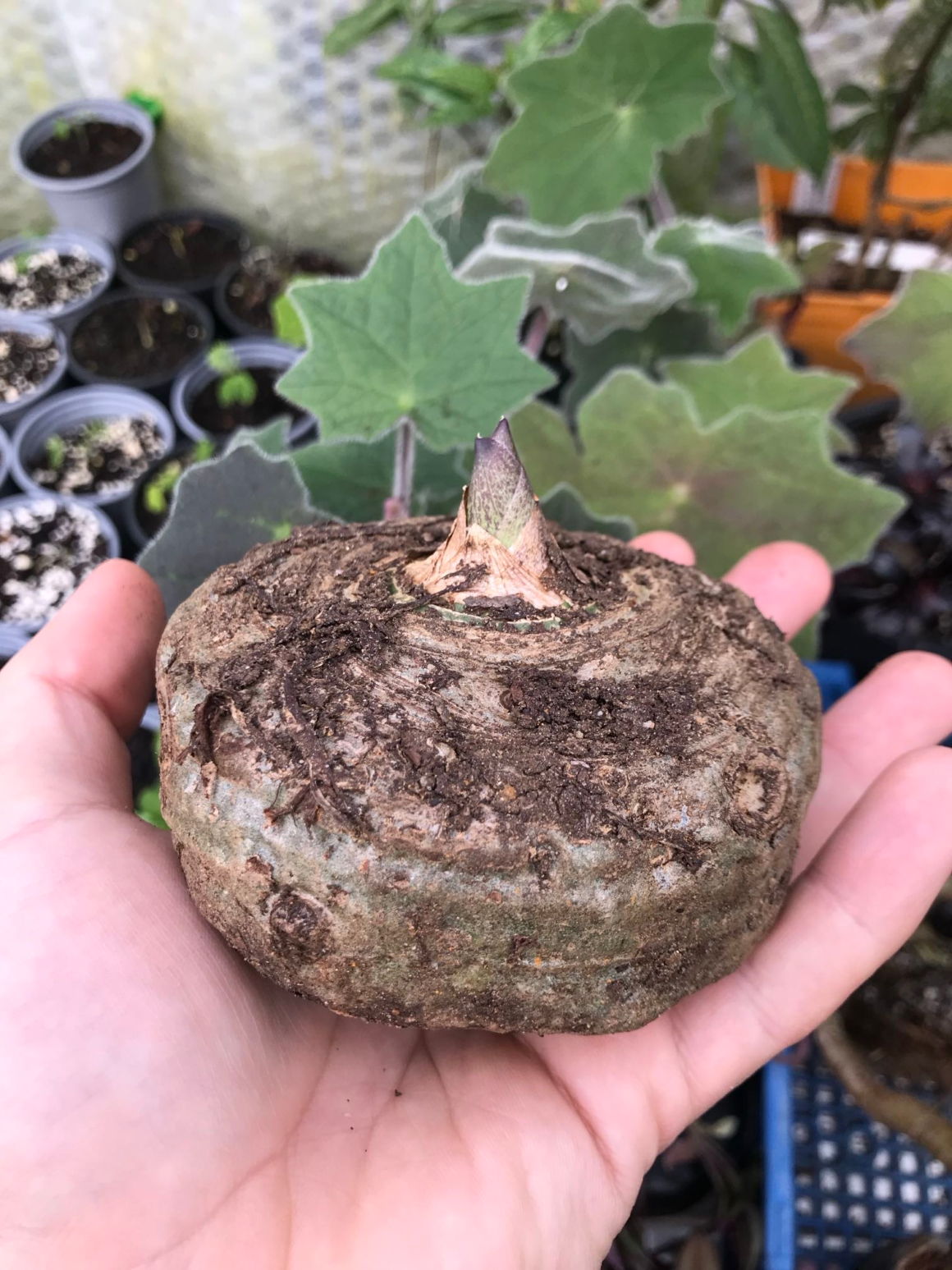
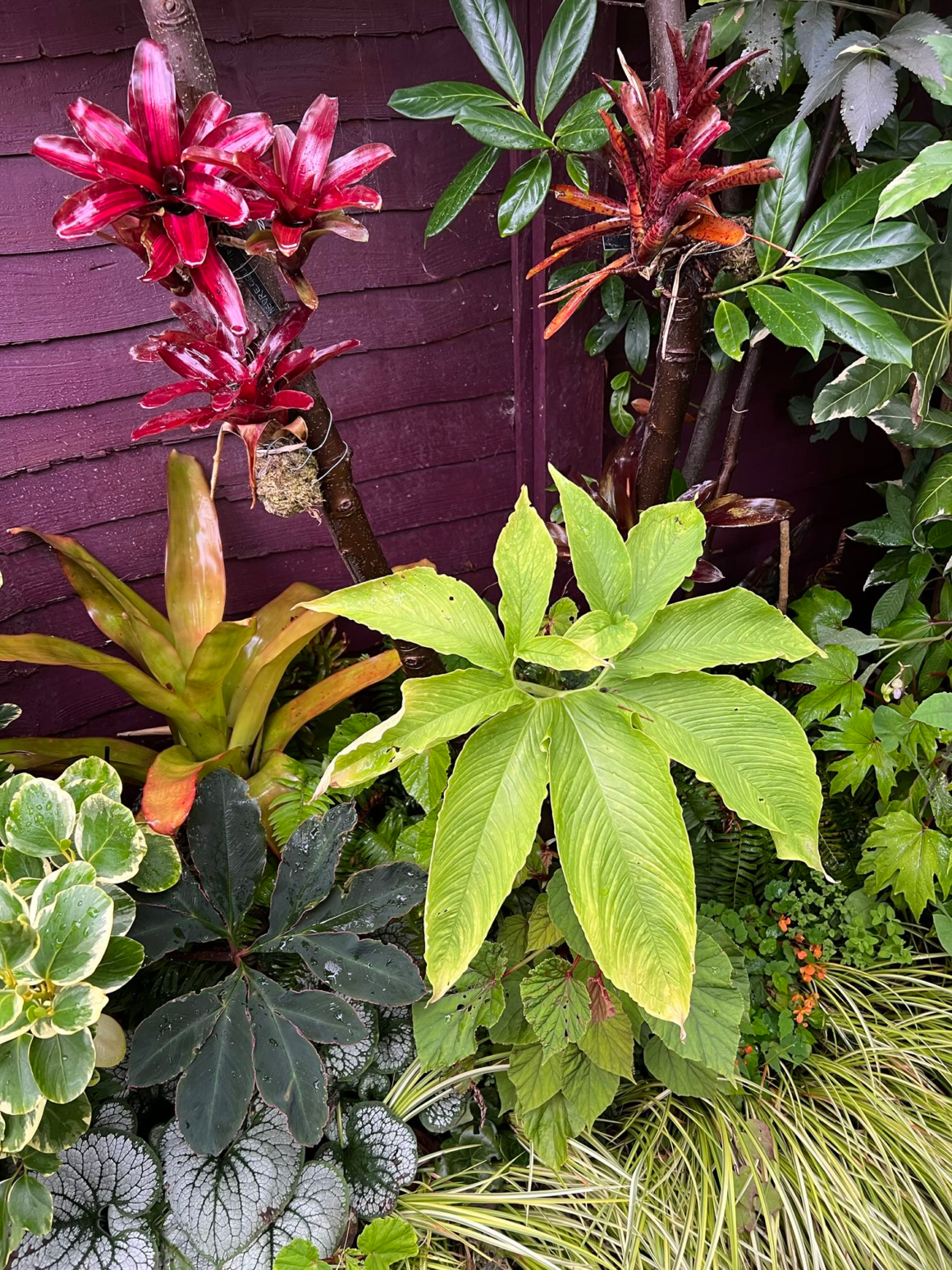
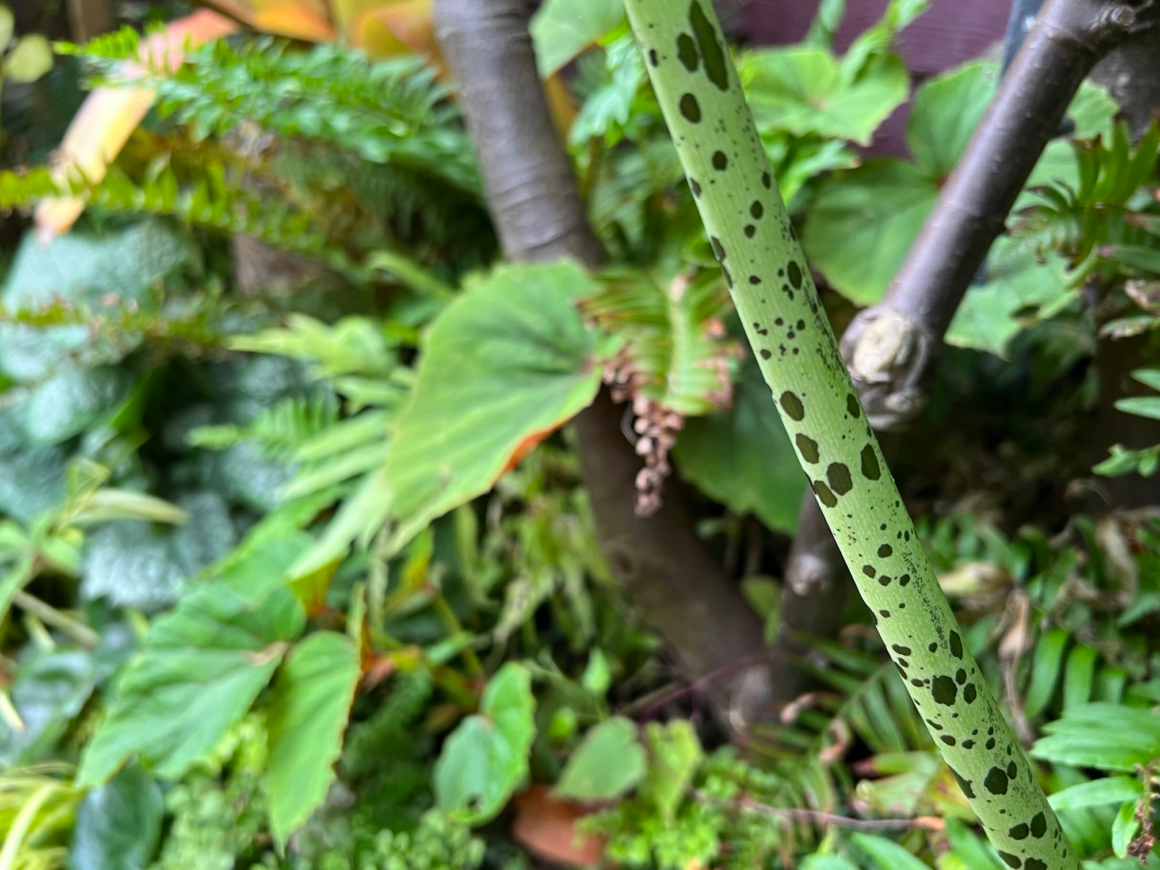
This vigorous form of the voodoo lily produces a tall, purple-spotted spathe and spadix directly from the dormant tuber in spring, often before it has even been planted, releasing a strong, unpleasant smell for a day or so to attract pollinating flies. A single, deeply divided, umbrella-like leaf follows and lasts through summer. Give it a sheltered spot with rich, well-drained soil and lift or deeply mulch the tuber over winter in all but the mildest gardens.
At a Glance
Growing Conditions
Aspect Suitability
- North-facing
- East-facing
- West-facing
Soil Tolerance
- Clay
- Sandy
- Loam
- Acid
- Neutral pH
Foliage
- Architectural foliage
Foliage interest: May–September
Seasonal Timeline
- Flowering Apr May
- Foliage May Jun Jul Aug Sep
- Fruiting Aug Sep
- Propagate Mar Apr
Maintenance Calendar
- Mar Plant the dormant tuber with its growing point just below the soil surface
- Apr Expect the flower to appear before the leaf, often with little warning
- Jun Water during dry spells while the leaf is expanding
- Sep Let the leaf die back naturally before cutting it away
- Nov Lift and store the tuber frost-free, or mulch deeply where it is left in the ground
Garden Design
Works well in: Contemporary, Tropical, Woodland
A curiosity plant best sited a little away from seating areas or open windows while in flower, since the scent - though brief - is genuinely unpleasant. The single leaf that follows is a handsome, umbrella-like foliage feature for the rest of summer.
Companion planting: Ferns, Hostas, Woodland groundcover
Wildlife Value
- Other pollinators
Safety
- Toxic to humans
- Toxic to dogs
- Toxic to cats
- Skin irritant
Contains irritant calcium oxalate crystals typical of the arum family. Harmful if eaten and can irritate skin; wear gloves when handling the tuber and keep it away from children and pets. The flower's smell of rotting meat is strong but brief.