

Grass · Houseplant · Tender perennial
Setaria palmifolia
Palm grass
Also known as: Panicum palmifolium
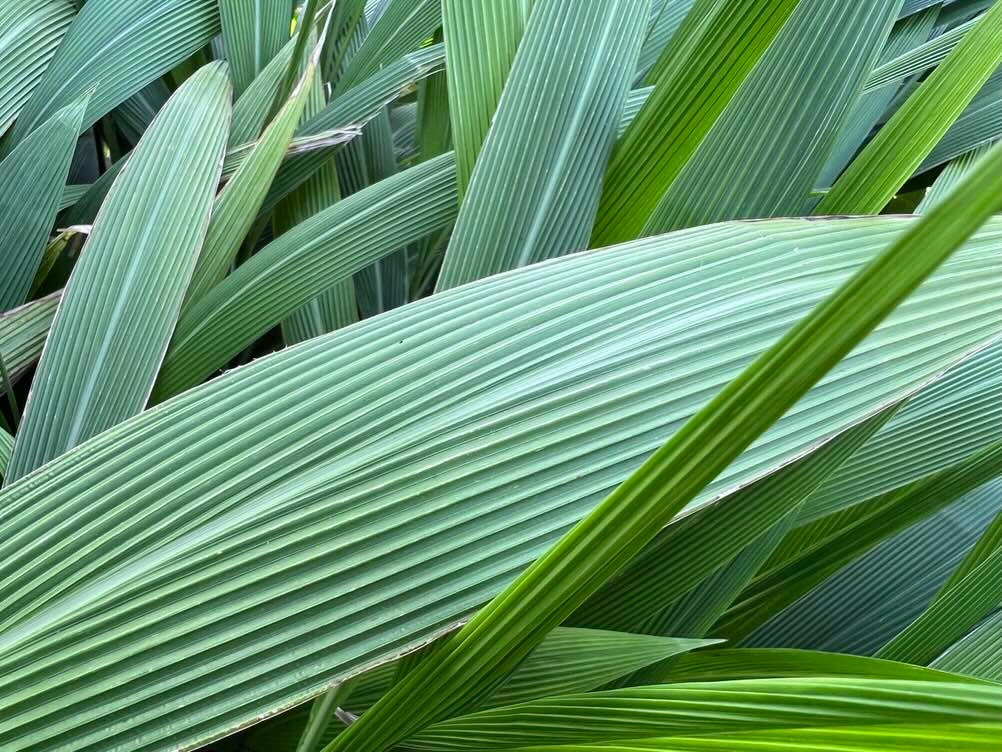
A dramatic tropical grass with wide, pleated, palm-like leaves that bring a lush jungle feel to patios and conservatories.
- Full sun, Partial shade
- 0.9–1.8 m (3–6 ft)
- 0.6–1.2 m (2–4 ft)
- H1b · Zone 10
- July–September
- Evergreen
Overview
Setaria palmifolia, commonly known as palm grass, is a striking ornamental grass grown for its broad, deeply pleated leaves that resemble miniature palm fronds rather than typical narrow grass blades. Native to tropical Asia, it forms a dense, arching clump of rich green foliage, with some forms showing attractive purplish or bronze tints, and it can occasionally produce tall, airy flower plumes in a warm, sheltered spot.
In the UK this is a tender perennial that cannot survive outdoor winters, so it is best grown in a container that can be moved under cover, or treated as a striking summer patio plant and brought indoors (or into a heated greenhouse or conservatory) once temperatures drop. It thrives in a warm, humid, partially shaded position with consistently moist, fertile soil, making it a lovely choice for jungle-style or exotic garden schemes during the warmer months.
While it needs a bit more care than hardy grasses, its bold, tropical texture makes it a real talking point, contrasting beautifully with finer-leaved plants and adding a lush, architectural statement to beds, borders, or large pots.
At a Glance
Growing Conditions
Aspect Suitability
- East-facing
- South-facing
- West-facing
Soil Tolerance
- Sandy
- Loam
- Acid
- Neutral pH
Foliage
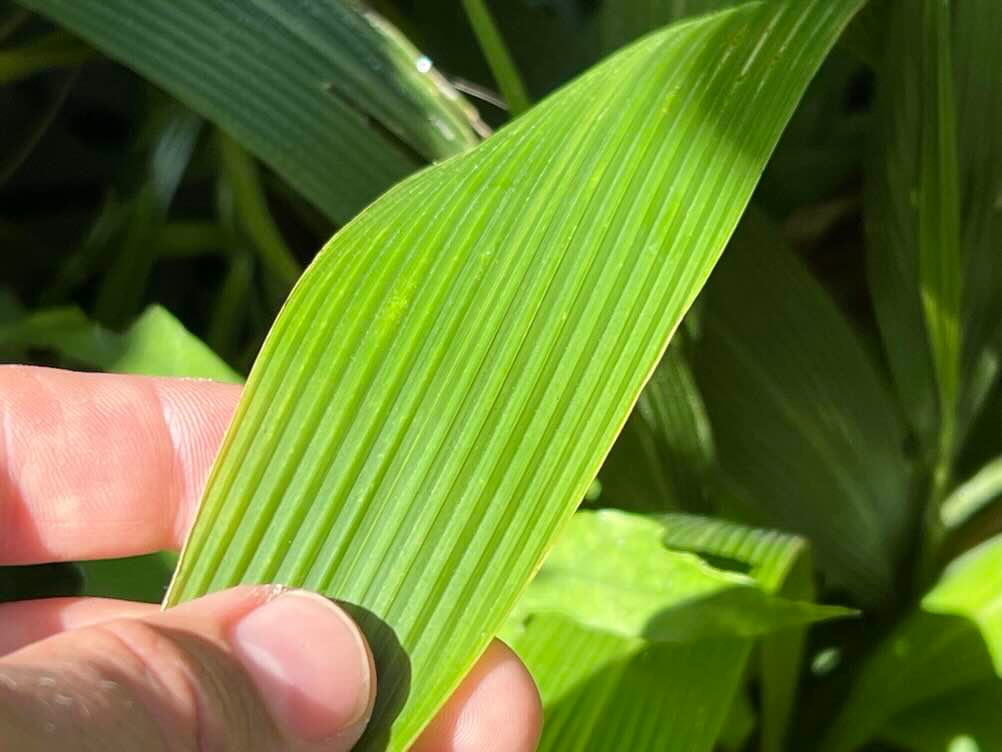
- Architectural foliage
Foliage interest: 12 months of the year
Seasonal Timeline
- Flowering Jul Aug Sep
- Foliage 12 months of the year
- Fruiting Aug Sep Oct
- Propagate Mar Apr May Sep
How to propagate
Ways to grow more Palm grass:
Division Mar–May, Sep Takes a little care
You'll need: A sharp spade or knife, fresh pot or border space, and moist fertile compost.
- Lift an established clump carefully, keeping as much root intact as possible.
- Use a spade or old knife to cut the clump into sections, each with several shoots and healthy roots.
- Trim back any damaged or very long leaves to reduce stress on the new divisions.
- Replant each section immediately at the same depth it was growing, in moist, fertile, free-draining compost or soil.
- Water well and keep in a warm, sheltered spot until new growth shows strong signs of establishment.
- How long
- New growth usually appears within 2 to 4 weeks of dividing.
- It's worked when
- Fresh green shoots emerge from the base and the clump starts to look upright and perky rather than wilted.
- Then
- Keep well watered and in a warm, sheltered position for the first few weeks, then feed regularly once established and move outdoors only after risk of cold has passed.
From seed Mar–May Tricky
- Needs light to germinate: press onto the surface, don't cover
- Germinates best at about 22°C
- Comes up in 14–28 days
- Prick out about 3 weeks after sowing
- Pot on about 6 weeks after sowing
- Seedlings are frost tender and grow slowly if kept too cool, so consistent warmth is key to reliable germination.
You'll need: A heated propagator, seed compost, and a warm bright spot kept at a steady temperature.
- Fill small pots or trays with free-draining seed compost and firm gently.
- Sow seed thinly on the surface and cover with a very light sprinkling of compost or vermiculite.
- Place in a heated propagator or warm spot maintaining 20 to 24°C.
- Keep the compost evenly moist but not waterlogged, and ensure good light once seedlings emerge.
- Once large enough to handle, prick out seedlings into individual small pots.
- How long
- Germination usually takes 2 to 4 weeks at a steady warm temperature.
- It's worked when
- Thin grass-like seedlings appear and begin to show the first true, slightly pleated leaves.
- Then
- Grow on in warmth and good light, potting on as roots fill the pot, and only move outside once nights stay reliably above 10°C.
Divide established clumps in spring as new growth begins, replanting sections with a good root system straight away into moist, fertile compost. Seed can be sown in spring at a warm, steady temperature of around 20 to 24°C; germination is usually quick but seedlings need protection from cold until well established.
Maintenance Calendar
- Mar Divide overcrowded clumps as new growth begins
- Mar Start feeding with a balanced liquid fertiliser
- Apr Move containers back outside once frosts have passed
- Apr Apply a mulch of well-rotted compost around the base
- May Increase watering as temperatures rise
- May Check new growth for aphids and spider mites
- Jun Continue monthly feeding through the growing season
- Jun Water regularly to keep soil consistently moist
- Jul Inspect leaves for red spider mite in hot, dry spells
- Jul Water deeply during warm weather, especially in containers
- Aug Check for leaf spot or fungal marks in humid weather
- Sep Collect ripening seed if desired
- Sep Reduce feeding as growth slows
- Oct Bring container plants indoors before the first frost
- Oct Reduce watering as temperatures cool
- Nov Keep in a frost-free, bright spot for winter
- Dec Water sparingly, just enough to stop compost drying out
Garden Design
Works well in: Modern / Contemporary, Tropical / Exotic
Use as a bold focal point in a tropical-style border or large container, where its pleated, palm-like leaves add instant jungle drama. Pair with cannas, bananas and ferns for contrasting textures, and give it a sheltered spot since it needs protection from cold in winter.
Companion planting: Tropical foliage plants, Bold-leaved exotics, Ferns
Wildlife Value
- Shelter
Spreads or self-seeds freely: keep it in check.
Safety
Palm grass is not known to be toxic, but its leaf edges can feel rough or slightly sharp, so some people prefer to wear gloves when handling it.