

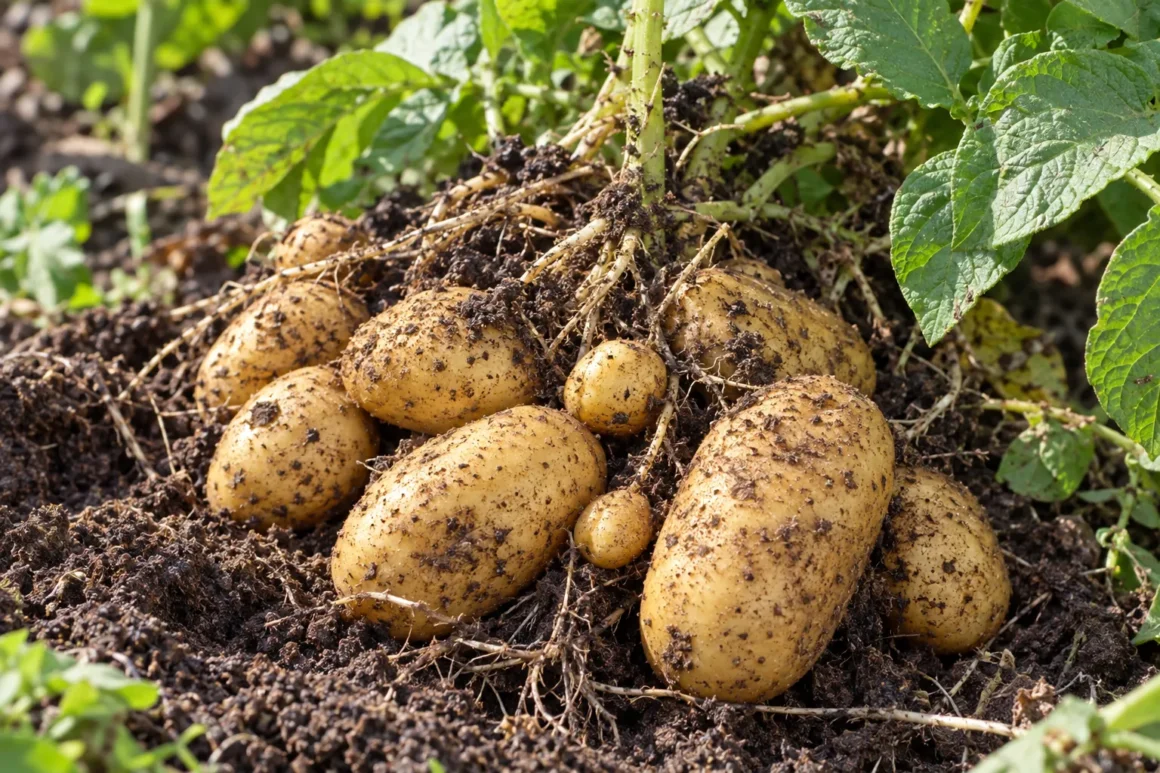
Tuber · Vegetable
Solanum tuberosum
Potato
A staple tuber crop grown from seed potatoes, producing bushy leafy plants with white to purple flowers and underground tubers.
- Full sun
- 0.5–1 m (2–3 ft)
- 50–75 cm (20–30 in)
- H2 · Zone 9
- June–August
- Deciduous
Overview
Potatoes were first domesticated in the Andes and are now one of the world's most important food crops. They are grown from small tubers, called seed potatoes, rather than true seed, and produce leafy, bushy plants that may carry white, pink or purple flowers before the tubers are lifted. Varieties are grouped by how quickly they crop: early types are ready in about 10-12 weeks and dodge many pests and diseases, while maincrop types take 18-20 weeks and give bigger yields that store through winter. The tubers themselves tolerate cold soil, but the leaves are blackened by frost, so plant a few weeks before your last frost and cover emerging shoots if a cold night threatens. Hot weather above about 27°C (80°F) slows tuber formation, so in hot climates grow them as a spring or autumn crop. Tuber colour, texture and timing depend on the variety.
At a Glance
Growing Conditions
Aspect Suitability
- South-facing
- West-facing
Soil Tolerance
- Clay
- Sandy
- Loam
- Acid
- Neutral pH
Foliage
Foliage interest: May–September
Seasonal Timeline
- Flowering Jun Jul Aug
- Foliage May Jun Jul Aug Sep
- Fruiting Aug Sep
- Propagate Feb Mar Apr
- Sow / plant outside Mar Apr
- Harvest Jun Jul Aug Sep Oct
How to propagate
One way to grow more Potato: the usual steps for each method.
From seed Feb–Apr Easy
You'll need: Seed compost, a seed tray or small pots, labels, and a clear lid or plastic bag.
- Fill a tray or pots with seed compost, level it and firm it gently.
- Water the compost and let it drain.
- Sow the seeds thinly on top. Cover them with a fine layer of compost or vermiculite about as deep as the seed is big; leave tiny seeds uncovered.
- Label them, cover with a clear lid or bag, and keep them somewhere bright but out of hot sun.
- Keep the compost just moist, and take the cover off once seedlings appear.
- How long
- Usually comes up in 1 to 3 weeks.
- It's worked when
- Seedlings with their first pair of leaves.
- Then
- When each has its first true leaves, prick them out into their own small pots, holding them by a leaf, never the stem. Harden them off for a week or two before planting out.
Plant certified disease-free seed potatoes rather than supermarket tubers, which may carry virus. Letting them sprout in a cool, bright, frost-free place for a few weeks first gives an earlier crop. True seed from the berries does not come true and is used only by breeders.
Maintenance Calendar
- Feb Set seed potatoes in a cool, bright, frost-free place to sprout before planting, as sprouted tubers crop sooner
- Mar Plant tubers 10-15cm (4-6in) deep about two to four weeks before your last frost, as shoots take this long to emerge
- Apr Draw soil up over emerging shoots (earthing up) to protect them from frost and stop the tubers turning green
- May Cover young shoots with fleece if frost threatens, as the leaves blacken at 0°C (32°F)
- Jun Water well in dry spells once the plants flower, as this is when the tubers swell
- Jul Watch for blight in warm, humid weather and cut down infected foliage to protect the tubers
- Jul Lift early types when the flowers open, or check with a hand in the soil
- Sep Lift maincrop types two weeks after cutting down the dead foliage, dry the skins and store in a dark, cool, frost-free place
Garden Design
Works well in: Edible / Kitchen Garden
Grow in rows or blocks in an open, sunny bed, or in large pots and grow bags where space is short. Move them to a new bed each year, and keep them away from tomatoes, which share their pests and blight.
Companion planting: Beans, Sweetcorn, Marigolds, Avoid planting next to tomatoes and squash
Wildlife Value
- Bees
Safety
- Toxic to humans
- Toxic to dogs
- Toxic to cats
- Toxic to horses
Only the cooked tubers are edible. Leaves, stems, flowers and the small green tomato-like berries contain solanine and are poisonous to people and pets, and tubers exposed to light turn green and become harmful, so discard green or sprouting parts and keep tubers covered with soil.