

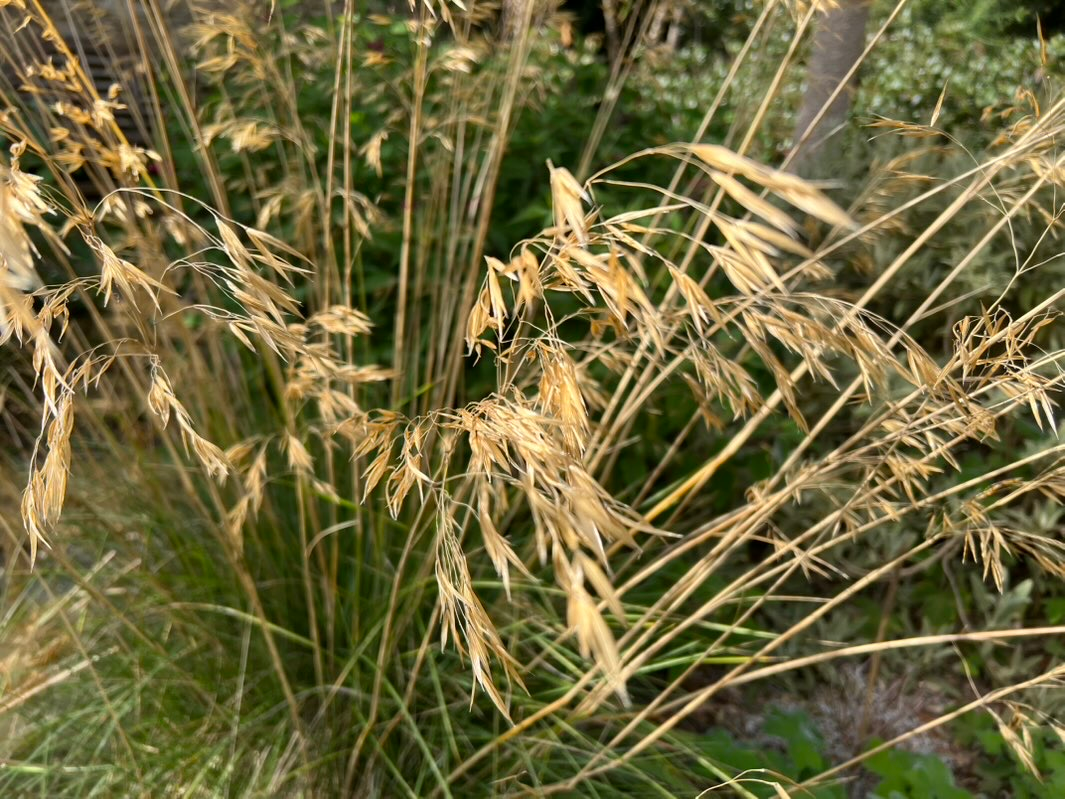
Grass
Stipa gigantea
Golden oats
Also known as: Celtica gigantea, Macrochloa gigantea
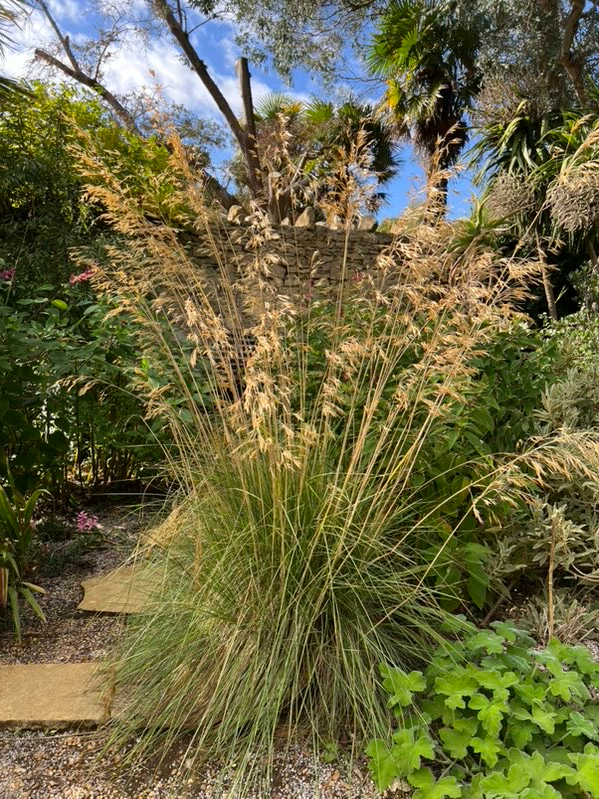
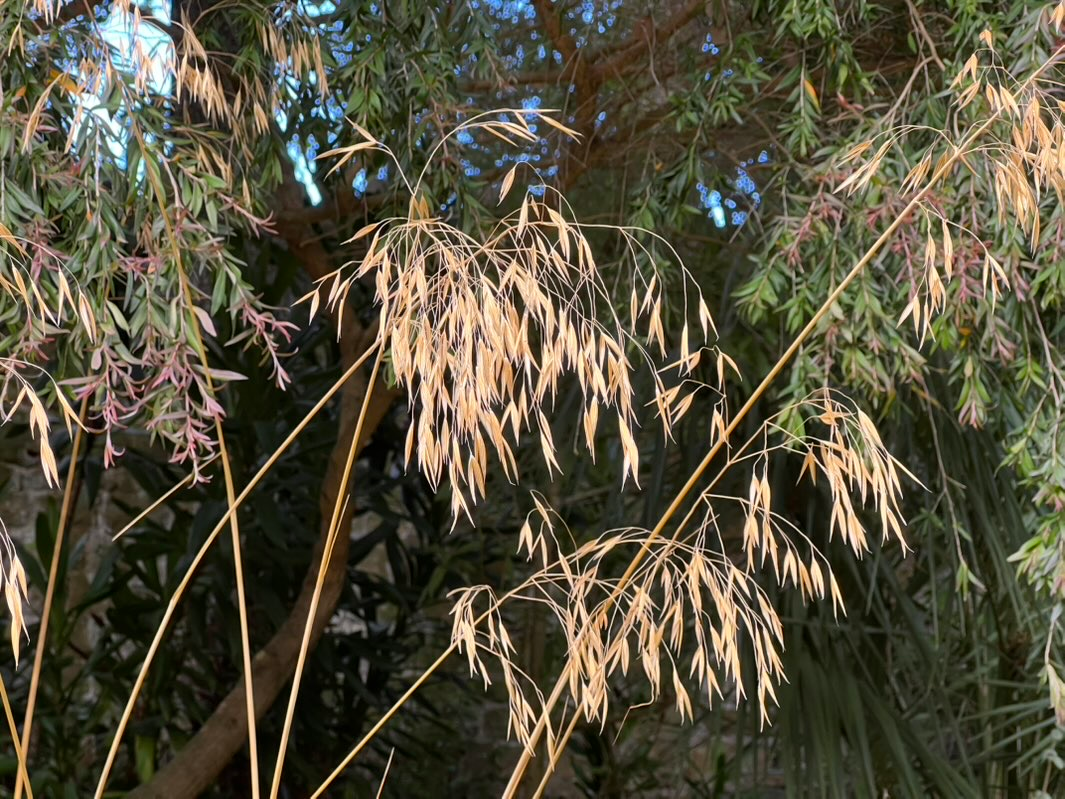
A dramatic evergreen grass sending up see-through stems of shimmering, golden, oat-like flowers to 2m.
- Full sun
- 1.5–2.5 m (5–8 ft)
- 0.6–1 m (2–3 ft)
- H4 · Zone 8
- June–August
- Evergreen
- RHS Award of Garden Merit
Overview
Native to Spain, Portugal and Morocco, golden oats forms a low, evergreen tussock of narrow grey-green leaves. From early summer, tall, airy stems rise above it carrying large open heads of purplish spikelets that ripen to glistening gold and catch the light for months, often standing into autumn. Because the stems are so open, it can be planted at the front of a border and still be looked through. Hardy to about -10°C and very drought tolerant once established, it hates winter-wet soil.
At a Glance
Growing Conditions
Aspect Suitability
- East-facing
- South-facing
- West-facing
Site Tolerance
- Exposed sites
- Coastal
- Drought
Soil Tolerance
- Chalk
- Sandy
- Loam
- Acid
- Neutral pH
- Alkaline
Foliage
- Architectural foliage
Foliage interest: 12 months of the year
Seasonal Timeline
- Flowering Jun Jul Aug
- Foliage 12 months of the year
- Fruiting Aug Sep Oct
- Propagate Mar Apr May
Maintenance Calendar
- Mar Comb out dead leaves with gloved fingers rather than cutting the tussock back, because cutting into an evergreen grass can kill it
- Apr Plant new grasses in spring rather than autumn, so they root well before facing winter wet
- Aug Leave the golden flower stems standing for autumn and winter interest and for seed-eating birds
- Dec Cut flower stems down at the base once they collapse or look untidy
Garden Design
Works well in: Cottage, Mediterranean, Modern / Contemporary, Prairie / Meadow, Wildlife-friendly
Plant singly or in a loose group where low evening sun shines through the golden heads; it can go near the front of a border because you see straight through it.
Companion planting: Verbena bonariensis, Eryngiums, Salvias, Kniphofias
Wildlife Value
- Birds
- Beneficial insects
- Shelter
- Food source
- Food
Food for birds: August–October
Safety
Not known to be toxic. Seeds have long, sharp awns that can lodge in pets' coats and ears; check animals after walking through the planting.