

Annual · Fruit · Vegetable
Tomato ‘Sungold’
Tomato Subgold
Also known as: Lycopersicon esculentum 'Sungold'
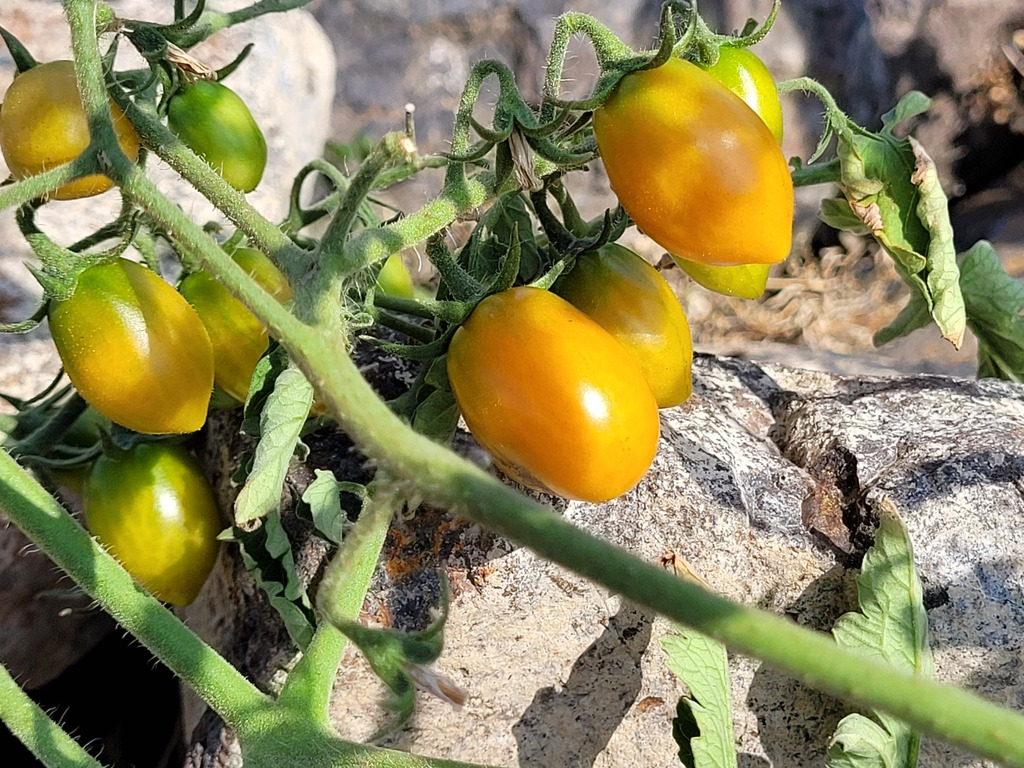
A hugely popular cherry tomato with golden-orange fruits bursting with sweet, tangy flavour, perfect for growing in greenhouses or sunny spots outdoors.
- Full sun
- 1.5–2 m (5–7 ft)
- 45–60 cm (18–24 in)
- H1c · Zone 10
- June–September
- Deciduous
- RHS Award of Garden Merit
Overview
Tomato 'Sungold' is one of the most loved cherry tomatoes amongst UK gardeners, prized for its exceptionally sweet and fruity flavour. The small, round fruits ripen to a vivid golden-orange colour and are produced in long trusses, making this a reliable and generous cropper throughout summer and into autumn.
This is a cordon (indeterminate) variety, meaning it grows tall and needs support, along with regular removal of side shoots to keep growth channelled into fruit production. It performs best in a greenhouse in cooler parts of the UK, but will also crop well outdoors in a warm, sheltered, sunny spot once the risk of frost has passed.
Easy to grow from seed and widely available as young plants, 'Sungold' is a favourite for salads, snacking straight off the plant, and for children getting involved in growing their own food. The fruits can split if watering is inconsistent, so even moisture is key to the best results.
At a Glance
Growing Conditions
Aspect Suitability
- South-facing
- West-facing
Soil Tolerance
- Clay
- Sandy
- Loam
- Neutral pH
Foliage
Foliage interest: May–September
Seasonal Timeline
- Flowering Jun Jul Aug Sep
- Foliage May Jun Jul Aug Sep
- Fruiting Jul Aug Sep Oct
- Propagate Feb Mar Apr
How to propagate
Ways to grow more Tomato Subgold: the usual steps for each method.
From seed Mar–Apr Easy
You'll need: Seed compost, a seed tray or small pots, labels, and a clear lid or plastic bag.
- Fill a tray or pots with seed compost, level it and firm it gently.
- Water the compost and let it drain.
- Sow the seeds thinly on top. Cover them with a fine layer of compost or vermiculite about as deep as the seed is big; leave tiny seeds uncovered.
- Label them, cover with a clear lid or bag, and keep them somewhere bright but out of hot sun.
- Keep the compost just moist, and take the cover off once seedlings appear.
- How long
- Usually comes up in 1 to 3 weeks.
- It's worked when
- Seedlings with their first pair of leaves.
- Then
- When each has its first true leaves, prick them out into their own small pots, holding them by a leaf, never the stem. Harden them off for a week or two before planting out.
Softwood cuttings Apr Takes a little care
You'll need: Clean, sharp secateurs or a knife, small pots, gritty compost (half compost, half grit or perlite), a plastic bag, and rooting powder if you have it.
- Early in the morning, cut soft, non-flowering shoot tips about 5 to 10 cm long, and keep them in a plastic bag so they don't wilt.
- Trim each one just below a leaf joint and take off the lower leaves, leaving two or three at the top.
- Dip the cut end in rooting powder if you have some.
- Push them into the edge of a pot of gritty compost so their leaves don't touch, and water them in.
- Cover with a clear bag or put them in a propagator, somewhere bright but out of direct sun.
- How long
- Roots in about 3 to 6 weeks.
- It's worked when
- New growth at the tips, and roots showing through the pot's holes.
- Then
- Pot each one up on its own and grow it on. Keep young plants frost-free through their first winter.
Sow seed indoors on a warm windowsill or heated propagator in February or March, then prick out and pot on before planting outside or into a greenhouse after the last frosts. Side shoots pinched out in summer can be rooted in water or moist compost to make quick new plants.
Maintenance Calendar
- Feb Sow seeds indoors on a warm windowsill
- Mar Sow seeds in a heated propagator if not done in February
- Mar Prick out seedlings into individual pots
- Apr Pot on growing plants as roots fill containers
- Apr Begin weak liquid feed once first truss forms
- May Harden off plants before planting out
- May Plant into greenhouse borders, growing bags or large pots
- May Stake or tie plants to supports as they grow
- Jun Pinch out side shoots regularly
- Jun Water consistently to prevent split fruit
- Jun Feed weekly with high-potash tomato fertiliser
- Jun Tie in main stem to support as it climbs
- Jul Continue removing side shoots weekly
- Jul Water regularly, keeping compost evenly moist
- Jul Keep feeding weekly with tomato feed
- Jul Check for whitefly and aphids on leaves
- Aug Harvest ripe golden-orange fruits regularly
- Aug Remove lower leaves to improve airflow
- Aug Check for signs of blight, especially outdoor plants
- Sep Continue picking ripe fruit as it colours
- Sep Pinch out growing tips to stop further trusses
- Sep Reduce feeding as season winds down
- Oct Pick remaining fruits before first frosts
- Oct Ripen green fruit indoors on a sunny windowsill
Garden Design
Works well in: Edible / Kitchen Garden
Best grown in a dedicated vegetable bed, large pots or growing bags rather than mixed into ornamental borders, as it needs staking and regular removal of side shoots. Its lush green foliage and trusses of bright orange fruit add colourful interest to a productive kitchen garden or sunny patio through summer.
Companion planting: Basil, Marigolds, Chives, Borage, Nasturtiums
Wildlife Value
- Bees
- Other pollinators
- Food source
- Food
Safety
- Toxic to humans
- Toxic to dogs
- Toxic to cats
- Toxic to horses
The ripe fruits are safe and delicious to eat, but the leaves, stems and unripe green fruit contain solanine and other compounds that are toxic if eaten in quantity by people or pets. Keep pets from chewing on the foliage and remove old plants after cropping rather than letting animals nibble them.