

Bulb · Perennial
Tulipa ‘Queen of Night’
Tulip ‘Queen of Night’
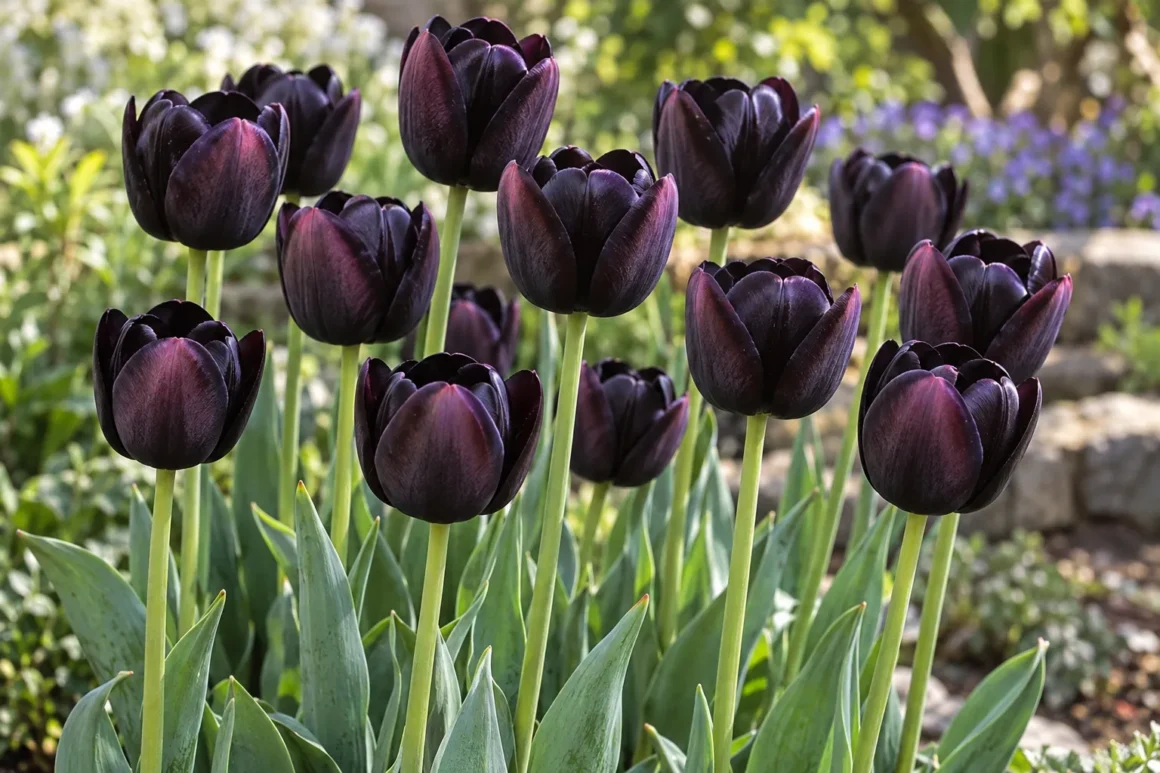
A tall single late tulip with glossy, deep maroon-black flowers in late spring, stunning with pale partners.
- Full sun
- 50–60 cm (20–24 in)
- 5–10 cm (2–4 in)
- H6 · Zone 6
- May
- Deciduous
Overview
‘Queen of Night’ is a single late tulip about 60 cm (2 ft) tall with goblet-shaped, satin-sheened flowers of the darkest maroon-purple, among the nearest to black of any tulip. It flowers late in spring and is superb with white or pink tulips, forget-me-nots and wallflowers.
Plant bulbs in late autumn, 10–15 cm (4–6 in) deep, in full sun and fertile, well-drained soil, sheltered from strong wind. Late planting after the soil has cooled helps avoid tulip fire disease. Deadhead after flowering and let the leaves die down; in many gardens it fades after a few years, so plant fresh bulbs for the best display.
Hardy to about −20°C (−4°F), USDA zones 3–8. Tulips need a long cold winter: where winters are mild, chill bulbs in a refrigerator for 10–12 weeks before planting and treat them as annuals. All parts, especially the bulb, are harmful if eaten.
At a Glance
Growing Conditions
Aspect Suitability
- East-facing
- South-facing
- West-facing
Soil Tolerance
- Chalk
- Sandy
- Loam
- Acid
- Neutral pH
- Alkaline
Foliage
Foliage interest: March–May
Seasonal Timeline
- Flowering May
- Foliage Mar Apr May
- Propagate Jun Jul
How to propagate
One way to grow more Tulip ‘Queen of Night’:
Offsets, runners and bulblets Jun–Jul Easy
You'll need: Hand fork, paper bags or trays
- Lift bulbs once the leaves have yellowed.
- Clean off soil and separate offsets.
- Dry in a cool, airy place.
- Store dry and replant in late autumn.
- How long
- 20 minutes
- It's worked when
- medium
- Then
- Grow small offsets on in a nursery bed until flowering size.
Lift after the leaves die, separate offsets and store dry until autumn. Offsets take two or three years to flower.
Garden Design
Works well in: Cottage, Modern / Contemporary
Plant in groups of 15 or more, mixed with pale tulips so the dark flowers stand out.
Companion planting: Forget-me-nots, Wallflowers, White tulips, Euphorbia
Wildlife Value
- Bees