

Annual · Vegetable
Vicia faba
Broad bean, Fava bean
Also known as: Faba vulgaris, Faba sativa
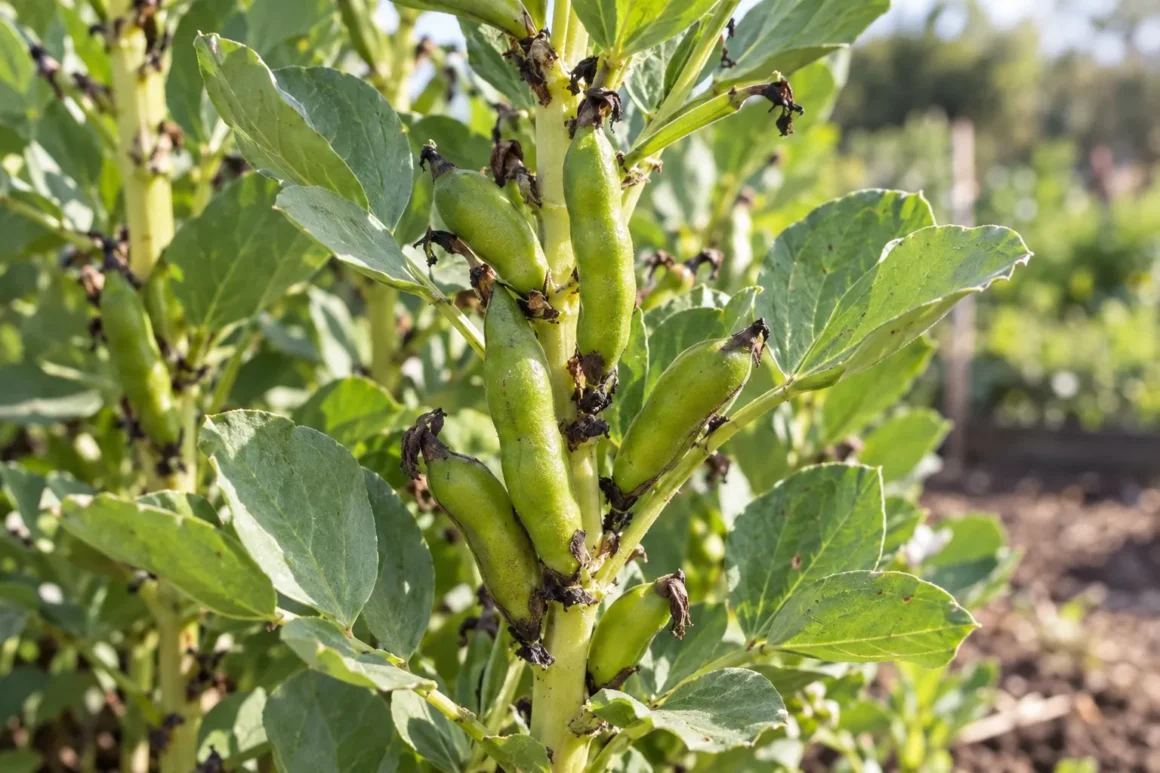
A hardy, upright bean with scented black-and-white flowers loved by bumblebees, grown for large, buttery beans in fat green pods.
- Full sun
- 0.6–1.2 m (2–4 ft)
- 30–45 cm (12–18 in)
- H4 · Zone 8
- April–June
- Deciduous
Overview
The broad or fava bean is one of the oldest cultivated crops, grown in the Middle East and Mediterranean for thousands of years. Unlike most beans it is hardy and prefers cool weather, forming sturdy, upright, square stems with grey-green leaves and clusters of sweetly scented white flowers with black markings, which are a magnet for bumblebees. Thick green pods follow, containing large beans eaten fresh or dried. It tolerates frost down to about -10°C (14°F) when young and is sown in autumn in mild-winter climates, or as early in spring as the soil can be worked elsewhere. Heat above about 25°C (77°F) stops pod setting, so finish the crop before summer in hot climates. Height and flower colour depend on the variety, and some have crimson flowers.
At a Glance
Growing Conditions
Aspect Suitability
- South-facing
- West-facing
Site Tolerance
- Exposed sites
Soil Tolerance
- Clay
- Sandy
- Loam
- Neutral pH
- Alkaline
Foliage
Foliage interest: March–July
Seasonal Timeline
- Flowering Apr May Jun
- Foliage Mar Apr May Jun Jul
- Fruiting Jun Jul
- Propagate Feb Mar Apr Oct Nov
- Sow / plant outside Mar Apr May Jun Jul Oct Nov
- Harvest May Jun Jul
How to propagate
One way to grow more Broad bean, Fava bean: the usual steps for each method.
From seed Feb–Apr, Oct–Nov Easy
You'll need: Seed compost, a seed tray or small pots, labels, and a clear lid or plastic bag.
- Fill a tray or pots with seed compost, level it and firm it gently.
- Water the compost and let it drain.
- Sow the seeds thinly on top. Cover them with a fine layer of compost or vermiculite about as deep as the seed is big; leave tiny seeds uncovered.
- Label them, cover with a clear lid or bag, and keep them somewhere bright but out of hot sun.
- Keep the compost just moist, and take the cover off once seedlings appear.
- How long
- Usually comes up in 1 to 3 weeks.
- It's worked when
- Seedlings with their first pair of leaves.
- Then
- When each has its first true leaves, prick them out into their own small pots, holding them by a leaf, never the stem. Harden them off for a week or two before planting out.
Direct sow 5cm (2in) deep in autumn in mild-winter climates, or four to six weeks before your last frost elsewhere. Seed saved from isolated plants comes true, but bees cross different varieties grown together.
Maintenance Calendar
- Mar Sow direct four to six weeks before your last frost, as plants grow best in cool weather
- Apr Support tall types with string run between stakes along each side of the row
- May Pinch out the soft tips once the lowest pods form, which deters black bean aphid and speeds pod growth (the tips are tasty cooked)
- May Check stem tips for black bean aphid colonies and squash or wash them off early
- Jun Pick pods when the beans show as bumps but are still small and tender
- Jul Cut plants off at soil level after cropping, leaving the nitrogen-rich roots to rot down
- Oct In mild-winter climates sow a hardy variety for an early crop next spring
Garden Design
Works well in: Cottage, Edible / Kitchen Garden, Wildlife-friendly
Grow in double rows or blocks in an open bed; the scented flowers attract early bumblebees to the whole plot. Dwarf types suit windy sites and large pots.
Companion planting: Potatoes, Sweetcorn, Summer savory, Avoid planting next to onions and garlic
Wildlife Value
- Bees
- Other pollinators
- Food source
- Food
Safety
Cooked beans are edible. People with the inherited enzyme deficiency G6PD deficiency can suffer a serious reaction (favism) from eating the beans or even inhaling the pollen, so they should avoid them.