

Climber
Wisteria sinensis
Chinese wisteria
A long-lived twining climber with cascades of scented lilac flowers in spring, for strong walls and pergolas.
- Full sun, Partial shade
- 8–12 m (26–39 ft)
- 6–1 m (20–33 ft)
- H6 · Zone 6
- April–May
- Deciduous
Overview
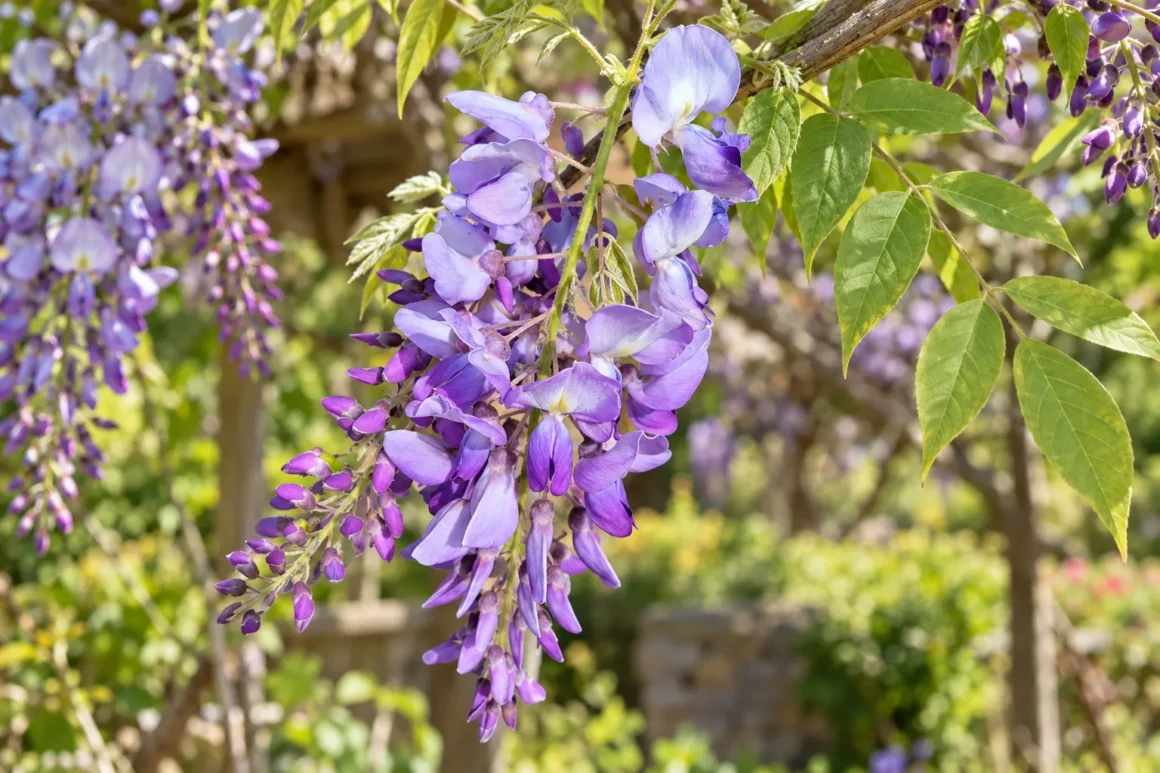
Chinese wisteria is a vigorous, long-lived deciduous climber that twines anticlockwise and can reach over 12 m (40 ft). In spring, before or as the leaves open, it carries hanging trails of fragrant lilac-blue pea flowers 20–30 cm (8–12 in) long, followed by velvety pods.
It needs a strong, permanent support, full sun or light shade for good flowering, and moist, well-drained soil. Prune twice a year: cut the long whippy shoots back to five or six leaves in summer, then shorten them again to two or three buds in winter. Grafted plants flower within a few years; seedlings can take many.
Hardy to about −20°C (−4°F), USDA zones 5–8, though late frosts can spoil the flowers. It thrives in warm summers. It is invasive in the south-eastern United States, where it smothers trees; there, the native American wisteria is a better choice. All parts, especially the seeds and pods, are poisonous.
At a Glance
Growing Conditions
Aspect Suitability
- South-facing
- West-facing
Soil Tolerance
- Clay
- Chalk
- Sandy
- Loam
- Acid
- Neutral pH
- Alkaline
Foliage
Foliage interest: May–October
Seasonal Timeline
- Flowering Apr May
- Foliage May Jun Jul Aug Sep Oct
- Propagate Apr May Jun Dec
How to propagate
Ways to grow more Chinese wisteria:
Layering Apr–Jun Easy
You'll need: A pot of compost, wire peg
- Bend a flexible young shoot down to a pot of compost.
- Wound the underside at a leaf joint.
- Peg it into the compost and keep moist.
- Sever once rooted, usually the next spring.
- How long
- 15 minutes
- It's worked when
- high
- Then
- Grow on for a year before planting.
Softwood cuttings May–Jun Tricky
You'll need: Knife, rooting hormone, propagator
- Take 10 cm (4 in) soft shoot tips.
- Dip in rooting hormone.
- Insert in cuttings compost under cover.
- Keep warm and humid.
- How long
- 20 minutes
- It's worked when
- low
- Then
- Pot on carefully; roots are brittle.
Layering is the easiest home method. Plants from seed can take 10–20 years to flower and vary.
Maintenance Calendar
- Jan Shorten the summer-pruned shoots to two or three buds
- Mar Feed with a high-potash fertiliser to encourage flowers
- Apr Cover young flower trails with fleece if a hard frost is forecast
- Jul Cut long whippy shoots back to five or six leaves
- Aug Water young plants in dry spells
- Sep Remove seed pods before they ripen
Garden Design
Works well in: Cottage, Japanese / Zen
Train on strong wires along a sunny wall, or over a sturdy pergola where the flowers can hang.
Companion planting: Climbing roses, Clematis, Pergola planting
Wildlife Value
- Bees
- Shelter
- Nesting cover for birds
Safety
- Toxic to humans
- Toxic to dogs
- Toxic to cats
- Toxic to horses
All parts are harmful if eaten, especially the seeds and pods, to people, dogs, cats and horses. Listed as invasive in North Carolina and other south-eastern US states; prune to control spread and remove pods before seed falls.