

Perennial · Shrub
Yucca filamentosa
Adam's needle
Also known as: Yucca smalliana, Yucca concava
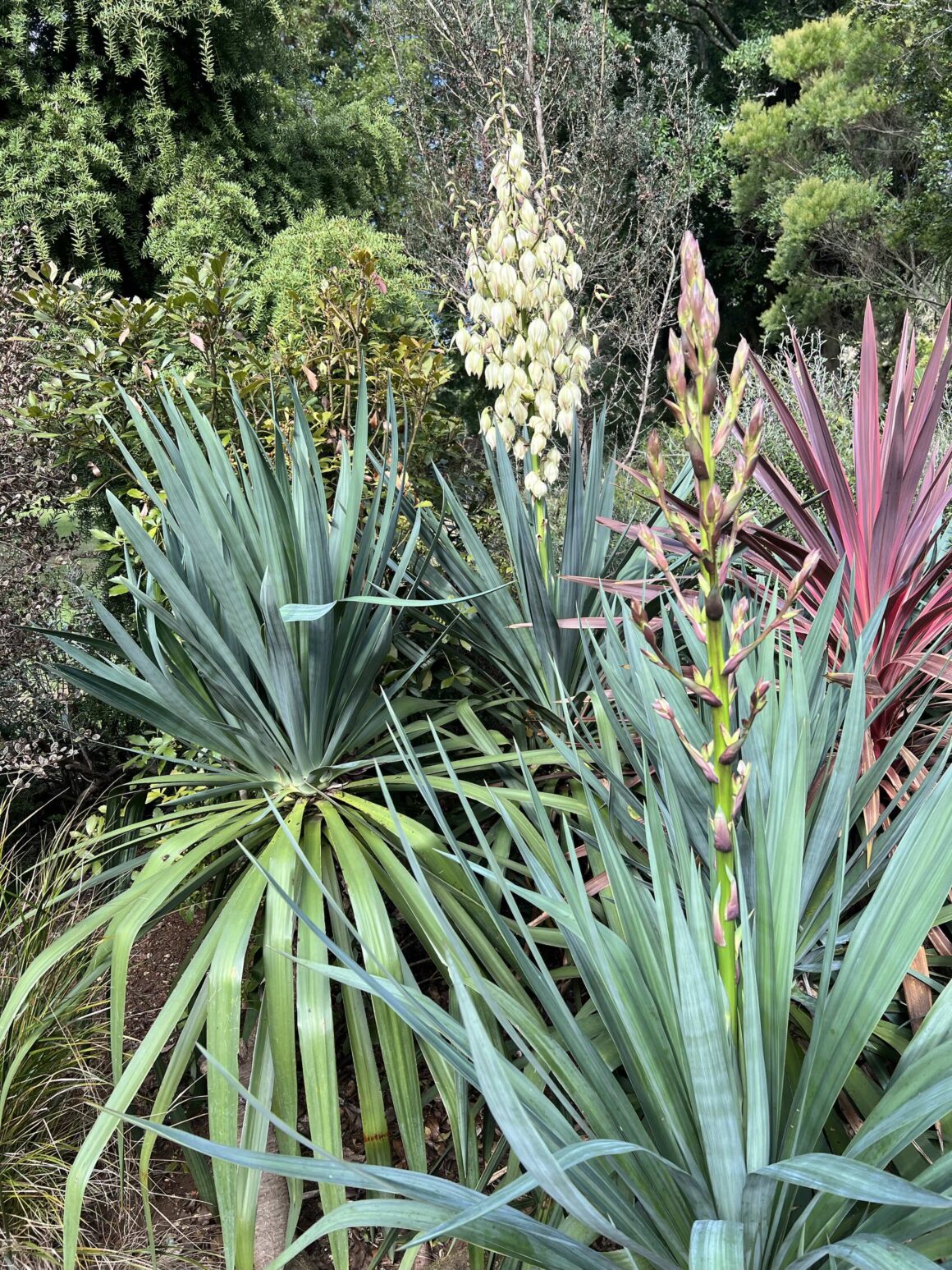
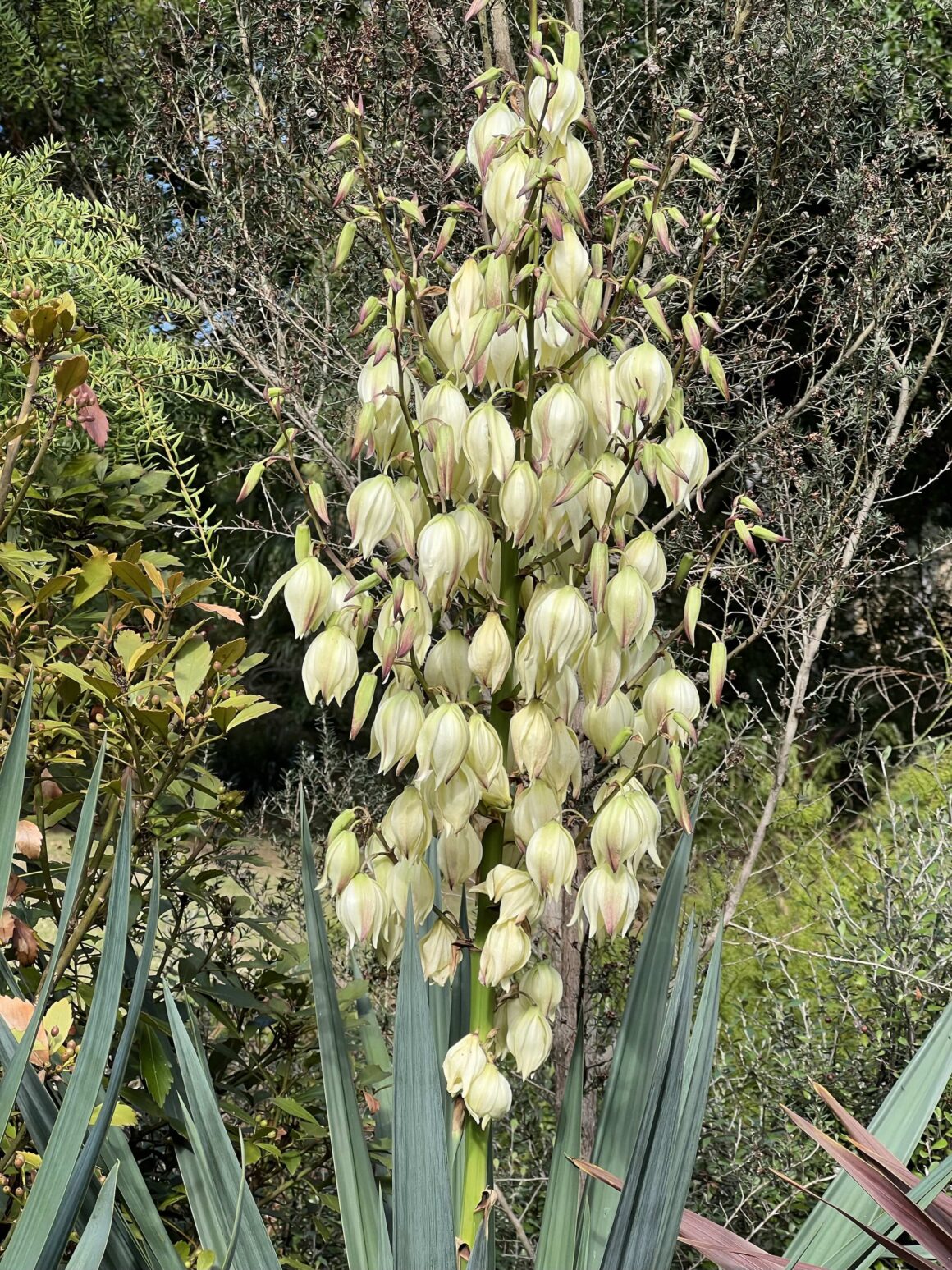
A tough, clump-forming stemless yucca with curly white threads on its leaf edges and tall spires of creamy bells.
- Full sun
- 0.5–1 m (2–3 ft)
- 1–1.5 m (3–5 ft)
- H5 · Zone 7
- July–September
- Evergreen
Overview
Native to the south-eastern United States, this Yucca forms low rosettes of stiff, grey-green, sword-shaped leaves with curling white threads peeling from their edges. In late summer, established plants send up tall spikes of nodding, creamy-white bells up to 2m high. In its homeland it is pollinated only by yucca moths, so seed pods rarely form elsewhere. It is one of the hardiest yuccas (about -15°C), tolerates more moisture than desert types and spreads slowly by offsets.
At a Glance
Growing Conditions
Aspect Suitability
- East-facing
- South-facing
- West-facing
Site Tolerance
- Exposed sites
- Wind
- Coastal
- Salt
- Drought
Soil Tolerance
- Chalk
- Sandy
- Loam
- Acid
- Neutral pH
- Alkaline
Foliage
- Architectural foliage
Foliage interest: 12 months of the year
Seasonal Timeline
- Flowering Jul Aug Sep
- Foliage 12 months of the year
- Propagate Mar Apr
Maintenance Calendar
- Apr Pull or cut off dead outer leaves wearing gloves and eye protection, as the tips are needle-sharp
- Apr Separate offsets with roots if clumps become crowded or you want more plants
- Oct Cut faded flower spikes to the base, because the rosette that flowered slowly declines and offsets replace it
Garden Design
Works well in: Desert / Dry, Mediterranean, Modern / Contemporary, Prairie / Meadow, Tropical / Exotic
A reliable, cold-tolerant way to add spiky structure to a sunny gravel border, coastal garden or large pot.
Companion planting: Grasses, Sedums, Lavenders, Eryngiums
Wildlife Value
- Moths
- Other pollinators
- Shelter
Safety
- Toxic to dogs
- Toxic to cats
- Toxic to horses
Contains saponins, toxic to dogs, cats and horses if chewed. Leaf tips are very sharp - plant away from paths and children's play areas.