

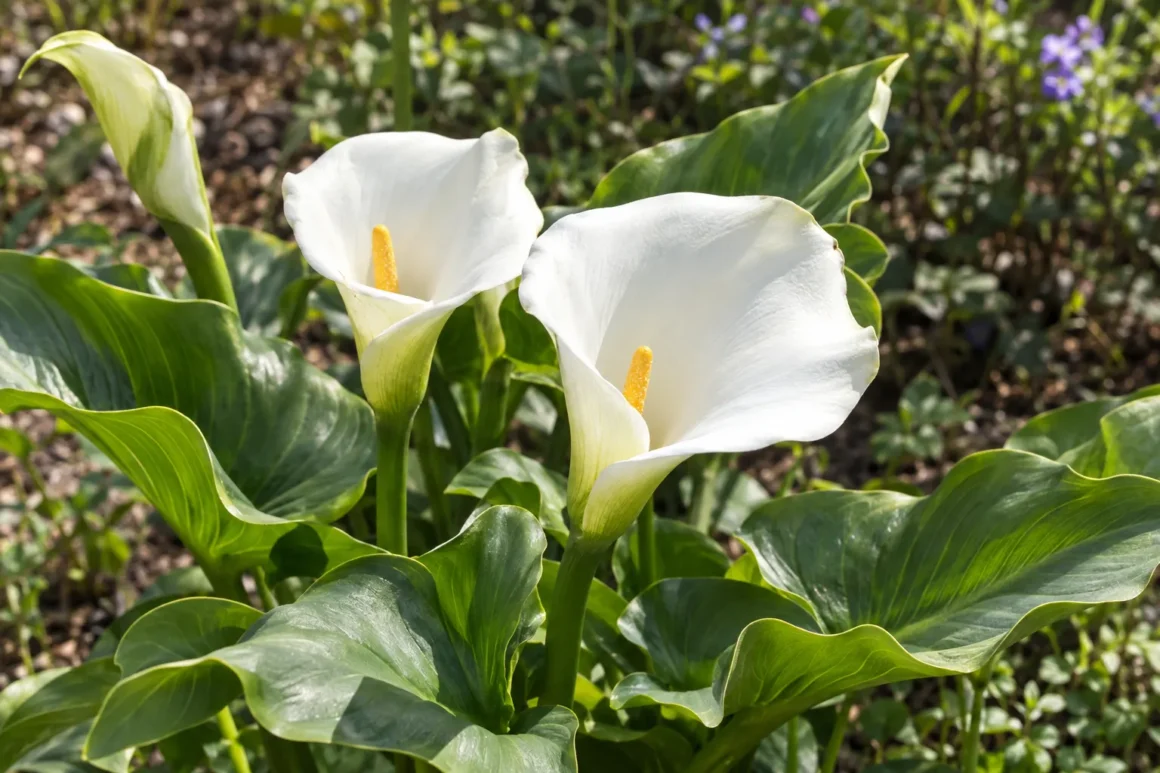
Marginal · Perennial
Zantedeschia aethiopica
Arum lily
Elegant white spathes over glossy arrow-shaped leaves, at home in a damp border or the shallow margin of a pond.
- Full sun, Partial shade
- 0.5–1 m (2–3 ft)
- 30–60 cm (12–24 in)
- H4 · Zone 8
- May–July
- Semi evergreen
Overview
Arum lily, also called calla lily, makes clumps of glossy, arrow-shaped leaves and tall stems carrying pure white funnel-shaped spathes around a yellow spadix in late spring and summer.
It is hardy to about −10°C (14°F), USDA zones 8–10, more so when planted in water, which shields the crown. In mild climates it stays evergreen; in hot climates give part shade. It is weedy in moist pastures in coastal California and southern Australia.
Grow in rich, moisture-retentive soil or in an aquatic basket up to 30 cm (12 in) deep.
At a Glance
Growing Conditions
Aspect Suitability
- South-facing
- West-facing
Site Tolerance
- Wet soil
Soil Tolerance
- Clay
- Loam
- Acid
- Neutral pH
- Alkaline
Foliage
- Architectural foliage
Foliage interest: March–November
Seasonal Timeline
- Flowering May Jun Jul
- Foliage Mar Apr May Jun Jul Aug Sep Oct Nov
- Fruiting Aug Sep
- Propagate Mar Apr
How to propagate
One way to grow more Arum lily:
Division Mar Easy
You'll need: Spade or sharp knife
- Lift or expose the clump as growth starts
- Cut into sections, each with roots and healthy buds
- Replant at the same depth in improved soil
- How long
- 1 hour
- It's worked when
- high
- Then
- Water in well and keep moist while new roots form.
Divide clumps in spring, leaving a bud on each piece; let cut surfaces dry a day before replanting.
Maintenance Calendar
- Mar Divide congested clumps as growth starts
- Apr Feed and top-dress with compost
- Jul Remove faded spathes
- Nov Mulch crowns in borders in cold areas
Garden Design
Works well in: Cottage, Tropical / Exotic
Pure white spathes over glossy arrow-shaped leaves, superb at a pond edge in up to 30 cm (12 in) of water, which also protects the crown from frost.
Companion planting: Ferns, Hostas, Irises, Primulas
Safety
- Toxic to humans
- Toxic to dogs
- Toxic to cats
- Toxic to horses
- Skin irritant
All parts contain calcium oxalate and are harmful if eaten; sap irritates skin and eyes. A declared pest in Western Australia and an invasive weed of wetlands in Victoria, South Australia and New Zealand; check before planting.