

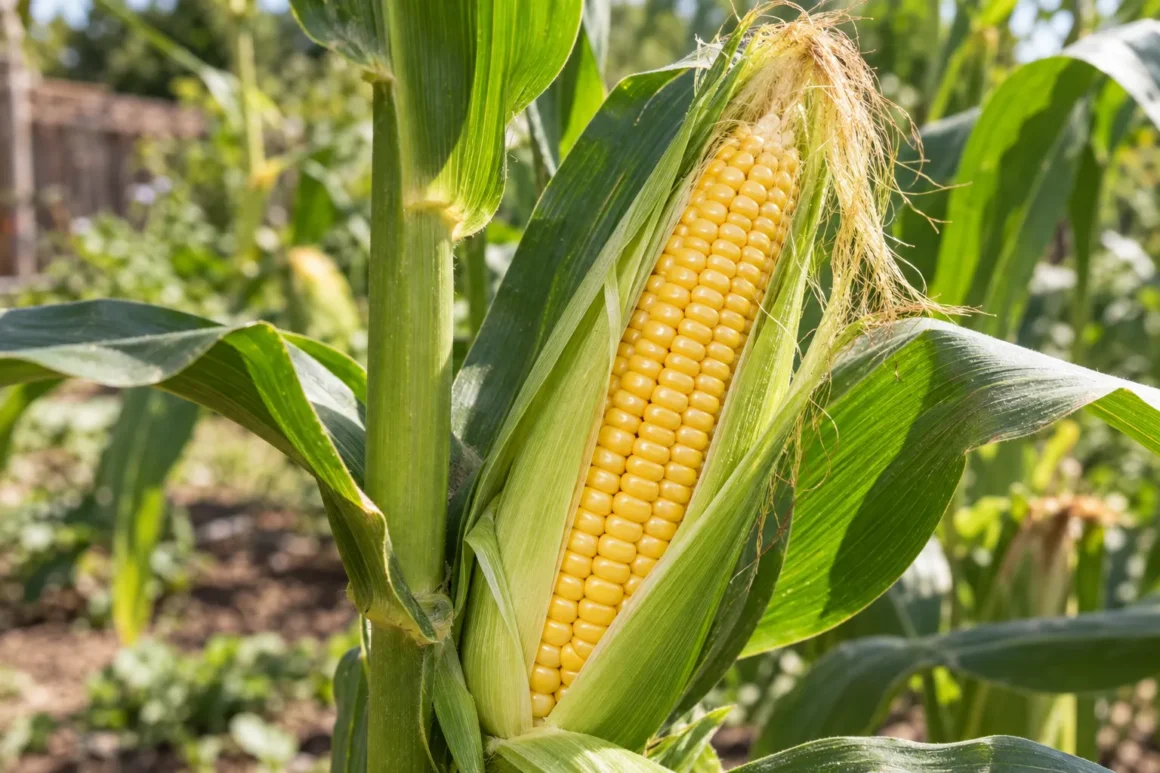
Annual · Grass · Vegetable
Zea mays
Sweetcorn, Sweet corn, Maize
Also known as: Zea mays var. saccharata, Zea mays convar. saccharata
A tall, grassy summer crop with plumed tassels, grown in blocks for sweet, juicy cobs eaten fresh.
- Full sun
- 1.5–2.5 m (5–8 ft)
- 45–60 cm (18–24 in)
- H2 · Zone 10
- July–August
- Deciduous
Overview
Maize was domesticated in southern Mexico from a wild grass, and sweetcorn is the garden form bred to hold extra sugar in its kernels. It grows as a tall, upright grass with broad, strap-like leaves, topped by feathery male tassels that shed pollen onto the silks of the cobs below. Because it is wind-pollinated, grow it in a block of short rows rather than one long line, so every cob fills properly. Plants need warm soil and full sun, and are killed by frost. Varieties differ in sweetness: supersweet types stay sweet longest after picking but must be grown well away from other corn to avoid cross-pollination. Height, cob size and kernel colour depend on the variety.
At a Glance
Growing Conditions
Aspect Suitability
- South-facing
- West-facing
Site Tolerance
- Exposed sites
Soil Tolerance
- Clay
- Sandy
- Loam
- Acid
- Neutral pH
- Alkaline
Foliage
- Architectural foliage
Foliage interest: June–September
Seasonal Timeline
- Flowering Jul Aug
- Foliage Jun Jul Aug Sep
- Fruiting Aug Sep
- Propagate Apr May Jun
- Sow indoors Mar Apr
- Sow / plant outside Apr May Jun Jul
- Plant out Apr May
- Harvest Aug Sep
How to propagate
One way to grow more Sweetcorn, Sweet corn, Maize: the usual steps for each method.
From seed Apr–Jun Easy
You'll need: Seed compost, a seed tray or small pots, labels, and a clear lid or plastic bag.
- Fill a tray or pots with seed compost, level it and firm it gently.
- Water the compost and let it drain.
- Sow the seeds thinly on top. Cover them with a fine layer of compost or vermiculite about as deep as the seed is big; leave tiny seeds uncovered.
- Label them, cover with a clear lid or bag, and keep them somewhere bright but out of hot sun.
- Keep the compost just moist, and take the cover off once seedlings appear.
- How long
- Usually comes up in 1 to 3 weeks.
- It's worked when
- Seedlings with their first pair of leaves.
- Then
- When each has its first true leaves, prick them out into their own small pots, holding them by a leaf, never the stem. Harden them off for a week or two before planting out.
Sow two or three seeds in deep pots indoors two to three weeks before your last frost, or direct sow once the soil reaches about 12°C (54°F), or 16°C (61°F) for supersweet types. Seed rots in cold, wet soil.
Maintenance Calendar
- Apr Sow in deep pots indoors two to three weeks before your last frost, as roots dislike disturbance
- May Plant out in a block of short rows about 35cm (14in) apart after your last frost
- Jun Draw soil around the stem bases as they grow, which helps anchor tall plants against wind
- Jul Water well when tassels and silks appear, as dry roots at this stage give poorly filled cobs
- Jul Tap the tassels on calm days to help pollen fall on the silks of small blocks
- Aug Pick when the silks have turned brown and a pierced kernel shows milky juice, and eat as soon as possible
- Sep Cut down and compost the stems after harvest
Garden Design
Works well in: Cottage, Edible / Kitchen Garden, Prairie / Meadow
Plant in a square block at least four rows deep for good pollination. The tall, rustling stems make a temporary summer screen, and squash or beans can be grown underneath in the traditional Three Sisters style.
Companion planting: Squash, Pumpkins, Climbing beans, Cucumbers
Wildlife Value
- Birds
- Shelter
- Food source
- Food
Food for birds: August–October
Safety
Cobs are edible and the plant is not known to be toxic to people or pets. Leaf edges can be sharp and cause small cuts, and dogs can suffer serious blockages if they swallow corn cobs.